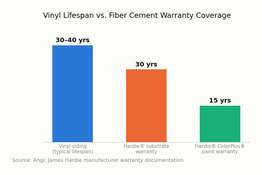
Fiber cement siding runs $7 to $18 per square foot installed, against $3 to $12 per square foot for vinyl, according to Angi’s 2026 cost data. That’s a real gap, sometimes 50% or more depending on the specific products compared, and it’s the number most homeowners fixate on when they’re pricing a re-side. It’s also only half the picture. James Hardie, the largest fiber cement manufacturer in North America, backs its siding with a transferable 30-year, non-prorated substrate warranty plus a separate 15-year warranty on its factory-applied ColorPlus finish. Vinyl siding, meanwhile, typically lasts 30 to 40 years depending on climate and maintenance, per Angi’s own lifespan data, sometimes less in harsh weather and sometimes more with a mild climate and regular upkeep. Compared side by side, cost per square foot and cost per year of expected service tell two different stories, and which one matters more depends on how long you plan to own the house and how much climate risk your region actually carries.
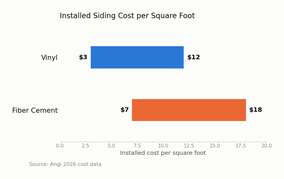
Installed Cost: $3–$12 vs. $7–$18 per Square Foot
Vinyl’s price advantage is real and it shows up immediately on a contractor’s quote. Angi puts the average total vinyl siding project at $12,303, with most homeowners landing between $6,370 and $18,376 depending on home size and trim complexity. Fiber cement’s $7 to $18 per square foot reflects both a pricier base material and installation that typically requires specialized cutting tools and more experienced labor, since the boards are heavier and cut differently than vinyl panels. Crews also need respiratory protection when cutting fiber cement because the dust contains silica, which adds time and equipment cost that a vinyl installation simply doesn’t carry. On a mid-size home, that installation difference alone can add several thousand dollars to the final bill before either material’s price-per-square-foot is even factored in.
Lifespan and Warranty: 30–40 Years vs. a 30-Year Substrate Warranty
Vinyl’s 30-to-40-year lifespan estimate is a real-world range based on wear, not a manufacturer’s contractual promise, which means the low end shows up in harsher climates or with minimal upkeep. Fiber cement’s numbers work differently: James Hardie’s 30-year substrate warranty is a written guarantee, not an estimate, and the separate 15-year ColorPlus finish warranty specifically covers peeling, cracking, and chipping of the factory-applied color. A warranty and a lifespan estimate aren’t quite the same category of claim, but the fiber cement number comes with a paper trail if something goes wrong early, and the vinyl number doesn’t. Most vinyl manufacturers do offer their own limited warranties too, though industry lifespan figures like Angi’s are typically built from field observation and material science rather than a single company’s written guarantee, which is a meaningfully different kind of promise to lean on when something fails at year twelve.
Maintenance: Occasional Wash vs. Periodic Repainting
Vinyl’s maintenance ceiling is low by design: an occasional rinse with a garden hose is usually enough, since the color runs through the material rather than sitting on top of it. Fiber cement needs more active upkeep to hit its full lifespan, including periodic pressure washing and eventual repainting or touch-up work once the factory finish ages past its warranty window, even though the substrate underneath is still structurally sound. That maintenance gap is the trade-off for fiber cement’s superior fire and pest resistance, which James Hardie markets specifically as a durability advantage in wildfire- and termite-prone regions. Vinyl, by contrast, can soften, warp, or melt when exposed to intense radiant heat, which matters more than it might seem if your home sits anywhere near a wildfire-prone tree line or a neighbor’s grill.
What the Trade-Off Actually Comes Down To
If you’re planning to sell within a decade or you’re working with a tight renovation budget, vinyl’s lower upfront cost and near-zero maintenance make it hard to beat on pure economics. If you’re renovating a forever home, live somewhere with wildfire or severe-storm exposure, or you simply want a written 30-year guarantee on the material itself rather than a range pulled from field observation, fiber cement’s higher installed cost buys you a different kind of certainty. Neither material is objectively better; they’re priced and warrantied for two different kinds of homeowner, and the mistake is comparing their sticker prices without comparing what backs each one up.
Leave a Reply