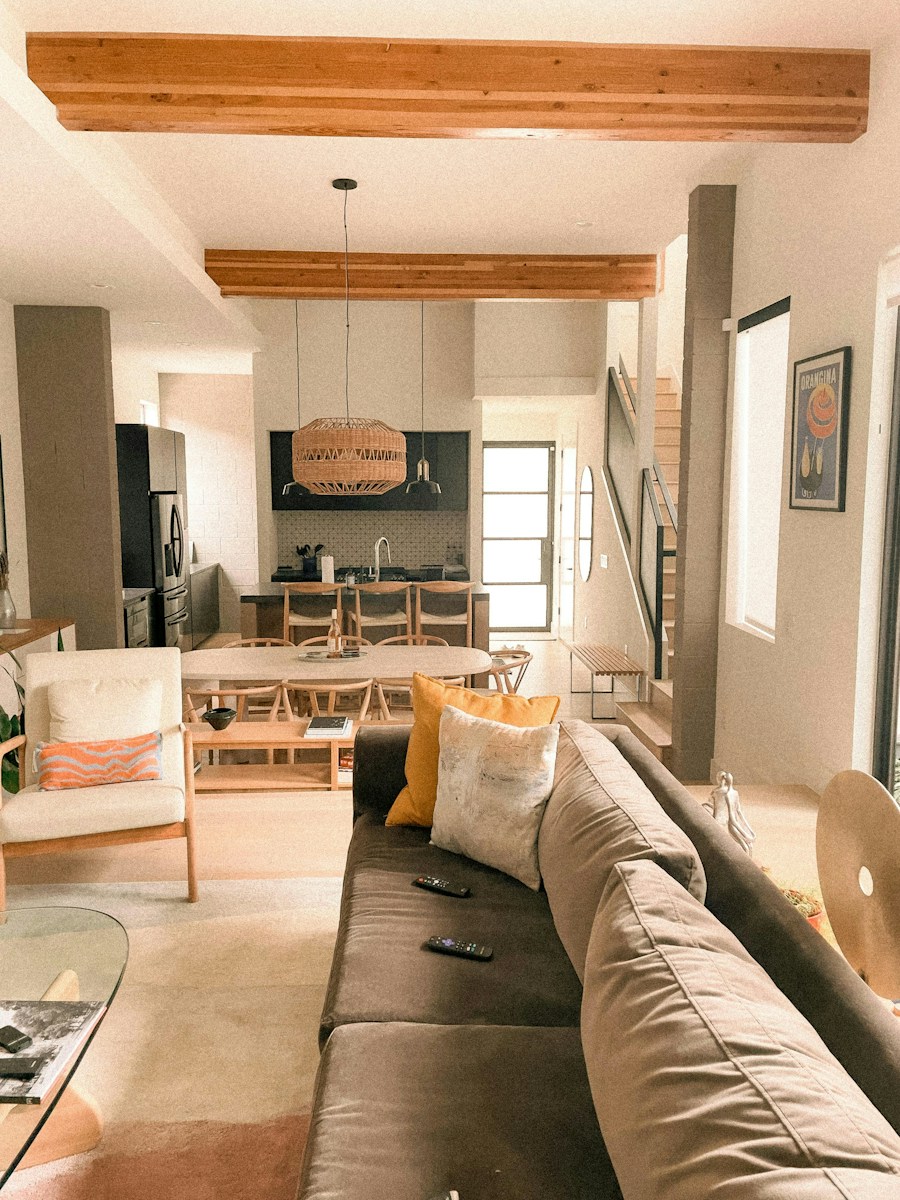
Holly Phillips moved into a small rental apartment and did what most people are told to do first: buy the furniture that everyone recommends for a compact living room. It wasn’t the desk ladder or the faux fur pelts that ended up haunting her. According to her own first-person account published on Real Homes, it was the budget chaise sofa, purchased quickly and confidently as the obvious starting piece for a small space, that turned into the biggest regret of her entire redesign.
The Piece Everyone Recommends First
A low-profile chaise sofa is one of those items that shows up on nearly every small-space furniture list: it looks compact in photos, it promises lounging room without the bulk of a full sectional, and it reads as a smart, space-conscious choice for a first apartment. Phillips bought hers under exactly that logic. What she got instead, by her own description, was a rushed purchase with seat depth she called essentially nonexistent and a build quality that gave out far faster than she expected. The piece that was supposed to solve her small living room ended up being the one she regretted moving into it in the first place.

Phillips isn’t alone in singling out a starter sofa as the purchase she’d take back. Heather Goerzen, Director of Design and Content at the design service Havenly, has described her own version of the same mistake: grabbing the first affordable sofa she came across for a new space, only to watch it lose buttons and sag within a year. She ended up spending more on a second sofa than she would have spent getting the first one right, which is the exact math that makes a “budget-friendly” first purchase into the most expensive one in a small-space redesign.
Why Small Spaces Punish The Wrong First Purchase
In a large home, a mediocre sofa is one disappointing piece among many. In a small apartment, the main seating is often the single largest object in the room and the one piece every visitor sits on and every photo of the space includes. There’s no second living room to balance it out and no easy way to hide poor proportions or bad upholstery in a room with 500 square feet or less. That’s part of why the stakes on a first furniture purchase are so much higher in a small space than they would be anywhere else: get the anchor piece wrong, and the whole room reads as unfinished no matter what you do around it.
It also explains why “buy the compact option first” is advice that so often backfires. Compact and comfortable aren’t the same thing, and a piece chosen mainly because it fits the square footage can end up failing on comfort, durability, or both. Phillips’s own list of regrets extended beyond the sofa to white bedding that stained easily and a desk ladder shelf that looked clever but had sharp, uncomfortable edges in daily use. The common thread across all of it wasn’t bad taste. It was prioritizing how a piece would photograph or fit on a floor plan over how it would actually hold up to daily life in a small footprint.
What A Redo Looks Like
Both Phillips and Goerzen describe eventually replacing their regretted pieces with something chosen more slowly and, in Goerzen’s case, at a higher price point that ended up being cheaper in the long run once the cost of the first purchase was factored in. Neither treats the story as a case against small-space furniture shopping altogether. Their point is narrower and more useful: the piece you buy first in a tight room is the one piece you can least afford to rush, because it’s doing more visual and functional work than any other item you’ll bring into the space.

The pattern shows up in the broader numbers too. Roughly a third of shoppers say they buy home decor specifically because it will look good online, according to a LendingTree survey on social-media-driven purchases, which tracks closely with the instinct to buy the piece that looks right for a small space in a photo rather than the one that will hold up to real use. If you’re furnishing a small space right now and reaching for whatever list promises the perfect first purchase, the more reliable question might be the one Phillips and Goerzen both learned the hard way: not whether a piece fits the room, but whether you’d still want it there a year from now.
Leave a Reply