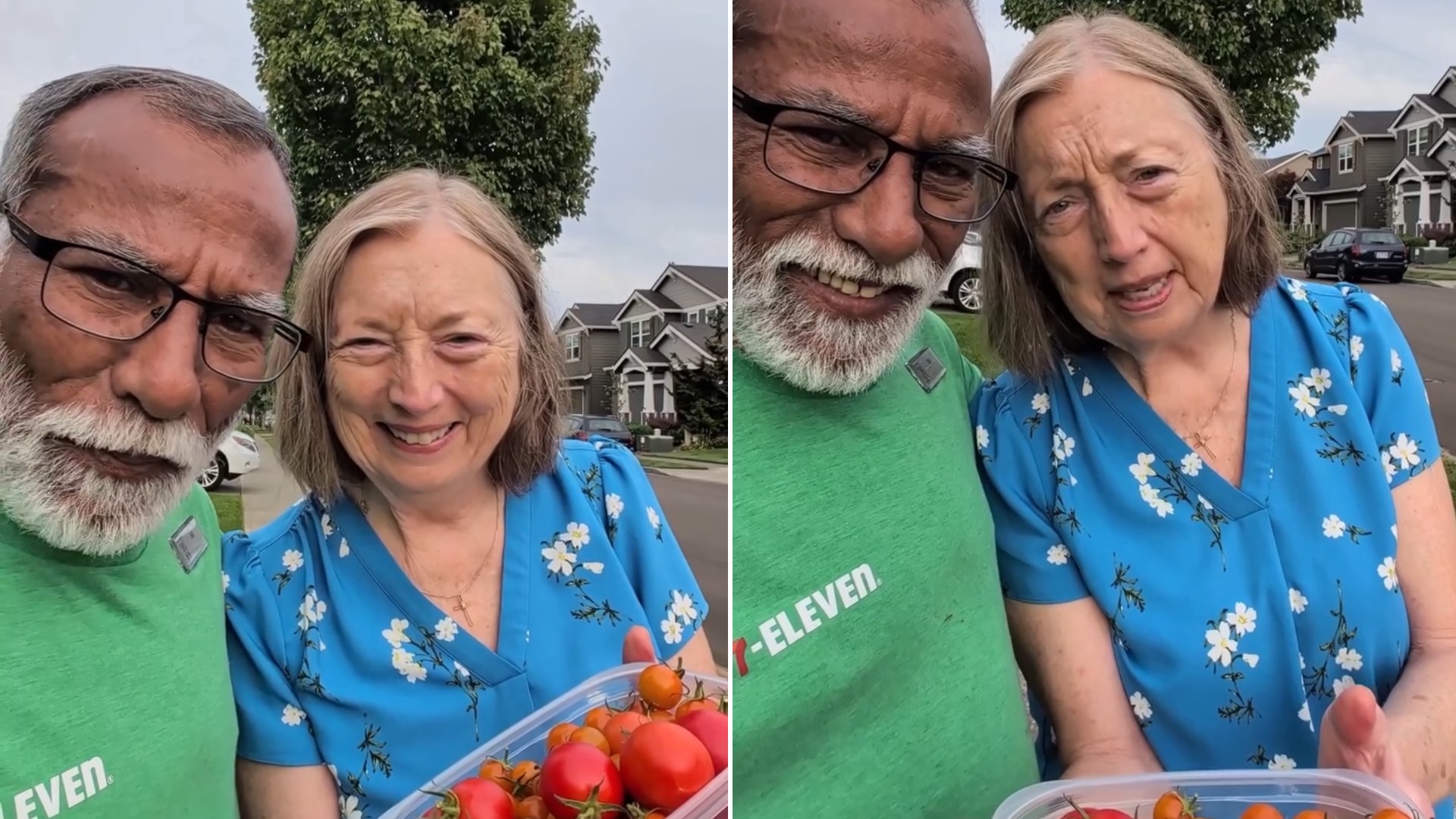
Not every neighbor story online is about conflict. In a warm, low-key Instagram video captioned “AMERICA & MY ACCEPTANCE IN THE COMMUNITY,” a man shares a spontaneous, friendly conversation with his older neighbor, who stopped by to bring him fresh cherry tomatoes from her own garden.
The gesture itself is small — a handful of homegrown tomatoes, the kind of thing neighbors have shared over fences for generations — but the man frames it as meaningful in a larger sense, tying the moment to his broader experience of feeling accepted in the community as an Indian immigrant living in the United States. His hashtags, referencing being Indian in the USA and the immigrant experience more broadly, make clear that the video is about more than produce; it’s about the texture of everyday belonging.
There’s a long tradition, in neighborhoods across the country, of garden surplus becoming a kind of informal social currency — zucchini left on a porch, tomatoes handed over a fence, herbs shared because there’s simply more than one household can use. It’s an unassuming ritual, but it carries real weight precisely because it requires no occasion and no formal invitation. A neighbor doesn’t need a holiday or an event to knock on a door with a few tomatoes; the gesture itself is the message, a small signal that says, in effect, I see you, and you’re part of this place.
For someone navigating life as a newer arrival in a country, that kind of unprompted kindness can carry outsized significance. Belonging in a new community often isn’t built through grand gestures but through a slow accumulation of ordinary moments — a wave from a porch, a conversation over a fence, a bag of tomatoes handed over with no expectation of anything in return. The man’s decision to share this particular exchange publicly, and to frame it explicitly around his acceptance in the community, suggests the moment landed as more than just a nice interaction; it read to him as evidence of something bigger — that he has found a genuine place among his neighbors.
His older neighbor, in bringing him something she grew herself rather than something bought, added a layer of personal investment to the gesture. Garden produce carries a kind of built-in sincerity — it took time and care to grow, and sharing it is an act that can’t easily be faked or performed for an audience, even if the moment eventually did end up being filmed and shared. The spontaneity of the visit, and the easy, friendly nature of the chat that followed, reinforced the sense that this was a genuine, unscripted moment of connection.
Videos like this one tend to resonate widely because they offer a counterpoint to the more contentious neighbor content that often dominates social feeds. Not every story about a knock on the door has to be about conflict; sometimes it’s simply about tomatoes, a conversation, and the quiet, cumulative feeling of being welcomed somewhere new.
Building Real Connection With Neighbors
Small, unprompted gestures — sharing extra garden produce, a wave hello, a brief conversation while checking the mail — are often what turn a street of strangers into an actual community. These gestures work precisely because they ask for nothing in return; the low stakes make them easy to offer and easy to receive. For newcomers to a neighborhood, whether recent immigrants or simply new residents, accepting these small invitations, and occasionally offering them back, can accelerate the slow process of feeling at home somewhere new. And for longtime residents, a simple gesture like sharing garden surplus costs little but can mean a great deal to someone still finding their footing in an unfamiliar place.
Leave a Reply