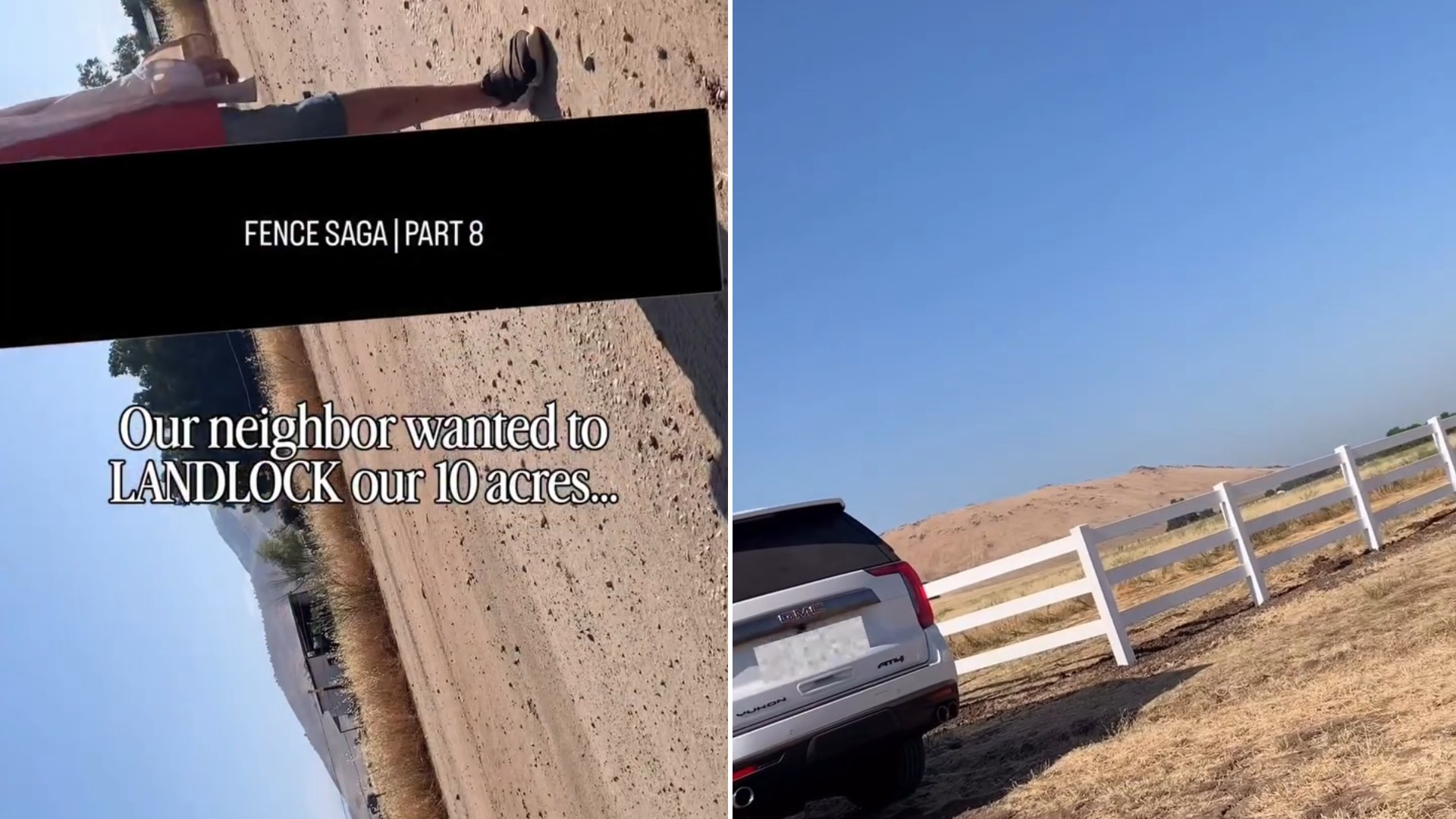
Buying rural land can sound like a straightforward escape from city living — more space, more privacy, fewer neighbors to navigate. One couple’s Instagram video complicates that picture, walking through what they describe as an ongoing dispute over property boundaries and legal easements that emerged only after they’d already closed on their land.
Their caption sets up the lesson plainly: “Buying land has taught us there are a LOT of things you don’t think to check until you suddenly need…” The sentence trails off into the video itself, but the implication is clear — there were details about the property, specifically around boundaries and easements, that the couple didn’t fully understand or verify before purchasing, and those gaps have since become the source of an active conflict with their neighbors.
Property boundaries and easements are two of the most consequential, and most commonly overlooked, details in a rural land purchase. Unlike a suburban lot with clearly surveyed and fenced edges, rural parcels can have boundaries that are less obvious on the ground, sometimes marked only by old survey pins, natural features, or simply longstanding but informal agreements between previous owners. An easement — a legal right for someone else, often a neighbor or a utility, to use a portion of the land for a specific purpose, such as accessing a landlocked property or running a shared driveway — can be even less visible to a new buyer, since it may exist only in old paperwork rather than anything physically marked on the land itself.
According to the couple, this is exactly the kind of gap that has caused their ongoing dispute. Whatever assumptions they made about where their land began and ended, or about who had the legal right to cross or use portions of it, apparently didn’t match reality once neighbors became involved. That mismatch between expectation and legal reality is a common thread in rural land disputes, and it’s often the kind of thing that only becomes an urgent problem well after closing — when a neighbor asserts a right of access, or a fence line turns out to sit on the wrong side of a property line.
The couple’s decision to document and share the experience turns what could be an isolating, frustrating legal headache into a cautionary tale for others considering a similar move. Rural land purchases have become increasingly popular in recent years, as more buyers look for space, privacy, or a lifestyle shift away from dense suburban and urban living. But that popularity has also meant more first-time rural buyers encountering the kinds of boundary and easement complications that longtime rural landowners and real estate professionals consider routine due diligence.
Their story is a reminder that rural land, despite its appeal as a clean, uncomplicated escape, comes with its own dense web of legal considerations — ones that don’t always announce themselves until a neighbor is standing at the edge of a disputed line.
What to Check Before Buying Rural Land
Before purchasing rural or undeveloped land, buyers should always commission a current, professional survey rather than relying on old plats or a seller’s description of the boundaries. A thorough title search is essential too, since it can reveal existing easements, rights-of-way, or other encumbrances that aren’t obvious just from walking the property. It’s worth specifically asking about access rights — both the buyer’s own access to the property and any rights neighbors or utilities may have to cross it. Talking to neighboring landowners before closing, when possible, can also surface informal understandings or long-simmering disputes that wouldn’t show up in paperwork. Rural land can be a wonderful investment, but like any real estate purchase, it rewards patience and thorough due diligence far more than it punishes a slower, more careful closing timeline.
Leave a Reply