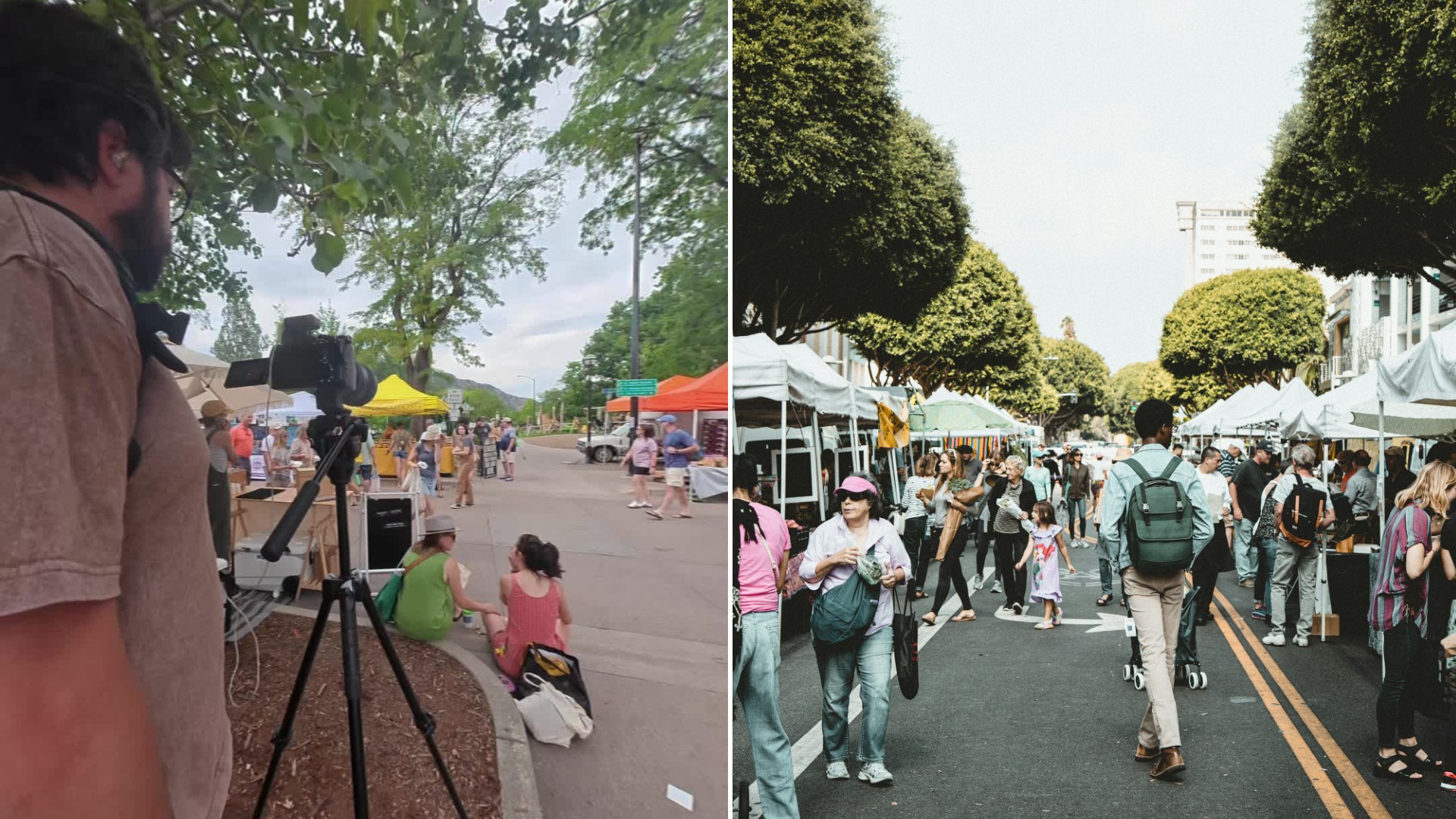
A confrontation in the middle of a public market has become the latest flashpoint in an ongoing, and often contentious, online debate about filming strangers in public. In the TikTok video, captioned bluntly “Foreign lady hates freedom,” a creator argues that he has a constitutional right to film in the market after a woman tells him she does not want to be recorded at all.
According to the creator’s own account of the exchange, the woman objected outright to being filmed, and he responded by asserting his right to record in the public space regardless of her objection. It’s worth being precise about what that claim represents: it is the creator’s own legal argument, made in the moment and framed for his audience, not a confirmed statement of the law as it applies in that specific location. Laws governing filming in public spaces vary by jurisdiction, and whether a market qualifies as public property, private property open to the public, or something else entirely can significantly affect what rights either party actually has — details that aren’t resolved simply by one party asserting them on camera.
This kind of confrontation has become a familiar genre online: a creator filming in a public setting, a bystander objecting, and an argument that quickly turns into a debate about rights, privacy, and the increasingly blurry line between documenting public life and recording individuals who have explicitly said they don’t want to be filmed. The creator’s framing of the exchange — invoking the Constitution and describing the woman as opposed to “freedom” — places the disagreement squarely within a broader, often ideologically charged conversation about filming in public that plays out regularly across social platforms.
The woman’s side of the exchange, as described, was simpler: she said she didn’t want to be recorded. That kind of objection is common, and for many people, being filmed without consent in a public setting — even when it may be legally permitted in a given jurisdiction — feels like an intrusion regardless of the letter of the law. The tension between what is legally allowed and what feels personally invasive is at the heart of nearly every version of this kind of confrontation, and this market encounter appears to be no exception.
Public markets, with their close quarters and constant foot traffic, are a particularly common setting for these disputes, since filming there is nearly unavoidable for anyone documenting the atmosphere or their own shopping trip, even when a specific individual becomes the unwilling focus of the footage. Without independent, jurisdiction-specific verification, it isn’t possible to say definitively whether the creator’s filming was legally permitted in this instance — only that he argued it was, and that the woman disagreed with being recorded regardless.
Filming in Public: What to Know
Rules around filming in public spaces vary significantly by location, and what’s legally permitted in one jurisdiction may not be in another, particularly when a space is privately owned but open to the public, like many markets. Even where filming is legally allowed, respecting a clear, direct request not to be recorded is generally considered good practice and can defuse a tense situation before it escalates. Anyone filming in public regularly is well served by understanding the specific laws of their own jurisdiction rather than assuming a blanket right applies everywhere. And for anyone who doesn’t want to be filmed, calmly stating that request — and moving out of frame if possible — is usually a more effective response than an extended confrontation, which often ends up amplifying the exact exposure the person was hoping to avoid.
Leave a Reply