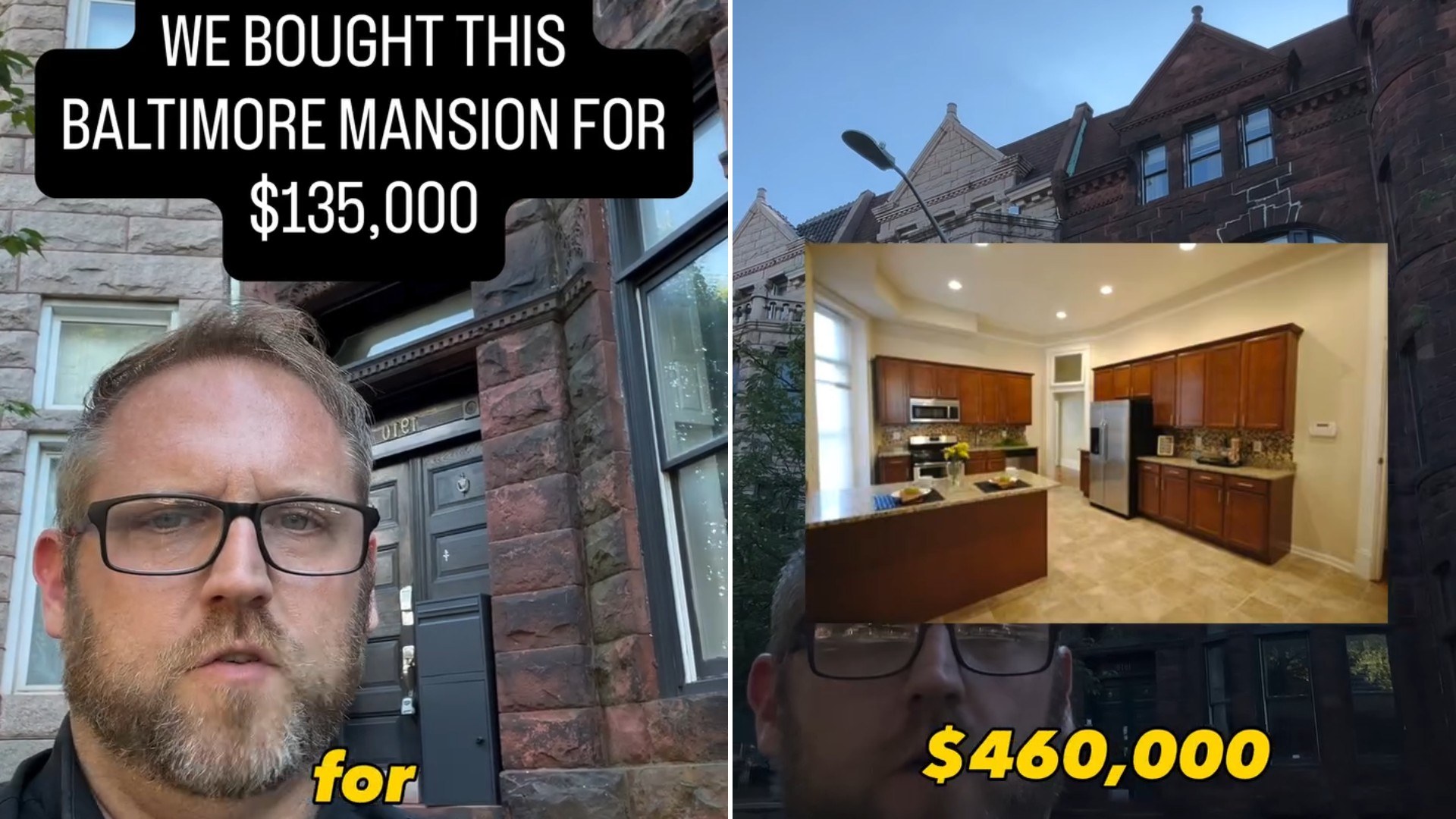
The mansion behind him is the kind of structure that photographs well even in its rough, unrenovated state, tall brick walls, historic detailing, the unmistakable bones of a once-grand Baltimore home that had clearly seen better days before an investor decided to take a chance on it. Standing in front of it, he walks through the numbers behind the entire deal, buying the run-down property, funding and managing the renovation, and eventually reselling it, all within less than a year.
What makes the breakdown compelling isn’t just the size of the final profit, though a $325,000 return is significant by any measure, it’s the transparency with which he walks through how that number came together. He references a tax break he was able to take advantage of as part of the deal, framing the entire project not as a lucky flip but as a calculated series of financial decisions, each one contributing to the ultimate outcome. It’s less a highlight reel and more an actual accounting of one specific transaction, presented plainly enough that viewers can follow the logic step by step.
Real estate investment content has exploded in popularity over the past several years, and videos like this one explain a good part of why. As @mdrealestateshow demonstrates by breaking down the actual financial outcome of a single specific property rather than speaking in vague generalities, transparency around real numbers tends to draw far more engagement than motivational talk about real estate wealth ever could, because viewers get something they can actually learn from rather than just something to aspire to.
Baltimore in particular has become something of a case study among real estate investors for a specific kind of opportunity, large, historic homes available at a fraction of what comparable architecture would cost in cities with tighter inventory and higher demand, paired with renovation costs that, while substantial, can still leave meaningful room for profit once the finished product is priced appropriately for its neighborhood. Cities with significant stock of older, architecturally distinct housing often present exactly this kind of opportunity for investors willing to take on the complexity and cost of a major renovation rather than pursuing a simpler, cosmetic flip.
For anyone genuinely interested in this kind of project, rather than just watching it unfold from the outside, a few realities are worth understanding before assuming this kind of profit margin is easy to replicate. Renovation costs on historic properties frequently run higher than initial estimates, since older homes often reveal outdated electrical systems, plumbing that doesn’t meet current code, or structural issues hidden behind original plaster and molding that only become visible once work begins. Financing a project like this also typically requires either substantial cash reserves or specialized renovation loan products, since traditional mortgages aren’t usually structured to fund a purchase-plus-renovation deal on a property in poor initial condition.
Tax strategy, the piece specifically referenced in this video, is another area where serious real estate investors often gain a meaningful edge over casual ones. Depending on how a property is held and how a project is structured, investors may be able to access depreciation benefits, deductions tied to renovation expenses, or other tax provisions designed to encourage exactly this kind of investment in aging housing stock. None of these strategies are secret, but they do generally require working with an accountant or tax professional who specializes in real estate rather than relying on general tax software, since the rules involved are detailed and the cost of getting them wrong can be significant.
What this video ultimately offers, beyond an impressive final number, is a rare, relatively transparent look at how a real estate flip actually comes together financially from purchase to resale. For viewers who dream about real estate investing but have never seen the actual math behind a completed deal, watching someone walk through the purchase price, the renovation investment, the tax considerations, and the final sale price in sequence demystifies a process that too often gets reduced online to a simple before-and-after photo with a profit number slapped on top, without any explanation of everything that had to happen in between to get there.
There’s a reason this kind of transparent, numbers-forward content continues to gain ground over flashier renovation reveals: audiences increasingly want to understand not just what a finished flip looks like, but whether the underlying strategy is actually replicable, or at least instructive, for their own circumstances. A video that walks through purchase price, renovation cost, tax strategy, and final profit in sequence gives viewers something a glossy before-and-after never can, a genuine framework for evaluating whether a similar opportunity, in their own city or their own budget range, might actually make financial sense.
It’s also worth pointing out how much local market knowledge factors into a deal like this one, something that rarely comes through in a quick highlight reel. Knowing which neighborhoods in a city like Baltimore are undervalued relative to their long-term potential, understanding realistic renovation costs for a specific type of historic construction, and having relationships with reliable contractors are all things that typically take years to build, and they matter just as much to the final profit number as the purchase price or the sale price ever does.
Leave a Reply