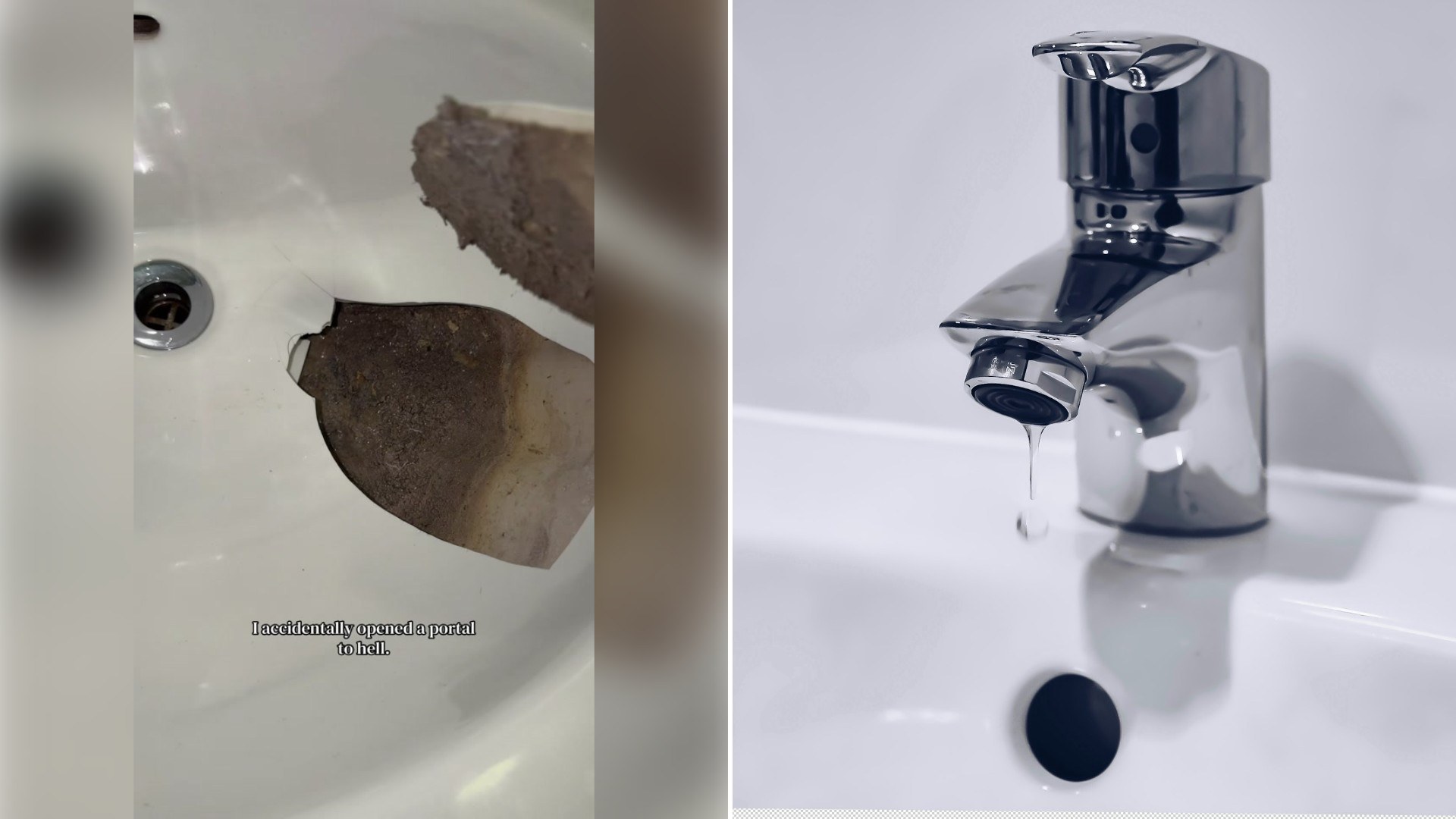
It started, as these things often do, with something small and accidental. A soap dispenser, the kind mounted directly into a sink basin, broke during ordinary use, leaving behind a dark, uneven hole where a clean fixture used to sit. The creator leans into the moment with a joke that immediately sets the tone for the video, saying it looked like he’d accidentally opened a portal to hell, a line that lands because the hole really does look exactly like something no homeowner wants to discover in the middle of a normal day.
What follows isn’t just a cosmetic repair. As he narrates the aftermath, it becomes clear that the broken dispenser exposed something more significant happening behind the sink, a bigger problem hiding just out of sight that the small accident had inadvertently uncovered. Rather than simply patching over the hole, the video documents the spontaneous DIY renovation that followed, turning what should have been a five-minute fix into a genuinely larger project he clearly hadn’t planned on tackling that day.
@ashtonboughtahouse you’d think after 2 months of living here i’d be done finding surprises but nah LMAO #cleanhouse ♬ original sound – ashton.
There’s a very specific genre of home content built around exactly this kind of moment, the small accident that reveals a much bigger issue, and it tends to perform well precisely because of how relatable the setup is. As @ashtonboughtahouse demonstrates by turning a broken soap dispenser into an impromptu renovation project, homeownership has a way of teaching people that almost nothing behind a wall or under a fixture stays isolated, one small failure point is often connected to a larger system that’s been quietly deteriorating out of sight.
Sink and countertop fixtures, including built-in soap dispensers, typically rely on a fairly simple mechanical connection, a pump mechanism threaded through a hole in the counter or sink deck, feeding down into a reservoir bottle stored underneath. When that seal or connection fails, whether from age, a hard knock, or simple wear over years of use, it can allow water to seep down into the cabinet or wall cavity below rather than staying contained where it belongs. Left unnoticed, that kind of slow leak can cause exactly the sort of hidden damage this video captures, softened or rotted material behind the visible surface that only becomes obvious once something breaks open and exposes it.
For homeowners who want to catch this kind of issue before a broken fixture forces the discovery, a few simple habits can help. Periodically checking underneath sinks for any sign of moisture, staining, or a musty smell, even when nothing appears to be actively leaking, can catch a slow problem long before it becomes a visible one. Any fixture that feels loose or wiggly when used, whether it’s a soap dispenser, a faucet base, or a sprayer attachment, is worth investigating sooner rather than later, since looseness is often the earliest physical sign that a seal has started to fail. And when a small fixture does eventually need replacing, it’s worth taking a moment to actually inspect the area underneath and behind it before simply installing a new one, since that’s often the only real opportunity to catch a developing problem before it’s sealed back up and hidden from view again.
There’s also a genuinely useful mindset shift embedded in how this video approaches the situation. Rather than treating the broken dispenser purely as bad luck, the spontaneous renovation that follows reframes it as an opportunity, an unplanned but ultimately useful chance to address a problem that would have kept quietly worsening behind the scenes if the accident hadn’t happened at all. That reframe is worth borrowing for anyone facing their own version of an unexpected home discovery: a broken fixture, an unplanned repair, or a project that suddenly grows larger than expected isn’t necessarily a setback, it can just as easily be the moment a bigger problem finally got caught early enough to fix properly, rather than being left to fester until it turned into something far more expensive down the line.
There’s a reason “portal to hell” jokes and similar dark humor show up so consistently in this genre of home renovation content: laughing at the absurdity of a small accident spiraling into a bigger project is often the fastest way to make an unwanted expense feel bearable rather than defeating. That same lightness, paired with the genuinely useful habit of actually investigating rather than simply patching over what’s found, is what separates a frustrating surprise from a productive one, and it’s exactly the combination this video manages to capture in under a minute of footage.
There’s also a reminder here about the value of curiosity in the face of an unwelcome surprise. It would have been easy to simply patch the hole, replace the dispenser, and move on without ever investigating what caused the damage in the first place. Choosing instead to dig a little deeper, even when the initial discovery was unpleasant, is what turned a minor accident into a genuinely useful renovation, and that same instinct, treating a small problem as worth understanding rather than just covering up, tends to save homeowners from repeating the same surprise again down the line. That kind of accidental discovery is also a useful nudge for anyone who has never looked closely at how their own under-sink or built-in fixtures are actually plumbed, since a five-minute mental audit now can spare homeowners a much bigger and far more expensive surprise later on.
Leave a Reply