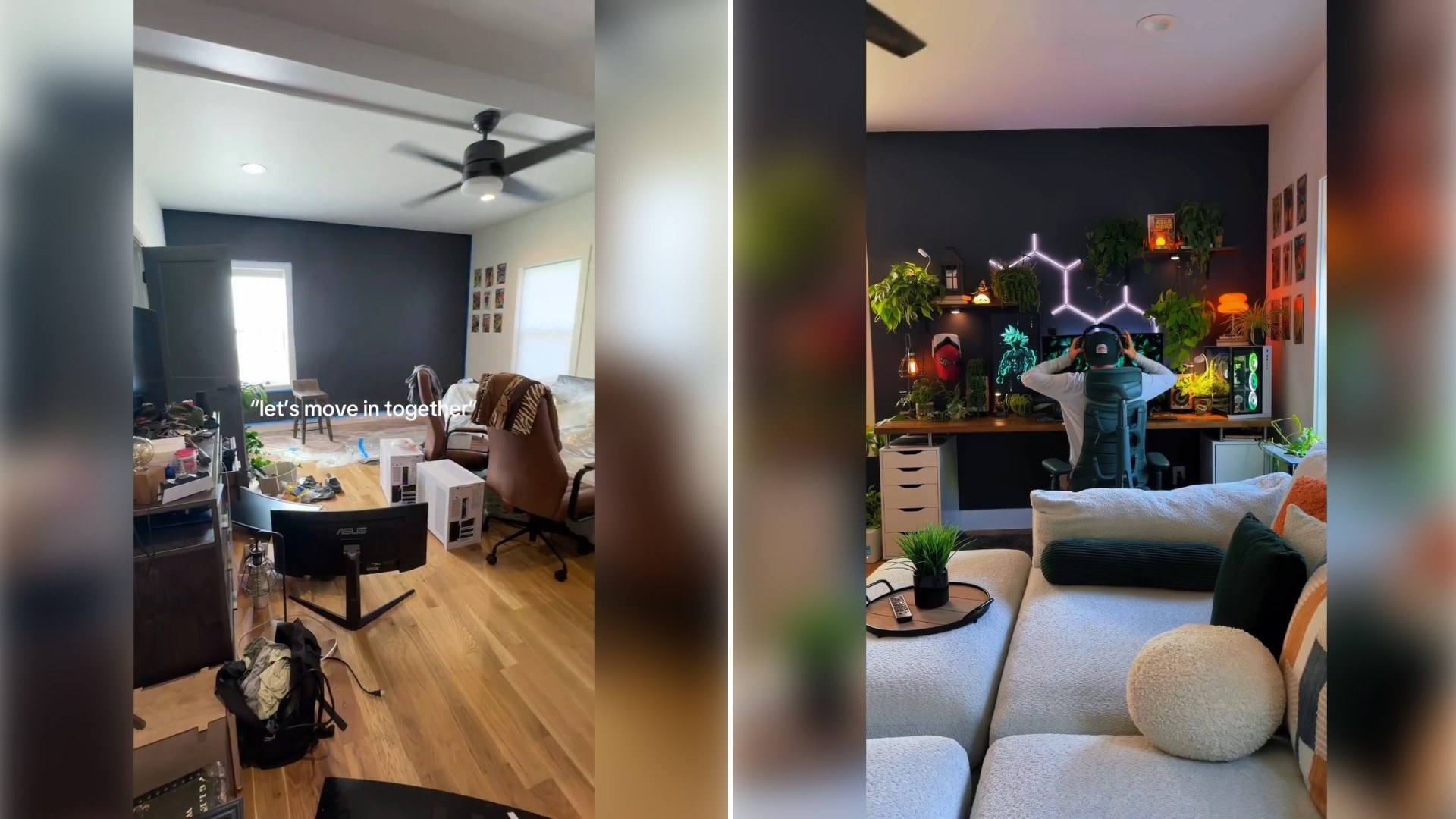
After a couple decides to move in together, they take on a cluttered, mid-renovation room full of painting supplies and transform it into a fully furnished, styled shared living and gaming space. The reel is a before-and-after room reveal tied to the couple’s decision to combine households. It’s a small story on its face, but it’s told with enough specificity, real numbers, real rooms, real reactions, that it ends up saying something bigger about how people actually live.
Part of what makes the clip work is how little it leans on the renovation itself to carry the emotional weight. The real story is the decision behind the room, not the paint or the furniture, and the video keeps that decision front and center rather than burying it under a standard before-and-after format.
View this post on Instagram
As @cozeecouple frames it, there’s no attempt to smooth over the messier parts of the story, and that candor is a large part of why the post has resonated with people well beyond the creator’s usual audience.
Moving in together is one of those milestones that rarely gets its own dedicated home-transformation content, overshadowed by bigger, splashier categories like first-home purchases or full renovations. This video fills that gap by treating the decision itself, two households folding into one, as reason enough for a before-and-after reveal, even though no money changed hands on a mortgage and no walls came down.
The room’s starting condition, cluttered with painting supplies mid-renovation, says something specific about how the space was actually used before the couple’s decision gave it a new purpose. A spare room mid-project, neither fully functional nor fully abandoned, is a familiar limbo state in a lot of households, the kind of space that stays unfinished indefinitely until a new reason to finish it finally shows up.
What makes combining two households into one shared space harder than a standard single-person room makeover is the negotiation baked into every decision. A shared living and gaming space has to account for two people’s existing furniture, two people’s style preferences, and two people’s sense of what the room is actually for, which is a fundamentally different design problem than furnishing a room for someone living alone.
The choice to style the finished room specifically as a shared living and gaming space, rather than a more generic living room, signals something about how this particular couple negotiated that compromise. Rather than defaulting to the most neutral, least personal furnishing choice available, they built the room around a shared activity, which tends to produce a more cohesive result than trying to split a space down the middle between two separate sets of preferences.
There’s also a quieter emotional beat running underneath the physical transformation. A room full of painting supplies and half-finished projects can read as a kind of limbo, evidence of plans that hadn’t been followed through on yet, and finishing it specifically in response to a relationship milestone gives the renovation a sense of occasion that a routine room refresh wouldn’t carry on its own.
Moving-in-together content like this one tends to resonate with a slightly different audience than typical renovation reveals, viewers who are themselves navigating the same transition, or who remember doing it, and recognize the specific logistics of merging two separate sets of belongings, furniture, and habits into a single functional room.
Comment sections under reveals like this one tend to fill with people sharing their own move-in-together stories, what they kept, what they argued over, what surprised them about combining two homes into one, and that shared recognition is part of what gives a relatively modest room reveal this much staying power with an audience well beyond the couple’s existing followers.
Whatever projects this couple tackles next in their shared home, this particular room reveal already captures something a lot of newly combined households recognize instantly: the moment a space stops being two people’s separate stuff crammed together and starts actually feeling like it belongs to both of them.
There’s also a practical dimension to merging two households that rarely gets its own spotlight: the sheer logistics of deciding what stays, what goes, and what gets replaced entirely once duplicate furniture and overlapping belongings collide in one space. A couple combining homes often ends up with two of nearly everything, and figuring out which version survives the move is its own quiet negotiation long before any paint goes on the walls.
Gaming setups in particular add a layer most shared-space negotiations don’t have to deal with, since they tend to come with their own dedicated furniture, wiring, and sightline requirements that a standard living room arrangement was never designed around. Folding a gaming setup into a shared living space rather than relegating it to a separate room is its own small signal about how this couple chose to treat the hobby, as something to build the room around rather than something to hide in a corner.
For anyone approaching a similar transition, the lesson embedded in this reveal isn’t really about gaming setups or sectional sofas specifically, it’s about treating the shared space as something genuinely new rather than one person’s old room with the other person’s stuff added in afterward. That distinction, between merging and simply moving in, is often what determines whether a shared space actually feels shared once the dust settles, long after the paint has fully dried and the leftover supplies have finally, at last, been put away for good.
Leave a Reply