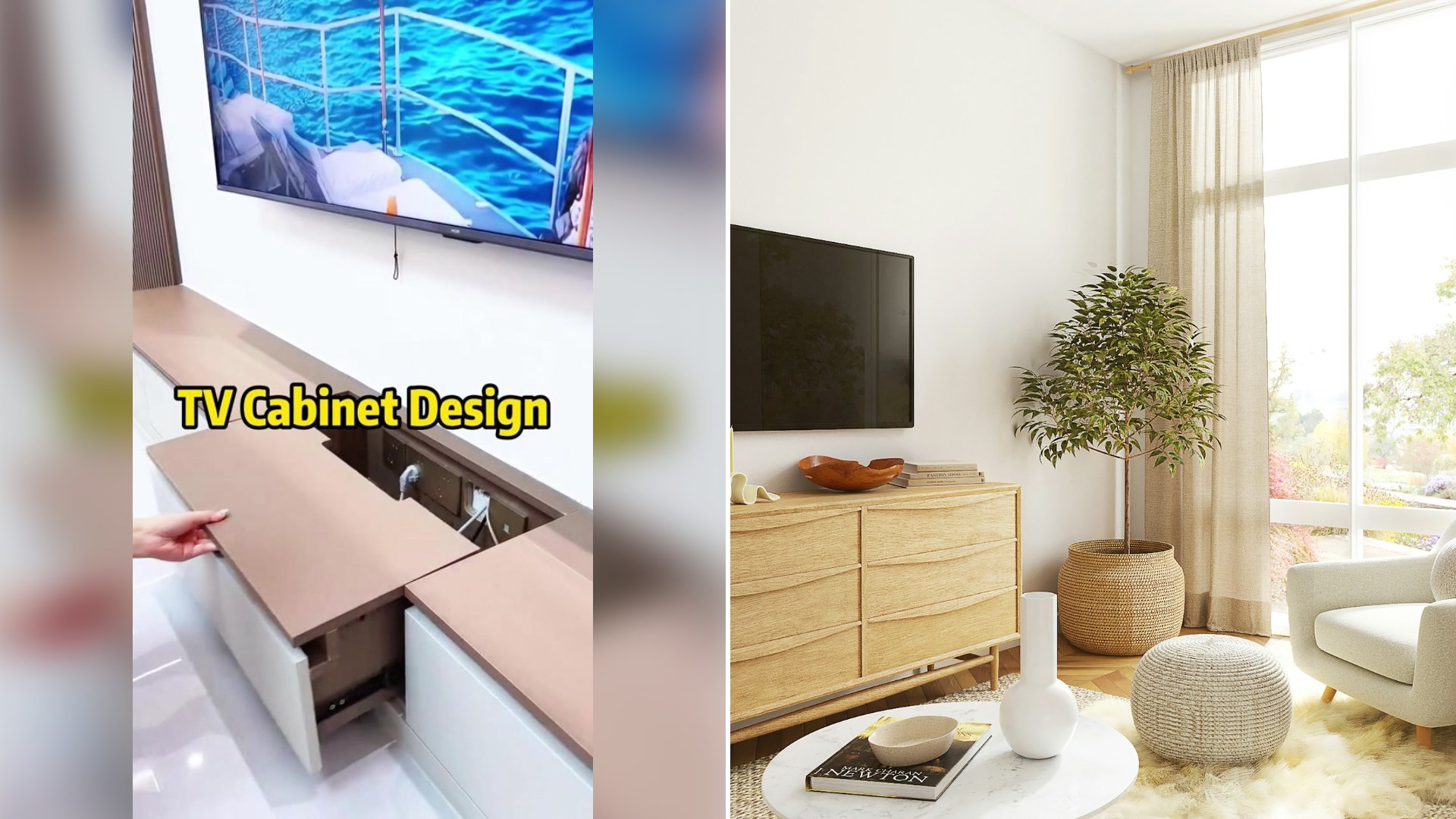
If there’s one universal frustration in modern home design, it’s the tangle of cords and blinking router lights that no amount of styling seems able to hide, and @pahome01 (TikTok) offers a genuinely elegant solution: a custom TV console drawer where a simple pull reveals a concealed compartment built specifically to hide power outlets and a router, shown installed and functioning in a real living room.
Cable management has quietly become one of the defining design challenges of the modern home, a problem that simply didn’t exist in anything like this form a generation ago. As the number of connected devices in an average living room has multiplied, routers, streaming boxes, gaming consoles, speakers, so has the visual clutter they generate, and that clutter undercuts even the most carefully styled room if it’s left in plain view.
What makes this particular solution stand out is the specific attention paid to router placement rather than just general cord concealment. Routers present a unique design problem because they need airflow and, ideally, an unobstructed signal path, which means simply hiding one in a fully enclosed, airtight cabinet can actually degrade Wi-Fi performance throughout the home, a tradeoff many well-intentioned hidden-storage solutions get wrong.
This kind of custom furniture work also reflects a broader trend in residential design toward what might be called invisible technology integration, built-in charging stations, concealed speaker wiring, furniture designed from the outset to accommodate the devices we actually use rather than treating them as an afterthought to be dealt with once the room is otherwise finished.
There’s a real design lesson here about the value of custom millwork over off-the-shelf furniture for specific functional problems. A mass-produced TV console simply can’t account for the precise outlet placement, cable routing, and ventilation needs of any given living room, which is exactly the gap that custom builders and designers are increasingly filling, treating furniture less like decoration and more like functional infrastructure.
It’s also worth noting how satisfying this kind of reveal is purely on a mechanical level, independent of its practical benefit. There’s something inherently pleasing about a smooth, well-engineered drawer or panel mechanism, the same appeal that drives interest in hidden doors and secret compartments generally, just applied here to a genuinely everyday problem rather than a novelty.
This kind of content also serves real educational value for homeowners working with a contractor or custom furniture maker of their own. Seeing a finished, functioning example of concealed tech storage gives people a concrete reference point and vocabulary for describing what they want, rather than vaguely explaining that they’d like their cords “to not be visible” without a clear sense of how that’s actually achieved.
There’s also a broader principle at work worth applying elsewhere in the home: solving a recurring daily annoyance with a one-time design investment. A well-built concealed compartment eliminates a frustration that would otherwise resurface every single day, a kind of design return on investment that’s easy to overlook in favor of more visually obvious upgrades.
In the end, what makes this reveal so satisfying isn’t drama, it’s genuine usefulness. Not every great design idea needs to involve a secret room or a buried apartment, sometimes the most impressive feature in a home is the one that quietly solves a problem nearly everyone has, hidden behind a drawer nobody would think twice about.
Leave a Reply