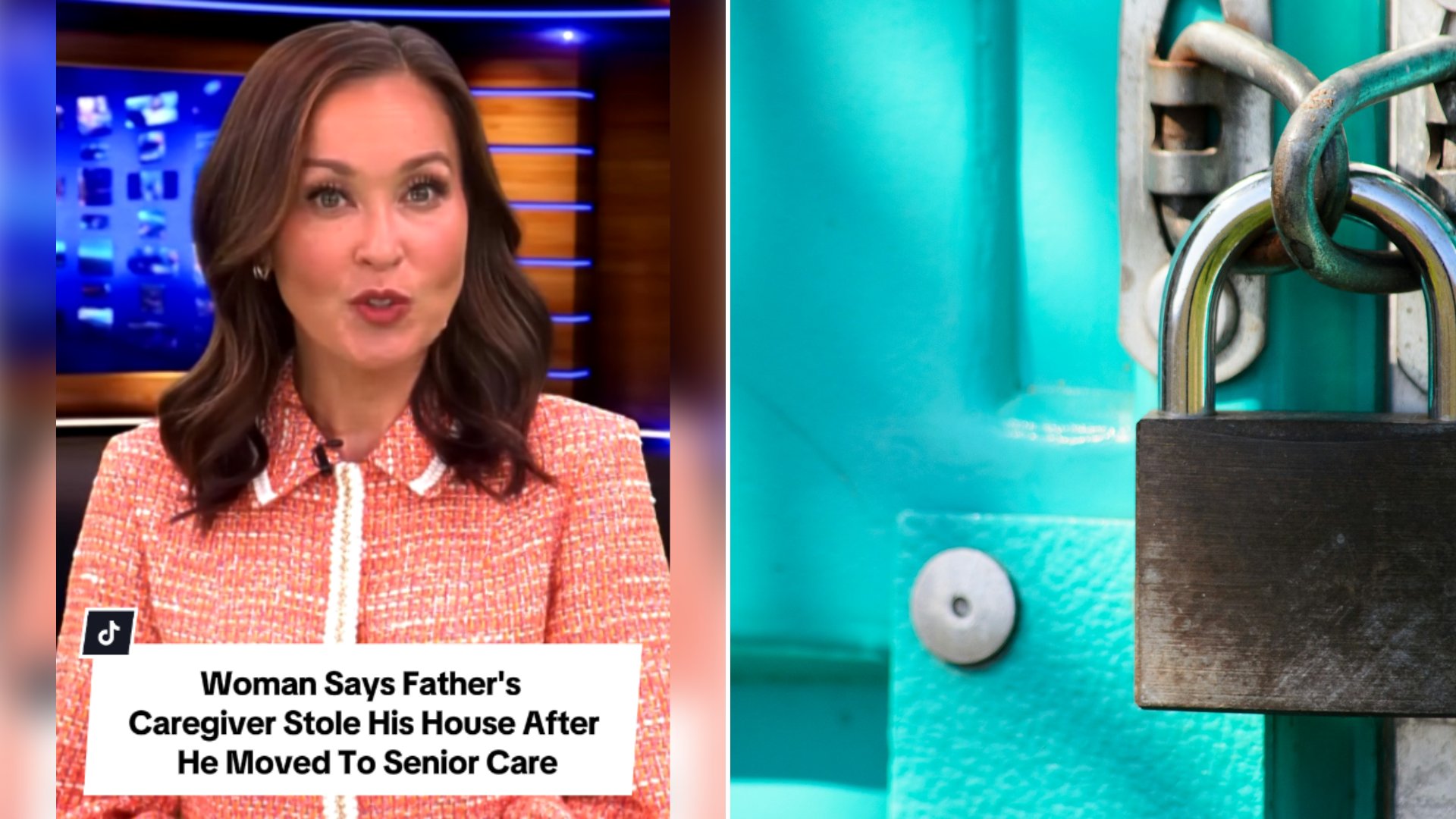
A daughter says she drove to her father’s house in South Carolina after weeks without hearing from him, found that her key no longer worked, and rang the doorbell camera. According to the video, the woman who answered told her that her father had died three days earlier.
That is where a 2 minute 43 second segment on the TikTok account @insideedition begins its account of what the daughter describes as a house taken out from under an elderly man. Everything that follows in the segment is her version of events, and the video says the caregiver at the center of it could not be reached for comment.
The daughter’s description of what she saw inside is specific. In the segment she says the walls had been painted orange, her family’s photos were gone, and the house was inhabited by strangers, including children she did not know. “Who are these people?” reads the on-screen text over her interview, and in her words: “This is my house. I couldn’t believe it.” The segment says she got in through an unlocked window and that her father’s belongings were gone.
Then, she says, the woman who lives there arrived. The segment has the daughter asking where her father’s things were, and the woman shouting back that she had broken into her house. The woman called the police. In the segment’s telling, the daughter ended up in handcuffs for allegedly trespassing, spent three days in custody and was released, and she says the charges were later dropped.
The segment then lays out what she says happened to her father. A nurse hired through an agency about three months earlier to care for him was, she says, the woman living in the house. Less than a month after the nurse started, her father was moved into a senior living facility. Two weeks after that, according to the video, the deed to his house was transferred for five dollars. She puts the house’s real value at $330,000. She says the nurse began moving furniture out one day.
A neighbor interviewed in the segment says what was happening at the house made him suspicious. The daughter also claims the nurse dipped into her father’s bank account, bought a car two hours after he died and went on shopping sprees. “And the police are doing absolutely nothing,” she says. The segment closes with a status line: she has filed a civil lawsuit to try to get her father’s home back, and it is still pending.
She says she hired the nurse to care for her father, not to steal from him. Nothing in the video establishes that anyone did steal; the allegations are hers, and the lawsuit is the place where they will be tested.
What a homeowner or an adult child can take from a case like this is mostly about catching a deed change early, because in her account the house changed hands within weeks of her father leaving it. The FBI’s Newark field office, writing about land and title fraud, recommends setting up title alerts with the county clerk’s office, which can email you when something is filed against a property, and notes that not every county offers the service. It also suggests setting up online search alerts for the property address and asking the local police department whether it runs property checks. Its guidance is aimed at owners of vacant land, but the alert tools are the same ones a family can point at an elderly parent’s house. The FBI’s page is at fbi.gov.
Look up the recorded deed yourself rather than relying on what anyone tells you. County registers of deeds keep the recorded documents, and the five dollar figure in this story is the kind of detail that shows up there. The South Carolina Department of Revenue’s deed recording fee guidance lists transfers of property valued at $100 or less among the deeds exempt from the recording fee, and says the affidavit filed with an exempt deed must state the reason it is exempt and be signed by someone connected with the transaction. Willfully filing a false affidavit is a misdemeanor, according to the department. Reading the recorded deed and its affidavit tells you who signed, who received the property and what reason was given.
If you hire in-home care for a parent, write down the agency name, the caregiver’s start date and every date the parent’s address, bank access or paperwork changes. The timeline she gives in the segment, a start date, a move to senior living within a month, a deed transfer two weeks later, is the type of record that is easiest to build while it is happening. Keep a second person on the parent’s accounts and on any alert notifications so that a locked front door is not the first sign of a change.
If something does go wrong, the FBI says on the same page that it can help stop wire transfers and recover money when a report is made quickly, within about 72 hours, and takes reports at tips.fbi.gov and ic3.gov. A civil suit like hers is the route the segment says she took to try to get the house back.
More from Willow and Hearth
- San Francisco Officials Sue Over a Forged Deed Scheme That Let Strangers Claim a Four Million Dollar Vacant Mansion Eight Times in a Year
- Neighbors Spend Every Day Helping a Struggling Elderly Woman With Television, Shopping, and Transportation, Then Discover Her Absent Son Collects $1,500 a Month in Government Caregiver Funds for Work He Never Performs
- Maryland Homeowner Spent the Summer Renovating a House to Sell and a Stranger Moved In Before It Ever Hit the Open Market
Leave a Reply