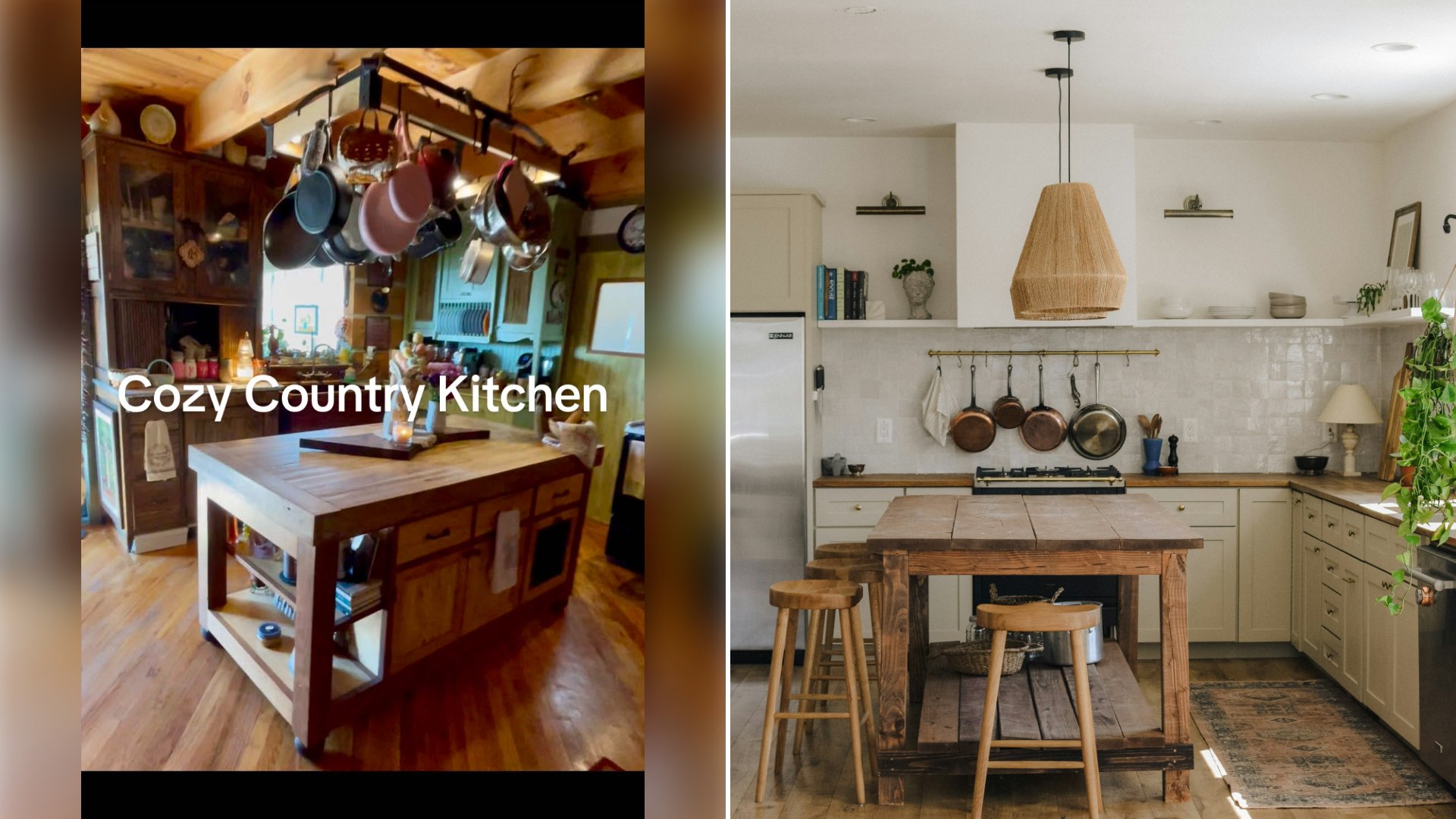
Some kitchens are designed from a catalog. Others are assembled slowly, one handmade piece at a time, until every corner has a story attached. The woman behind @bradford.pair says hers belongs firmly in the second group. In a kitchen tour she shared on social media, she opened with a line that sums up the whole room: it did not come from the showroom. It came, she says, from years of love, prayer and her husband’s hands.
@bradford.pair
Furniture Instead of Builder Grade
She explains that the couple slowly replaced the old builder grade cabinets with pieces that feel more like furniture than a cookie cutter kitchen. That choice shapes everything else she shows. Instead of a wall of matching boxes, the room is made up of individual pieces with their own character, each with a job to do.
The first example is a Hoosier cabinet, which she says cleverly hides the dishwasher. Hoosier cabinets were once common in American kitchens, a freestanding workstation with storage, a work surface and often a built in flour bin. Using one to disguise a modern appliance is a smart way to keep the old time look without giving up convenience.
A Sink Made of Mahogany
One of her favorite pieces is the sink. She says her husband built a solid mahogany sink. Mahogany is known for its rich color and its strength, and it is a bold material to bring near water. Wood near a sink needs a protective finish and regular attention, so a piece like this is a real commitment. Her pride in it is easy to hear in her description.
Storage With Personality
She points out a flour bin on one side of the island, just like the one her Mamaw used to have. On the other side of the island there is a bin for taters and onions. Small touches like these tie the room to family memories while serving practical needs.
There is also a little coffee bar set up on what she calls the old timey green cabinet. The top of the red piece, she says, looks like an old pie safe. Color is clearly welcome here, and the mix of green and red cabinetry keeps the room from feeling like a showpiece.
Even the refrigerator joins in. She says it is wrapped in oak to blend right in, and the family still has access to the water and ice dispenser. For anyone who does not care for the look of stainless steel in a country kitchen, this is a clever solution that keeps the function and hides the appliance.
Quilted Steel Behind the Stove
Behind the stove, she says the couple used quilted steel for the backsplash and for the hood. Textured metal is a good choice around a cooking area because it handles heat and is easy to wipe clean. The quilted pattern also nods to the handmade quilts so many families keep in their homes.
The Island With Cannonball Feet
She calls the island the heart of it all. It sits on cannonball feet that her daddy gave her, and its top is made from the last spalted maple from their property. Spalting is the pattern of dark lines and color changes that appears in wood as it begins to be colonized by fungi. When the wood is dried and sealed at the right time, the markings become a prized feature, and no two boards look alike.
The phrase the last spalted maple carries weight. It suggests that what remained of the maple from their property is now part of their daily life.
Heirlooms in the Room
She closes with two pieces that bring earlier generations into the kitchen. There is a huge wardrobe that her husband’s great grandfather built, and a butcher block that his grandfather once used. Her final words are modest: it is not fancy, but it is theirs.
Ideas You Can Borrow
You do not need a workshop or a mahogany plank to apply the lessons in her tour.
Choose furniture over fixtures. Freestanding hutches, pie safes and buffets can add storage and character, and they can move with you if you ever relocate. A secondhand cabinet can hide a dishwasher or a microwave much the way her Hoosier does.
Reuse what you already have. A family heirloom, such as a flour bin, a cutting board or an old table, can become the focus of the room. Ask relatives which pieces they are willing to pass down.
Disguise the appliances. Panels, wraps and cabinet fronts can make a refrigerator or dishwasher blend into the cabinetry. Check the manufacturer’s guidance for ventilation and clearance before you cover anything.
Mix finishes carefully. Her tour combines wood, painted cabinets and metal. A good rule is to repeat each finish at least twice in the room so it feels intentional.
Think about the work triangle, but live in the room first. She says the couple slowly replaced their cabinets, and a gradual pace like that gives you time to learn how you actually cook and move before committing to each change.
Protect natural wood. Whether it is a butcher block, a maple island or a mahogany sink, use a food safe finish where food touches the surface and reapply oil or wax as the wood needs it.
Why Slow Kitchens Feel Richer
There is something appealing about a room that was never finished in a single weekend. She describes a kitchen put together slowly, over years, from pieces with meaning. The result, in her words, is a kitchen where every corner tells a story.
Her tour is also a reminder that home improvement does not have to be a race. If a project takes years because the budget, the materials or the time are limited, the end result may feel more personal than anything delivered in a month. Start with the piece that matters most, build or find something with meaning, and let the rest follow.
Leave a Reply