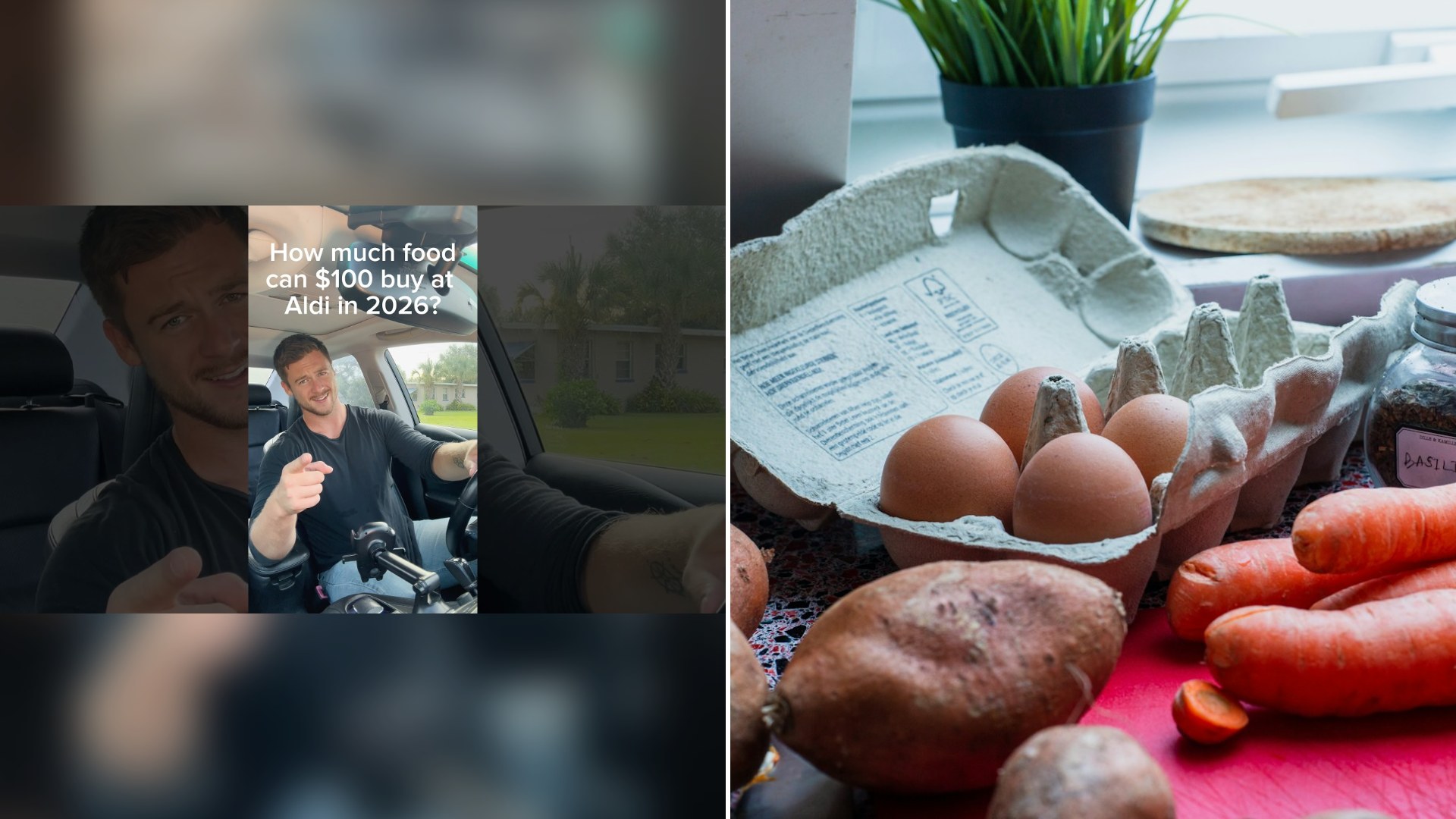
How far does $100 stretch when you are feeding a family of seven? Joel Hunter, who posts on YouTube as @joel.hustle, set out to answer that question in a short grocery run, and the twist is where the money came from. He says it took him 6 hours and 53 minutes of DoorDash deliveries to earn just over $100, and he then walked into Aldi to turn every dollar of it into food for his family.
Trading a Long Shift for One Cart
Joel explains that his previous upload covered the delivery shift itself, so this one picks up at the store. He enters Aldi with his cash and a quarter for the cart, and sums up the whole plan with a line: “Have my $100 and my quarter.” His goal is simple. He wants to see how much food a full shift of gig work buys in 2026 for a household of seven.
A quick note on the numbers before the list. The automatic captions on his upload dropped decimal points throughout, so the prices below were reconstructed from context and may be off by a few cents. One figure is especially unclear: the ground beef is captioned at $22.74, but the weight is garbled, so treat that one as approximate.
What Went Into the Cart
According to the prices he reads out, Joel started with pantry staples. He picked up four cans of pinto beans at 85 cents each, two loaves of bread at about $1.45 each, old fashioned oats at about $3.99, a two pound bag of pasta at about $1.89, and two cans of tomato sauce at about 47 cents each. Twenty soft taco tortillas came to about $2.73.
Fresh produce followed. He shows strawberries at about $2.29, blueberries at about $3.49, bananas at about 47 cents a pound (roughly four pounds, for about $1.88), a bag of apples at about $1.99 and a bag of oranges at about $2.89. Celery was about $2.59, sweet potatoes about $2.99 and red onions about $2.49.
For protein and dairy, he reads out a gallon of milk at about $2.71, a dozen eggs at about $1.66, and two blocks of cheese at about $1.75 each. Six pounds of chicken breast came to about $13.32 and four pounds of chicken drumsticks to about $4.37, alongside the ground beef and a 16 ounce package of butter at about $2.89.
With roughly $12 left, he says he added vegetables: broccoli at about $3.85, sweet corn at about $2.99 and zucchini at about $1.39. His last grab was six avocados for about $3.15.
The Checkout and the Question
At checkout, Joel says he hoped $100 would be enough. The receipt came to about $100, and a small rounding adjustment brought his cash total to exactly $100. He then shows a final look at everything he bought.
The closing reflection is where the story lands. Joel repeats that earning the money took 6 hours and 53 minutes of driving, and adds that after he got home it honestly came to more than seven hours. He then asks his audience whether that food was worth working seven hours for. He does not say how many days the groceries will last, which Aldi he visited, or what his family thought of the haul, so those details are left to the imagination.
Doing the Math on Gig Work
If his figures are right, simple arithmetic puts the shift at roughly $14 an hour before expenses. That is arithmetic on his numbers, not a claim he makes. Anyone who delivers for a living knows the real figure is lower once costs come out, so it helps to keep a log of miles driven, fuel and wear on the vehicle. Self employed income may also be taxable, which means a share of every shift may need to be set aside. Tracking all of it for a few weeks gives a far clearer picture of what an hour of gig work actually pays.
Tips for Stretching a Grocery Budget
Joel’s cart is a good example of how families cut costs without giving up variety. A few habits worth borrowing:
Build meals around inexpensive staples. Dried or canned beans, oats, pasta, rice, eggs and seasonal produce fill plates for far less than convenience foods. A pot of beans with tortillas and cheese can feed a crowd.
Compare unit prices, not sticker prices. The small label on the shelf that shows price per ounce or per pound is the fairest way to compare sizes and brands. Bananas at pennies a pound are hard to beat for a big household.
Buy proteins with the best value per serving. Bone in cuts such as drumsticks, and larger family packs that you portion and freeze at home, usually cost less per pound than boneless packages.
Plan before you shop. Write meals for the week, check the pantry first, and stick to the list. Shoppers who go in with a plan are less likely to fill the cart with items that go to waste.
Bring what the store expects. Many discount grocers, Aldi among them, use a quarter deposit on carts and charge for bags, so a quarter and a few reusable bags save a little at every trip.
Use the freezer. Bread, butter, cheese, chicken and even ripe bananas freeze well, which lets a household buy when prices are good and eat later.
Why This Story Resonates
Food prices are one of the few expenses every household feels weekly, and Joel’s trip puts a human face on the numbers. Whether his cart looks like a bargain or a stretch depends on who is looking. Some will see a family of seven stocked up from a single day of work. Others will see a full shift of work that disappears in a single checkout lane. Either way, it is a reminder that a grocery receipt is really a measure of time, and that planning, patience and a good eye for unit prices can make that time go further.
Leave a Reply