You do not need a designer, a big budget, or a brand new couch to make a house feel like home. @kawaiicosmickitten takes people on a tour of her low-income apartment, a two-bedroom, one-bath place she shares with her daughter. She shows the whole thing, laundry and all.
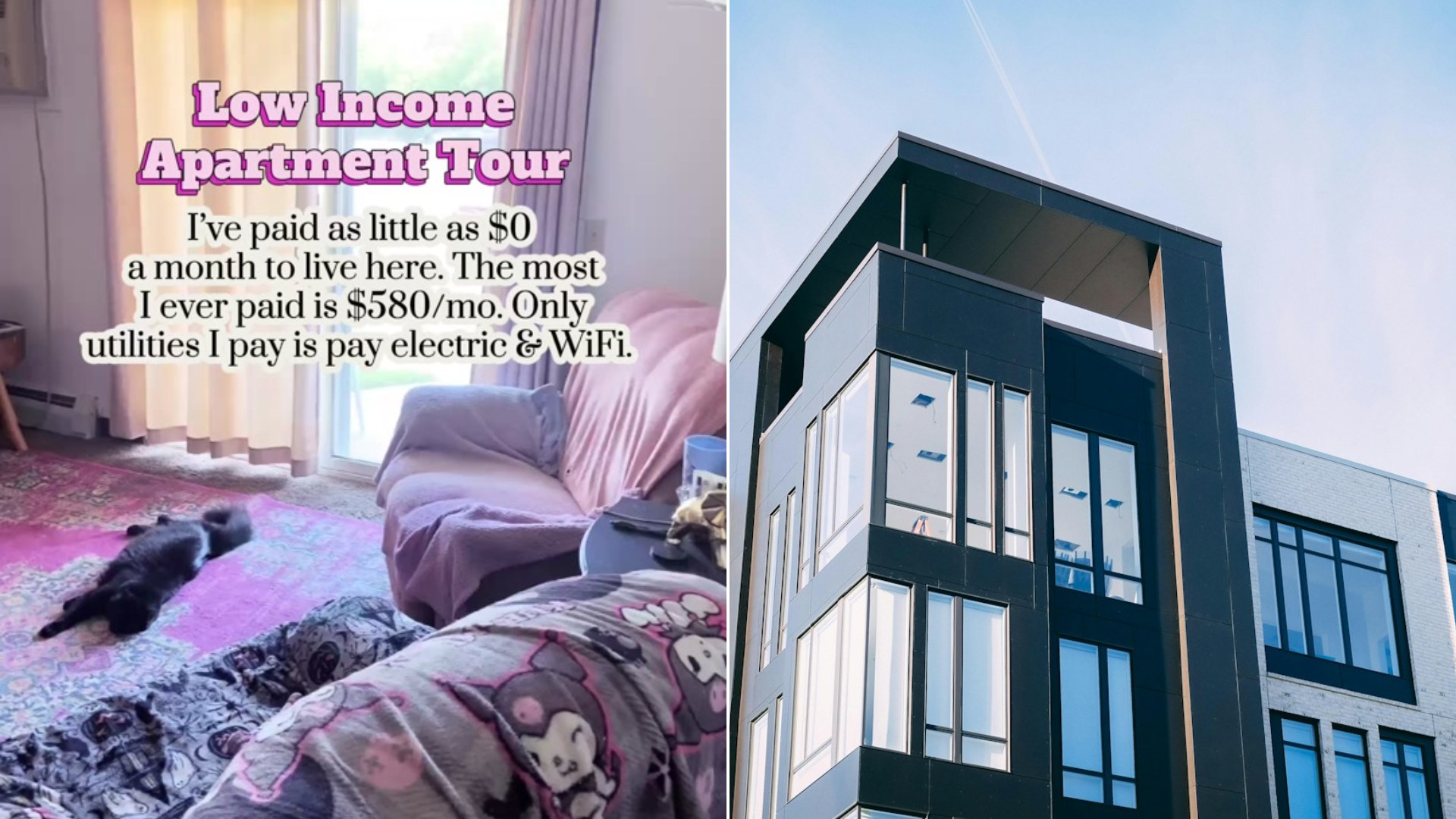
The first thing she explains is how the rent works. It is based on 30 percent of your income. Over the time she has lived there, she says, she has paid anywhere from zero dollars to $580 a month. The most she ever paid was when she was earning about $16 an hour.
@kawaiicosmickitten
Cheap finds and family pieces
She starts at the front door and moves down a long hallway to the dining room and living room. The gray loveseat came from Wayfair years ago, and it was cheap because she needed something quick when they moved in. The Stitch canvas print came from Hobby Lobby on sale. Two patio recliners came from an office garage sale at about ten dollars each.
Some of her favorite pieces have a story. A log table and a canoe shelf were made for her by her sister and her sister’s husband many years ago. She says she used to be really into log furniture and is not so much anymore, but she could not bring herself to get rid of the pieces because they mean so much to her. So she works them into the decor. An end table she has had for years was painted black and, she admits, needs to be sanded and painted again.
There is a patio with a hummingbird feeder, an AC unit that works pretty well, a coffee bar with a Keurig, and a cat bed in the corner. She says everything is pretty old and she needs more dining chairs so they can eat at the table.
Kitchen, bedrooms, and big plans
The kitchen is where most of her videos are filmed. It is full of pink pans and Hello Kitty items. She is thinking about peeling off the white peel-and-stick covering in the kitchen and going back to the original look, because she is not allowed to paint, so peel-and-stick is the only option. In the hallway are the litter boxes, plus a shelf for towels, bedding, and hair accessories.
Her bedroom is where she used to run a t-shirt printing business. The desk used to be set up nicely but she does not use it much now. Her bed is on the floor, which she says is how she likes it, though she might get a platform someday. Her daughter’s room is similar, with a desk and a bed on the floor, and they need to go school shopping. The closets are big, she says.
Her verdict: “Not too bad for a low-income apartment.”
How income-based housing generally works
Many people are curious about this kind of housing, so here is a general overview. Programs and rules vary by city and state, so treat this as a starting point and check with your local housing authority.
- The rent rule. In many federal programs, the household pays about 30 percent of its adjusted income toward rent. If your income drops, your rent can drop too, which is how someone can pay anywhere from zero dollars to a few hundred.
- Who qualifies. Eligibility depends on household size and income compared with the area median. Each program sets its own limits.
- Waitlists are common. Demand is high in many places, and lists can be long or even closed for periods. It is smart to apply to several at once.
- Keep your information current. Housing offices often ask for yearly income updates, and they usually want to hear about changes in income or family size soon after they happen.
- Know the house rules. As she mentions, there are limits on things like painting. Read your lease so you know what you can change.
Where to start looking
- Contact your local public housing authority and ask what programs are open and how to join the waitlists.
- Look at the U.S. Department of Housing and Urban Development website, which lists resources by state.
- Call 211, a free information line in much of the country that can point you to local housing help.
- Be wary of anyone charging a fee to put you on a list. Legitimate public housing applications are generally free.
Making a rental your own
You do not have to own the walls to love your home. The ideas in her tour work for anyone on a tight budget:
- Buy secondhand. Office sales, thrift stores, and community groups often have solid furniture for a few dollars.
- Paint a tired table or end table. A fresh coat can make an old piece feel new.
- Keep the things that mean something, like handmade furniture from family, even if your taste changes.
- Try peel-and-stick covers if your lease forbids paint, and ask your landlord first.
- Make a spot for the things you love, whether it is a Hello Kitty poster, a bird feeder on the patio, or a coffee bar.
A home is not about how new the furniture is. It is about who is in it, and she seems to have made a warm one for her daughter and her cats.
More Stories You May Like
- Former Landlord Says In Some Places Your Security Deposit Is Supposed To Earn Interest, And Tenants Who Never Asked Have Been Leaving Money Behind
- Realtor Is Getting Her Own Home Ready To List In 90 Days Even Though She Is Not Selling, And Her Day One Look At What Buyers Really Want Is Worth Watching
- Couple Bought 10 Acres of Land and Ended Up in a Fence War With the Neighbor That Is Now on Part Seven, and Their Advice to New Landowners Is Simple
Leave a Reply