You saved up the down payment. You found the house. You are ready to sign, and then somebody mentions closing costs. For a $300,000 home, the hosts at the Real Estate The Ramsey Way channel say a buyer could be looking at another $9,000 to $12,000 on top of the down payment. Sellers are not off the hook either. On that same house, they say a seller should plan on about $3,000 to $9,000.
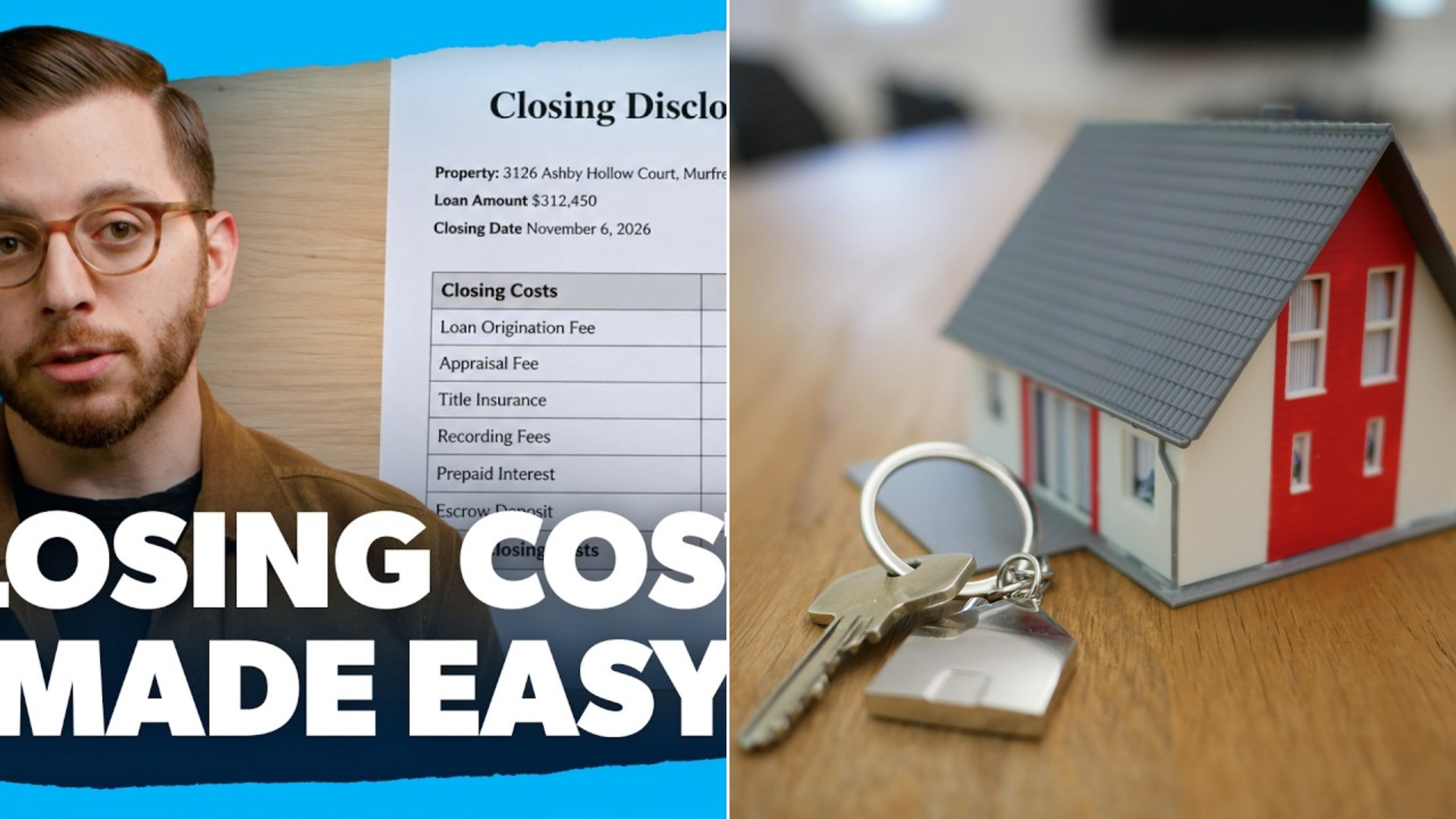
That is a lot of money to discover on the last day of a home sale, and it is exactly why the channel put out a seven minute lesson called Closing Costs Explained: Where Your Money Actually Goes. Here is the breakdown, dollar by dollar.
Where The Money Actually Goes
Closing costs are the fees buyers and sellers pay to finish a home sale. The money does not land in one pocket. According to the video, it gets split between the lender, the appraiser, the insurance company and a handful of other people who help the deal cross the finish line.
Buyers usually pay about 3 to 4 percent of the purchase price. Sellers usually pay 1 to 3 percent. Agent commissions come on top of that at about 3 percent per agent. The hosts compare it to one of those grocery receipts that practically reaches your knees, and that is a fair picture.
The Buyer Side In Three Groups
The hosts sort the buyer costs into three groups, which makes the long list a lot easier to swallow.
Group one is your mortgage. Your lender charges an application and processing fee, which usually runs a few hundred dollars. Then comes the origination fee, which covers the lender’s cost of creating your loan. That one is about 1 percent of the loan amount, so every $100,000 you borrow adds roughly $1,000. You will also pay prepaid interest, which is the interest that builds up between your closing date and your first scheduled mortgage payment.
Group two is third party services. The appraisal determines what the house is worth and usually runs $300 to $500. The home inspection also runs about $300 to $500. The hosts point out the difference: the appraisal is about the home’s value, while the inspection is about the home’s condition. You also pay for the inspection before closing day, so not every dollar of your closing cost gets paid while you are sitting at the closing table.
Group three is paying future bills ahead of time. Homeowners insurance is the big one. You pay the first year upfront at closing, and that averages about $1,600. You will also pay your share of property taxes for the rest of the year, which goes into your escrow account along with your insurance payment. If you put down less than 20 percent, you will also owe private mortgage insurance, often called PMI, and you pay one month of it upfront at closing.
Smaller Fees That Show Up
A tax service fee goes to a third party that keeps an eye on your property taxes, and it probably will not cost you even $100. If you are buying in a neighborhood with a homeowners association, you will pay a processing fee at closing to set up your membership.
Here is the part that surprises people. When somebody says they paid $10,000 in closing costs, it does not mean somebody charged them $10,000 to shuffle paperwork. That number includes lender fees, third party services, insurance and taxes. A big chunk of it is money you were going to owe anyway, just paid earlier than you expected.
How To Avoid A Closing Day Shock
The hosts’ advice is simple: closing day is a terrible time to find out you needed thousands more than you planned for. A few ways to stay ahead of it:
- Budget for it from day one. Use the 3 to 4 percent rule of thumb for buyers and add it to your savings goal right next to the down payment.
- Look at fees, not just the rate. Before you pick a lender on interest rate alone, compare the fees too, and ask whether there is any wiggle room.
- Ask for the numbers in writing. Lenders are required to give buyers a Loan Estimate soon after applying and a Closing Disclosure at least three business days before closing. Compare the two line by line, and ask about anything that changed.
- Remember the money you spend early. Your inspection and appraisal get paid before you ever reach the closing table, so count them in your total.
- Separate what you owe from what you prepay. Insurance, taxes and PMI are bills you would pay as a homeowner anyway. Seeing them that way makes the total feel less like a penalty.
What Sellers Should Know
If you are selling, the video puts your share of closing costs at about 1 to 3 percent of the sale price, plus agent commissions at about 3 percent per agent. On a $300,000 home, that is where the $3,000 to $9,000 figure comes from for the closing costs themselves. Commissions are a separate line on top.
It is worth asking your agent for an estimate of your net proceeds early. That way the number you are hoping to walk away with is the number you actually plan around, not the sale price you see in the listing.
The Bottom Line
Closing costs are not a trick. They are a long list of real services and prepaid bills, and once you see them in groups, they stop feeling like a mystery. Add them up before you fall in love with a house, and the day you get the keys can feel like a celebration instead of a scramble.
If you are shopping for your first home, or helping a grown kid who is, the full seven minute lesson from Real Estate The Ramsey Way is worth sharing.
More Stories You May Like
- Real Estate Agent Warns Buyers to Assume Cameras and Microphones Are Capturing Their Every Word the Moment They Step Out of the Car at a Showing, and Explains What Not to Say
- Pressure Washer Says Another Contractor Told A First Time Home Buyer Her Brick Wall Needed To Be Torn Down, And All It Needed Was A Little Chemistry
- Home Inspector Checking a Railing Pulled Out a Voltage Tester and Found a Live Electrical Wire Where No Homeowner Would Ever Expect One, and Electricians Are Stunned
Leave a Reply