A plumber who tells you how to skip calling a plumber is a rare thing. In a quick video, a Knoxville, Tennessee, plumbing pro at @tnstandard walks through three repairs the video says “every homeowner should know at a minimum how to do.” The caption goes even further: “Most plumbers won’t tell you these things take 2 minutes to fix.”
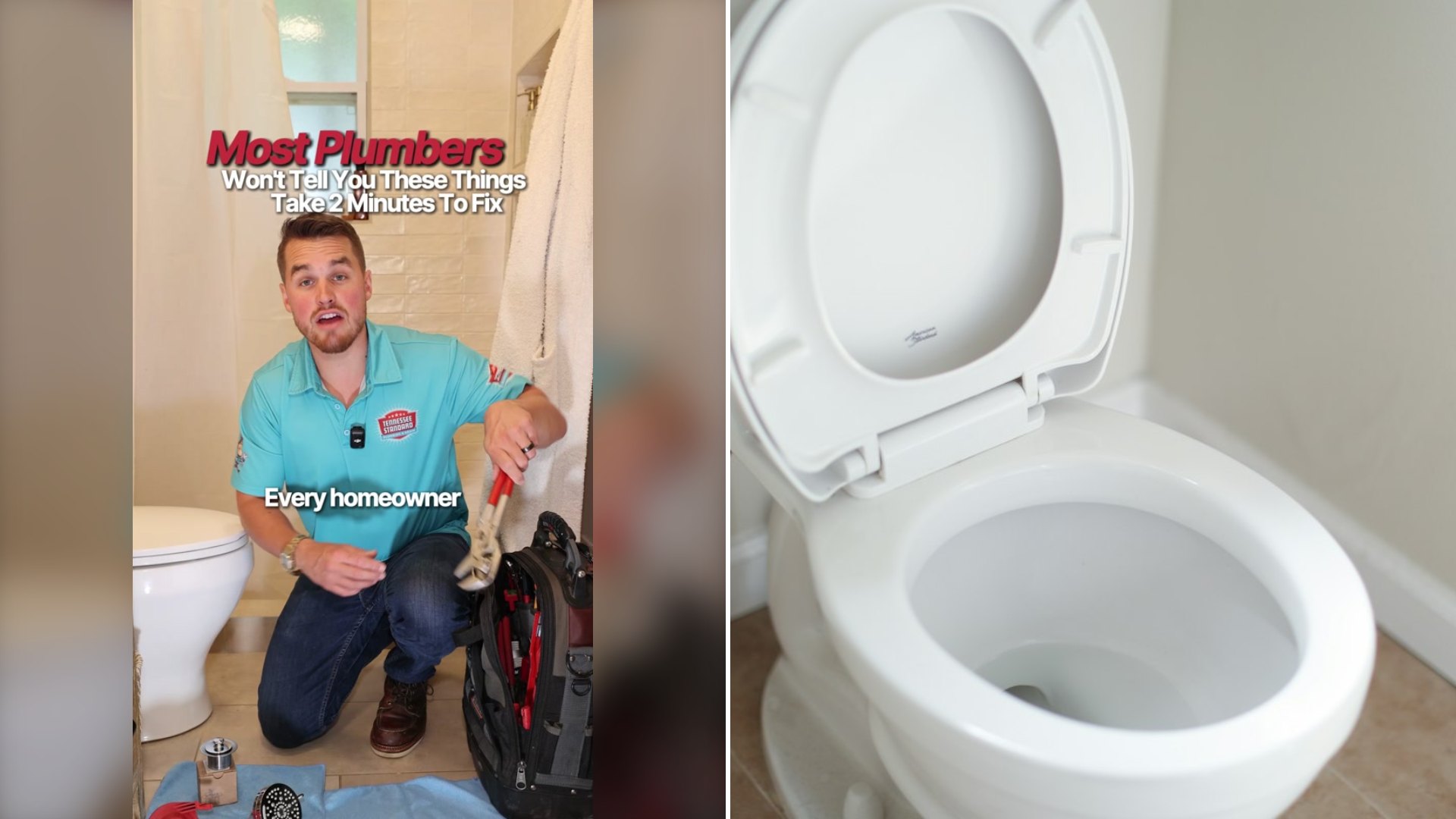
The three jobs covered are replacing a shower head, swapping a toilet flapper and replacing a shower cartridge. None require special skills, and two of them can be done with a few dollars in parts and tools most people already own.
Here is what the video shows, along with some extra pointers that make each job go smoothly.
@tnstandard
Fix One: Replace a Shower Head
The steps are simple. “Take the old shower head off and put a little plumber’s tape on the threads. Screw the new one on with your hands and give it a small turn with a wrench.”
Helpful tips: Plumber’s tape, also called thread seal tape or PTFE tape, costs a couple of dollars. Wrap it two or three times around the threads in a clockwise direction as you face the end of the pipe, so it does not unravel when you screw the new head on. Wrap a rag around the shower head connection before using a wrench so you do not scratch the finish. Do not overtighten. If it drips at the connection, give it a little more turn or add another wrap of tape.
This is a great upgrade for older bathrooms. A new head with a handheld wand can make showering easier and safer for anyone with balance or mobility concerns, and many newer models use less water.
Fix Two: Swap a Toilet Flapper
If your toilet runs on its own, or you hear it refill in the middle of the night, a worn flapper is often the culprit. The instructions: “Grab a $10 flapper kit from the hardware store. Shut off the water supply valve behind the toilet.” Then flush to drain the tank, swap the flapper and turn the water back on. A cheap universal kit fits most standard toilets, which is why this repair costs so little.
Helpful tips: To confirm the flapper is leaking, add a few drops of food coloring to the tank and wait about 15 minutes without flushing. If color shows up in the bowl, water is sneaking past the flapper. Flappers come in two common sizes, 2-inch and 3-inch, so take the old one with you to the store or check the toilet brand before buying. Adjust the chain so it has just a little slack. Too tight and the flapper will not seal; too loose and it can get caught underneath.
This one pays for itself. A running toilet can waste a large amount of water and quietly drive up your bill month after month.
Fix Three: Replace a Shower Cartridge
A shower that drips after you turn it off, or a handle that is hard to turn or will not adjust the temperature properly, may need a new cartridge. This is the most involved of the three, but the video makes it look manageable. “Turn off the water and take the trim off the front of the shower valve. Remove the cartridge holding ring and extract the old cartridge. Install the new cartridge, put back the trim and test for leaks.”
Helpful tips: Cartridges are specific to the faucet brand and model, so remove the old one first and take it to the store, or look up your model number. Many showers do not have their own shutoff, which means you may need to turn off the main water valve to the house. Know where that valve is before you start. Lay a towel in the tub to catch small parts, and snap a photo of each step as you take things apart so you can reassemble them in the right order. Some cartridges are stubborn after years of mineral buildup and may need a special puller tool, which many hardware stores sell or rent.
When to Call a Pro Instead
Doing it yourself is a smart way to save money, but some situations call for a licensed plumber.
The shutoff valve will not turn or leaks. Forcing an old valve can break it and cause a bigger leak.
You find corrosion, cracked pipes or water damage behind the trim or around the toilet base.
The problem comes back right after a repair, which may point to a bigger issue like high water pressure.
You are not comfortable kneeling, reaching or working in a tight space. There is no shame in hiring help, and many plumbers will tackle several small jobs in one visit.
A good habit for every homeowner is to learn where the main water shutoff is and test it once a year. In an emergency, those few seconds can save a floor, a ceiling and thousands of dollars.
The video from @tnstandard is short, practical and refreshingly honest. Sometimes a two-minute fix and a trip to the hardware store really is all it takes.
More From Willow and Hearth
- Inspector Says He Could Pull Loose Bricks Right Off the Sill of a New Build Then Asks What You Think of a Kitchen in a Closed Off Far Corner
- Home Inspector Checking a Railing Pulled Out a Voltage Tester and Found a Live Electrical Wire Where No Homeowner Would Ever Expect One, and Electricians Are Stunned
- Pulte New Construction Inspection Shows a Very Different Experience Than the Inspector Expected
Leave a Reply