After weeks of punishing Texas heat, the temperatures have finally dropped, and that means one thing for gardener Tonetra of Tonetra’s Garden: it is time to plant the fall garden. Her plot sits in full sun, so she waited until the weather cooled before moving her transplants outside. The lineup includes broccoli, cabbage, kale, red mustards, turnips and sugar snap peas.
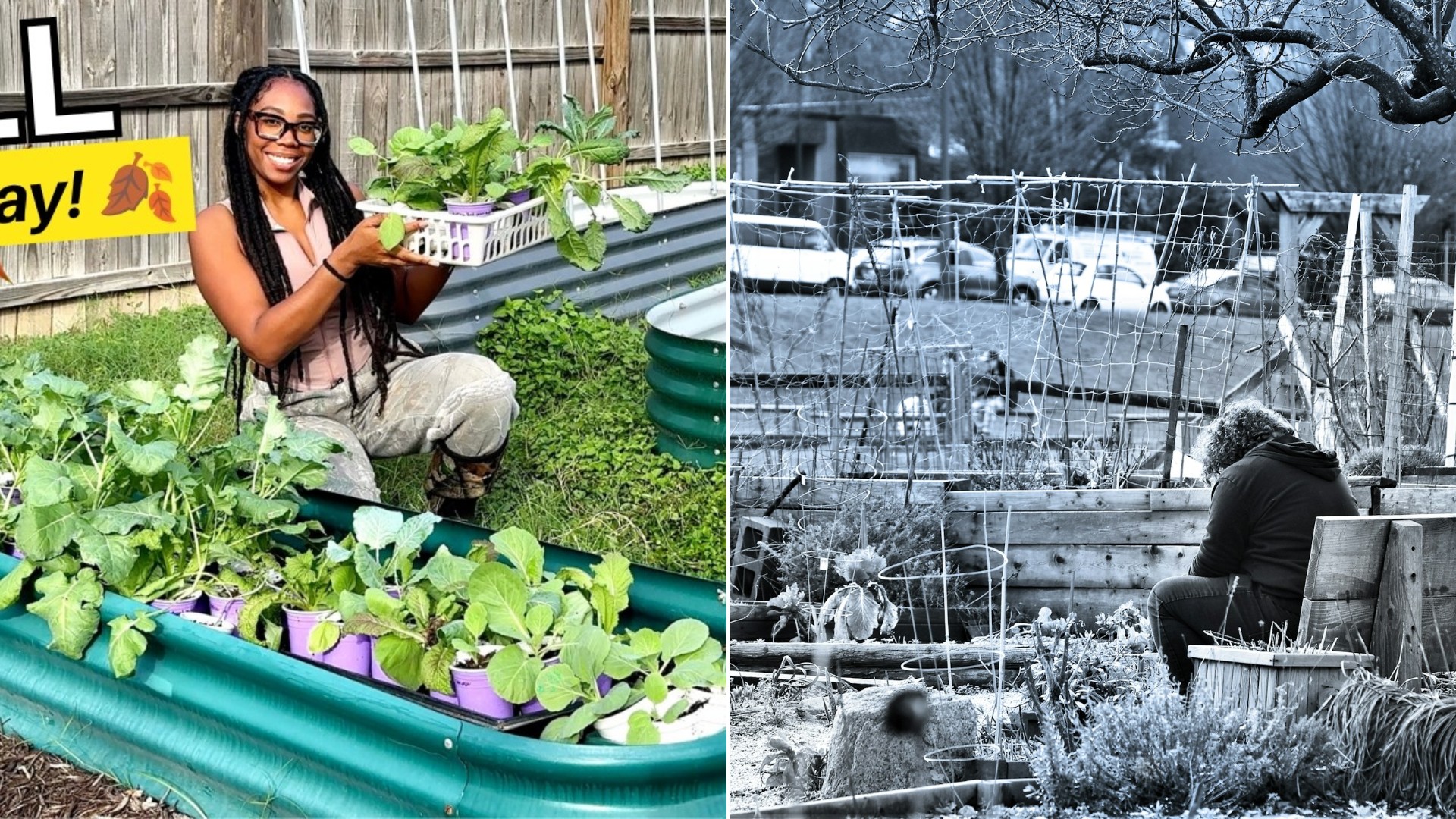
She started every transplant from seed, and she walked through planting day bed by bed, explaining her spacing, her soil boosters and a few lessons from last year. Whether you garden in the South or somewhere cooler, her approach is a handy template for getting a cool-season harvest going.
Six varieties in the lineup
In all, Tonetra is growing six different varieties this season. She picked a broccoli that does well in the South and a Copenhagen cabbage, which she loves because it is an early producer. It heads up fast and stays compact, yet still gives a good cabbage head. She added lacinato kale, also called dino kale, which she calls a beauty to have in the garden.
Her personal favorite is red giant mustards. She says she is obsessed with them, because when the weather gets cooler the leaves turn a deep maroon. She never goes without them. The last two crops, purple turnips and sugar snap peas, are direct sown right into the soil rather than started as transplants.
Cabbage first, with a plan on paper
Before planting, she ran inside to grab her hand-drawn map of the garden. The front raised bed is for cabbage. The map called for 10 plants, but based on last year’s experience she decided on six, which she says was the perfect amount and lets every head grow to the same size. Her advice is to plan out your fall garden, because it helps a ton once you start planting.
For each hole, she adds a handful of Black Cow, a composted manure product, and a sprinkle of Plant-tone, an organic plant food. She spaces the plants at least 12 inches apart, which she says has given her the best luck. She makes all her planting holes first and then pops the plants in, which she finds easiest.
Broccoli, turnips and root crops
The next bed is for broccoli. Last year it held cabbage, and rotating crops between beds is a smart habit. Her chart showed room for eight plants, and she decided to try it, since last year she planted only about four and felt she could have squeezed in more. The broccoli transplants are huge, so she set them on a diagonal, four plants and then four more, using the same planting routine as the cabbage.
A small raised bed is set aside for root crops. For now, she planted turnips along one edge, saying she loves her turnip greens. She fluffed the soil, then sprinkled the seed in four rows, covering them lightly. She plans to fill the other side of the bed with something else in a couple of days. The turnips will be thinned out once they germinate, which happens fast. She keeps the soil moist so they pop up, and she plans to water them in.
Greens and peas at the garden entrance
At the front of the garden, which she calls her favorite part, two small round raised beds hold red giant mustards and dino kale. She first thought of four mustards and two kale per bed, but settled on three red giants and two lacinato kale because the red giants get pretty big. She wanted to push her limits a little without overcrowding. One bed already had Black Cow, so it only needed a handful of Plant-tone.
On top of the trellis, she direct sowed a row of sugar snap peas. By then the Texas sun was heating up fast, and she raced to get everything watered in. It is a reminder that in the South, fall planting chores are best done early in the morning.
Tips worth borrowing for your own fall plot
Several lessons from her planting day apply to any garden. Wait for the heat to break before setting out transplants, since young plants struggle in hot sun. Draw a simple map so you know how many plants fit in each bed. Do not overcrowd, but test your limits a little each year and take notes for next time. Mix in compost or a balanced organic fertilizer at planting time, and keep seeds moist until they sprout.
Cool-season crops such as cabbage, broccoli, kale, turnips and peas generally tolerate light frost, and many greens actually taste sweeter after a chilly night. Rotating crops from year to year, as she did by putting broccoli where cabbage grew, also helps cut down on soil-borne problems.
She still has plenty of seedlings left over. Her plan is to plant a container garden with them in an upcoming video, which is good news for anyone short on space. For now, her raised beds are tucked in, watered and ready to grow into a harvest of greens, heads and pods that will carry her table well into the cool months.
More Stories You May Like
- Heating With Gas Or Propane This Winter Should Cost Less But Electric Heat Is Expected To Cost More And Heating Oil Prices Are Forecast Up About 21%
- Fresh Paint And Staging Can Hide Water Stains Uneven Floors And Musty Smells So Walk Through With A Checklist Before You Fall For The Listing Photos
- Homeownership Is 78.6% For Householders 65 And Older But Only 35.2% For Those Under 35 Showing How Wide The Generational Housing Gap Is
Leave a Reply