A house can lose a big slice of its value without its price dropping at all. That is the argument from the British Home Group channel, which says Britain’s housing market is firing warning shots and that homeowners could lose almost 14% of their property’s real value in five years even if the asking price never budges.
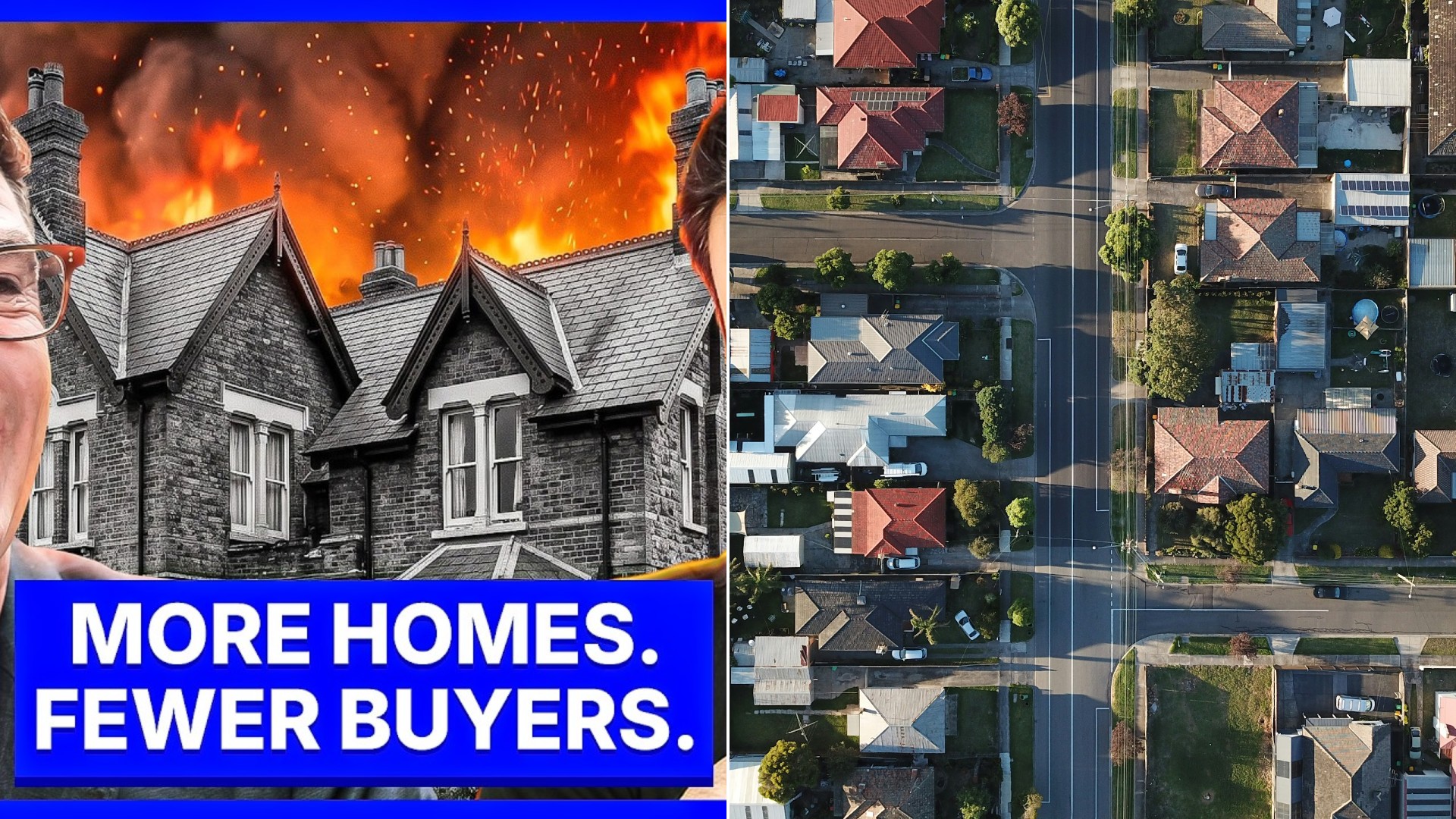
The presenter starts with the numbers. According to new figures from the property data firm 20CI, the number of properties coming onto the market has been rising for years. It is up 1.9% over the past year and at its highest level in a decade. At the same time, the number of sales being agreed has fallen by 5.7%, and the number of properties reduced in price while being marketed has risen by 6.2%.
And yet average house prices are still rising, up 1.4% over the last year. The presenter’s job is to explain how all of that can be true at once.
More Homes For Sale, Fewer Buyers
The first warning shot is simple. People’s buying power is being squeezed. Mortgage rates have been going up, the cost of living is climbing and wages are not keeping up. Buyers who can afford less do not automatically meet sellers who want to accept less, so the price buyers are willing and able to pay is more and more often below the price sellers are willing to take.
The result is a standoff, and in a standoff, something eventually gives.
Sellers Start Cutting Prices
That brings the second warning shot. More sellers are cutting their asking prices to bring buyers in. The property portal Rightmove reported that 3,000 listings a day are dropping their asking prices, the highest volume in 15 years. The total number of homes for sale is at its highest in 12 years.
The presenter says it is not more complicated than that: more houses on the market, fewer buyers buying and higher mortgage rates all push prices downward.
Why Prices Still Look Like They Are Rising
The answer, he says, is a lag. Completed house price data reflects the market from about six months earlier. So when supply is rising, price reductions are increasing and sales agreed are slowing right now, he reads that as a signal that price growth will keep slowing down.
He also points out that the market is splitting in two ways. The average price of flats is falling while the price of houses has been rising. There is also the north south divide, with the average held together by the north propping up a falling market in the south.
The Silent Crash Explained
The presenter does not claim prices will collapse. He says there is a very real possibility of a prolonged period of adjustment, and he draws a distinction with a graph of house price inflation against consumer inflation. When house prices rise faster than general inflation, a property grows in real terms and builds wealth for its owner. That is what happened before the 2007 and 2008 financial crisis, thanks to credit expansion, and millions of homeowners grew wealthier simply because the value of their properties was rising.
But when inflation runs faster than house prices, something different happens that many people overlook. Even if your house price is going up, it is losing value relative to inflation. He points out that since 2022 inflation has frequently been rising faster than house prices, so while headlines say a property has increased in value, in real terms it could be worth less.
Then comes the number in the headline. Even if house prices stay completely unchanged for five years while inflation averages just 3% a year, he says, your property would lose almost 14% of its value in real terms without its price falling by a single penny. You can check the arithmetic yourself. Three percent a year over five years compounds to roughly a 16% rise in the cost of everything else, and when you divide that into an unchanged house price, you end up with about 86% of the original buying power. That is a loss of close to 14%.
In his words, Britain’s housing market does not need to experience a dramatic crash for house prices to undergo a silent crash. It could happen gradually over several years through inflation itself.
What Homeowners And Buyers Can Take From It
The presenter also says buyers are not the only ones feeling the strain. Homeowners who are remortgaging face higher costs too, which is part of why he thinks weak price growth could continue. Prices might fall slightly, rise slightly or simply stay where they are.
Here are some practical points to keep in mind, drawn from the same logic:
- Look at real value, not just the sticker price. A flat or slightly rising house price can still mean a loss once inflation is counted.
- Check the date on any price data. Completed sale figures trail the current market by around six months.
- Watch the local picture. The presenter says flats and southern areas are behaving differently from houses and the north.
- If you are selling, be realistic early. More sellers are cutting prices, and buyers have more choice than they did a few years ago.
- If you are buying, the standoff may work in your favor, especially if a listing has been marked down.
For people nearing retirement or planning a move, the message is not to panic but to measure wealth in what the money buys. A number on a listing can stay put for years while the pound in your pocket quietly buys less, and that is exactly what the presenter means by a silent crash.
More Stories You May Like
- Renter Confronts Self-Described Property Manager Who Showed Up with a Stranger Planning to Move Into Her Son’s Bedroom Even Though the Owner Never Countersigned Her Lease
- Ladder And Power Tool Mistakes Can Send Homeowners To The ER So Check The Weight Rating And Setup Before You Climb
- Home Price Growth Has Slowed To 1.5% Nationally But Chicago Is Still Up 6.9% While Seattle Prices Have Fallen 1.9% Over The Past Year
Leave a Reply