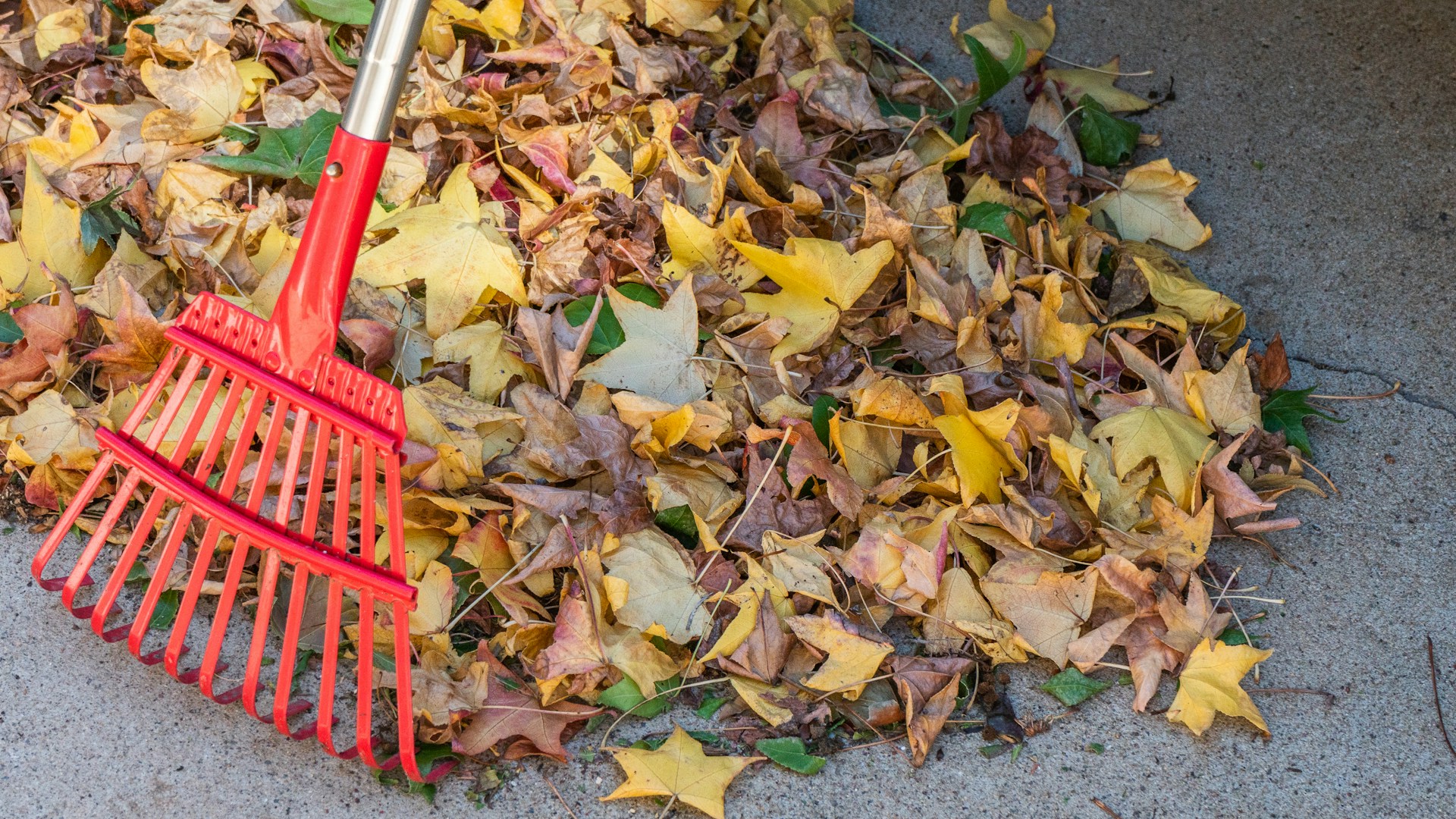
Every November the curb fills with bags of leaves that gardeners worked hard to rake. Extension experts across the country keep saying the same thing: that pile is free fertilizer. Here are 7 ways to put fall leaves to work instead of bagging them.
Each idea below comes from a university extension service, so it is based on lawn and garden research rather than hearsay.
1. Mow Them Right Into The Lawn
University of Illinois Extension, in an October 2018 column, says to mow over leaves so small pieces settle between the grass blades. The University of Georgia’s 2017 article on mower mulching says this saves time and effort compared with raking.
Georgia adds that the smaller pieces break down faster and that leaves can break down within days after light rain. A regular blade works, though a mulching blade is better.
2. Mow In Windrows To Chop A Big Pile Fine
Georgia’s article describes a windrow method. Discharge the leaves toward the center of the lawn, raise the deck as high as it goes to run over the windrow, and repeat until most pieces are dime-size or smaller.
Then spread the chopped leaves over a wider area. The article says not to try this with wet leaves, since even a new blade will not pick up leaves matted to the ground.
3. Tuck Whole Leaves Around Roses And Perennials
Illinois Extension says whole leaves placed around the base of tender plants, such as roses, protect the crown. Keeping the leaves whole prevents them from packing down.
Oklahoma State Extension, in a 2020 gardening column, says you can rake leaves into perennial beds to keep overwintering plants warm, and that you will not need a lot of leaves for it.
4. Spread Chopped Leaves As Mulch In Flower Beds
Oklahoma State says to use the mower’s bag attachment to collect chopped leaves, then spread them as mulch in flower beds. Georgia notes that a bag attachment makes gathering easier but is not required for mulching.
It is a simple way to turn what would be a trash bag into a garden covering for the winter.
5. Work Them Into Empty Vegetable Beds
Illinois Extension says to blow leaves into nearby vegetable and flower beds, then either work them in this fall or leave them as a mulch layer and work them in next spring. Oklahoma State describes scattering whole or chopped leaves over a fallow bed, then tilling or turning them in so they break down over winter.
By spring, the bed has extra organic matter without a single trip to the store.
6. Build A Compost Pile Or A Leaf Pit
Illinois Extension says mower-collected leaves are the browns that pair with grass clippings, the greens, in a compost pile. It advises keeping the moisture balanced, because a pile that is too dry will not break down and one that is too wet becomes smelly and slimy.
Oklahoma State adds a leaf pit: dig a big hole in an inconspicuous spot, such as behind the garage, and fill it with leaves, garden plant material and fruit and vegetable peels. It says not to add meat or fat.
7. Let Them Lie In Wooded Areas
If you have natural woodland, Illinois Extension says to just let the leaves lie, since they decompose and return nutrients to the soil. Oklahoma State says large properties can leave leaves as mulch and winter cover, spread out so they do not smother existing plants.
That is the easiest idea on the list, because it takes no work at all.
Why Extension Experts Favor Leaving Leaves On Site
The thread running through all three sources is that leaves are not trash. They hold the nutrients and organic matter that trees pulled from the soil all summer, and chopping or composting them returns those materials to your own yard.
There is a practical side too. Georgia notes that the smaller pieces break down faster because they have less surface area and pick up bacteria from the ground below, so a lawn mowed with leaves clears itself quicker than a lawn left under a thick carpet.
It also means fewer trips hauling bags to the curb, and less strain on a back that already worked hard all season.
When Bagging Still Makes Sense
Illinois Extension notes that when there are more leaves than the lawn can absorb, you can mow and bag the excess so it does not smother the grass. It also says leaves bagged at the curb by neighbors can be collected as compost material.
Oklahoma State mentions that a vacuum-shredder can suck up, chop and bag leaves, but only when they are dry, since wet leaves clog the machine.
A Weekend Plan For Less Raking
Start with a dry day. Mow once a week through the heavy drop, bag only what the lawn cannot absorb, and use the rest on beds and in the compost pile.
Check that the mower blade is sharp, because Georgia says worn blades leave poor leaf mulching. Your lawn, your back and your trash bill will all thank you. Details are in the University of Illinois Extension column, the UGA article and the Oklahoma State column.
More Stories You May Like
- Pest Control Upsells Can Lock You Into Year Long Contracts So Seal The Entry Points First And Read The Cancellation Terms Before Fall Mice Move In
- Scalping The Grass Watering Daily And Bagging Clippings Are Lawn Habits That Waste Money And Timing Matters More Than Most Homeowners Think
- HOA Fines And Special Assessments Can Blindside New Owners So Read The CC&Rs And Resale Certificate Before You Buy Into The Neighborhood
Leave a Reply