“People love to talk about socialization with homeschoolers.” That is how TikTok creator @itsmrskinney opens a video that has plenty of people talking, and she comes at the topic as someone who lived it.
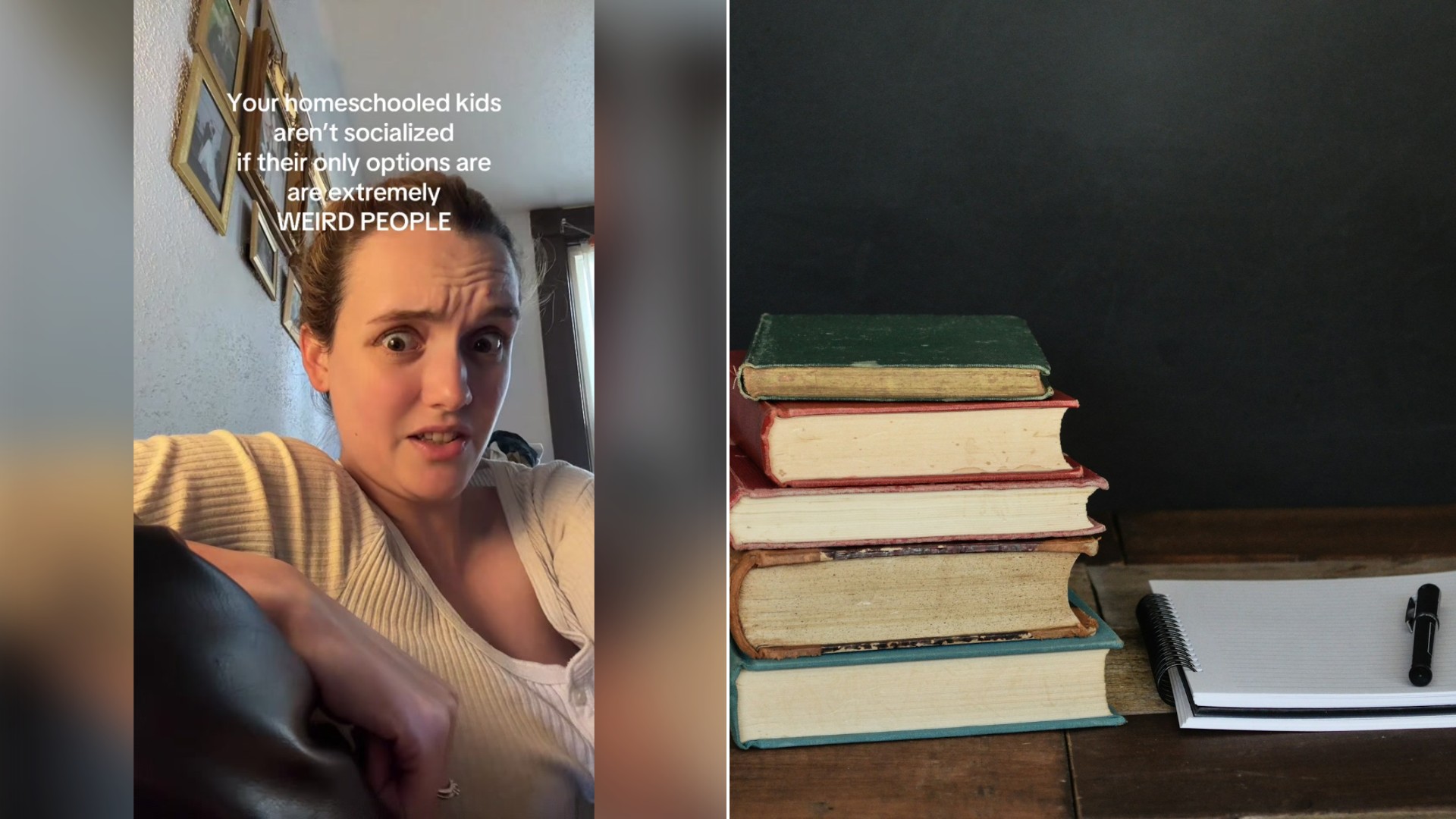
She says she was homeschooled, and that her parents did a really good job educating her and her siblings. Her parents were both professional teachers, she says, and she holds “no ill will” toward them for choosing to homeschool. She says she understands why they did it and that she benefited from it.
@itsmrskinney
Her Mom Tried To Get Them Around Groups Of People, But Nobody Looked Closely At Who Those People Were
She says she has talked about this with her mother. In hindsight, her mom did her best to get the kids around groups of people and help them make friends. What neither of them really thought about, she says, was who those groups actually were.
“Oh yeah, I had friends. I hung out with people,” she says. But she describes them as “moon landing denying, anti vaxx” types, and she says she does not talk to any of them anymore.
She also recalls peers telling her she was going to die in childbirth because of the way her skeleton is built. She was a teenager, she points out, so she had little reason to question it.
“Simply Putting Your Kid Around People Does Not Equal Socialization”
That is her main point, and she says it goes for any mode of education. Having kids in a room with other kids is not the same thing as teaching them how to get along with others.
She is blunt about what she saw in her own circles. She says many homeschooled kids she knew were raised in what she calls a “permanent reactive defensive mode,” and that they attacked anybody who seemed even slightly different. In her telling, that comes from growing up around adults who feel they have something to prove.
She adds that when kids are raised to think everyone is part of a conspiracy to make life uncomfortable, they end up mistreating everybody. She is describing the particular circles she knew, and her caption says her own parents “didn’t realize it was this bad, and they were doing their best.”
Her Warning To Parents Who Pull Kids Out To Avoid Bullies
“I’ll never stop telling people that the social aspect is not a reason to homeschool,” she says. Pulling kids out of public school to avoid bullies does not solve the problem, in her view, because “sucky people exist everywhere.”
Weird people exist everywhere too, she says. The difference is that in small fringe circles there are fewer people and nothing checking anyone’s behavior, so that behavior can be “10 times more amplified.”
Her bigger worry is that kids in those circles have no way of telling what is not normal unless a parent tells them. At 14 or 15, she says, she did not realize that it was unusual to want to live on a commune. Her parents did not raise her that way, she stresses, but those were the only people she had as friends, and she does not think her parents noticed until she got older and headed toward college.
Then she got mad at them for it, she says, before laughing and adding, “Girl, I’m so glad I listen to them haha. And not my friends. What the heck?”
In her caption she tells skeptics, “You may tell me your homeschool circles aren’t like this… LOL YES THEY ARE.” She says she thinks things are probably more extreme now than they were in 2008 to 2015, when she was growing up.
What Every Parent Can Take From Her Story
You do not have to agree with every point she makes to find a useful lesson here, whether your kids go to public school, private school or learn at the kitchen table. The question is not only whether your child is around other people, but who those people are and what they are teaching.
Here are some simple ways to keep an eye on it.
- Meet the friends and, when you can, their parents. A short chat at pickup or a cookout tells you a lot.
- Ask open questions at dinner, such as “What did you and your friends talk about this week?” Teens often answer when the question is casual.
- Mix up your child’s circles. Sports teams, church groups, volunteer work, scouts and community classes all give kids a range of people and viewpoints.
- Say out loud what is and is not normal. If a friend says something extreme, a calm “that is not how most people think” can matter more than you would guess.
- Keep the door open. A teen who is not afraid of an argument is more likely to come to you when something sounds off.
Her story also carries a gentler message for parents who feel guilty. Her own parents were doing their best, she says, and she thanks them for steering her toward college. Parents can only guide what they can see, and good guidance often starts with paying closer attention to the friends their kids choose.
More Stories You May Like
- Queens Woman Rationed Her Air Conditioning For 10 Years, Then Learned Con Edison Was Billing Her For The Apartment Upstairs, And The $6,000 Refund Only Covers Six Years Of It
- Indiana Homeowners Fixed Their Violations And Were Never Fined, Then Found Legal Fees On Their HOA Accounts, And One Owner Says Neighbors Were Charged $400 A Letter Over A Garage Trim And A Tree
- Thirty-Year Mortgage Rates Drop To 7.24% After Hitting 7.40% In October, But Buyers Are Still Facing Borrowing Costs Far Above The 6.17% Rate Seen A Year Earlier
Leave a Reply