Some Saturday soon you will mow for the last time, roll the mower into the shed and pull the door shut. One less chore until spring, you figure. But a lawn grower named Elias says your yard is not done when that door closes, and next July’s crabgrass is already being decided.
Elias, who calls Lancaster County home, shares his case on the Elias Lawn Care and Elias Homestead channel. He points to the township strip across his lane: every July their side is crabgrass, and his is not.
His secret has nothing to do with the bag that has crabgrass on the front. It comes down to a feeding at the right week, and one setting on the mower.
“A Field Fed After The Cows Come In Is Fed For The Creek”
Elias learned the timing from his grandfather, who fed the hayfield the same week the cows came in for the winter. That was always his last mowing. His saying was that a field fed after the cows come in is fed for the creek.
The signs, Elias says, are easy to read. The grass is still green and still growing a little. The bag on the mower barely fills. The ground is soft under your shoe, not hard. Between zone 6 and 7, he says, that week usually lands in the back half of October.
Why then? Every winter, on the first thaw, he cuts two slices of sod. One comes from his side of the lane, which was fed the week before the last mowing, and the other from the unfed township strip. He lays them side by side and shakes off the dirt.
His slice is full of fresh white root tips, like new thread. The township slice has short brown roots and hardly a white tip on it. His grandfather did the same with a slice from the hayfield every January, and the fed field always had the white thread.
All winter, he says, while the mower sits in the shed and the lawn looks like it is doing nothing, the roots keep working. They just need something in the dirt.
Feed Too Late And It Sits In Cold Ground, Feed Too Early And The Cold Bites The Soft Blades
There is a catch. Feed too heavy while the grass is still growing hard and it puts on soft new blades right before the cold. That is why the timing comes at the end, when the top has nearly quit, and why it comes earlier and lighter the farther north you live.
His rule is that the last good week comes about two weeks before your first hard frost, the first night below about 28 degrees. Thanksgiving week is too late almost everywhere the ground freezes. In zones 3 to 5, your week may fall at the end of September or early October, while zone 7 may stretch into early November.
He also reminds viewers to check state rules. He says New Jersey does not allow lawn feeding from mid-November until March, and New York’s line is December 1. Your county extension office will know yours.
All of this is for northern grasses like bluegrass, fescue and rye. For southern grasses such as Bermuda or zoysia, which go brown all winter, a heavy feeding now wakes the grass just as it tries to sleep, so that is a spring job.
The Mower Setting That Made The Difference Between 80 Crabgrass Plants And 20
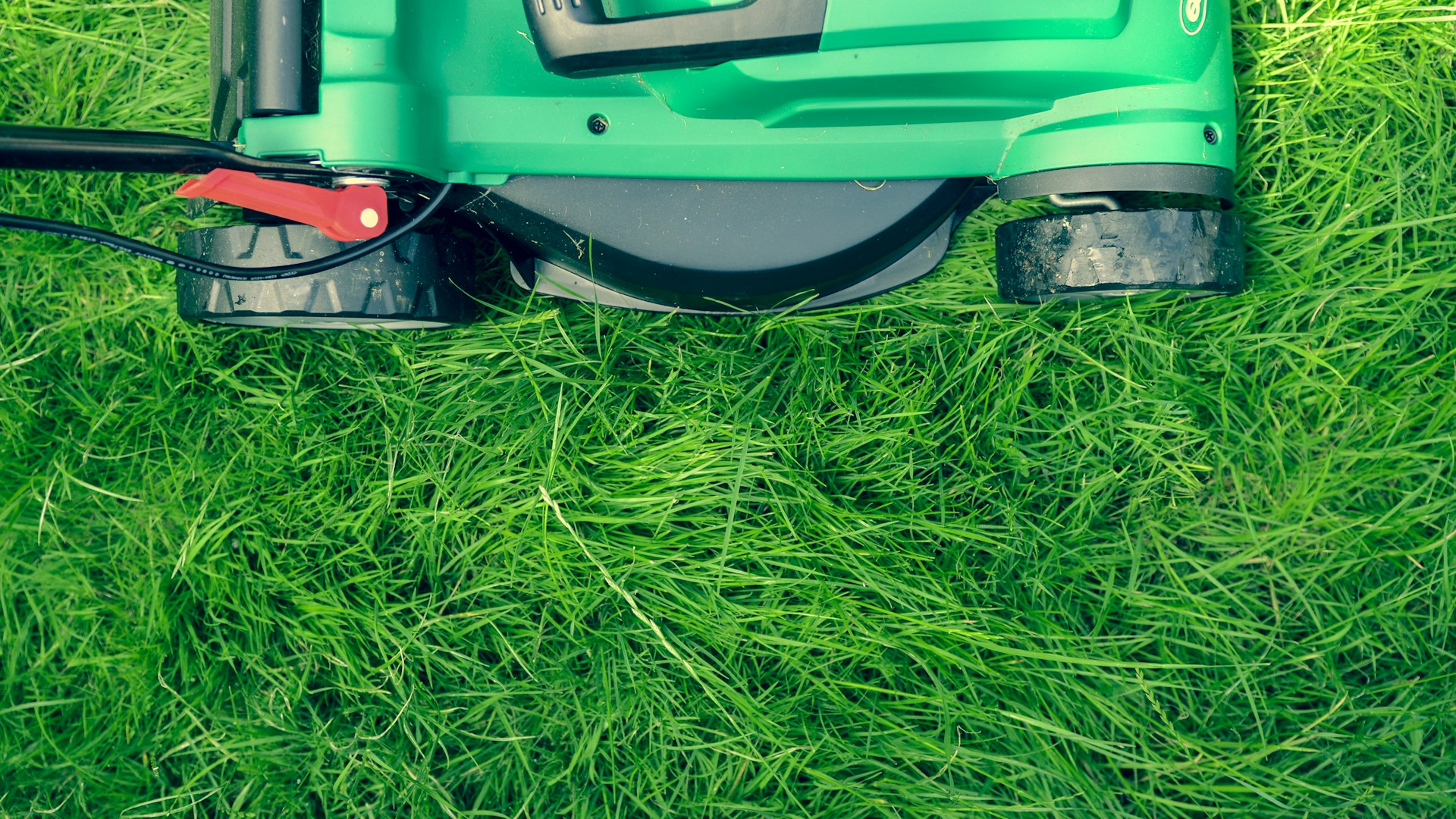
Before the sack goes in the spreader, the mower has one more job. Do not scalp the lawn short for winter, Elias says, and do not put the mower away early just because the calendar says fall. Keep mowing as long as the grass keeps growing, and bring the deck down a notch over the last two mowings, half an inch in all. If you mowed at 3 inches, finish around 2 and a half.
Long grass folds over under snow and mats, and that is where gray snow mold starts. But a scalp is worse. The blades you leave standing make the food your roots are storing. Cut them off, he says, and you have shut the kitchen when the cellar needs filling.
Crabgrass loves short grass. That township strip gets mowed right down to the dirt, and every summer it is the first ground on the road to go to crabgrass. Elias cites counts from farm college tests: tall fescue mowed at 2 and a half inches all summer had more than 80 crabgrass plants in each test patch by September. The same grass mowed at 4 inches had 20 to 27. Same grass, same seed, only the mower was different.
He notes that count was for summer mowing, not the last cut, but it shows what crabgrass thinks of a short lawn. He suggests pushing a ruler into the lawn to check, since some decks mark 3 inches but cut closer to 2.
How To Figure Out How Much Feed Goes On
Most of us cannot say how much feed our lawn got last fall. Elias says the lawn wants somewhere between half a pound and a pound of nitrogen per 1,000 square feet. He uses about a pound, and stays at the low end, half a pound, in colder zones.
The arithmetic is simple. Divide 100 by the first number on the bag. For a sack marked 46-0-0, that is a little over 2 pounds of the sack for a full pound of nitrogen per 1,000 square feet. For a 21-0-0 sack, it is about 5 pounds.
He prefers a quick-release feed this late, because slow-release products let go their food as the ground warms, and the ground will not warm. He is skeptical of winterizer bags with a big third number, potash. If your ground already has enough, he says, adding more is like burning money, and a soil test will tell you if you are short. He also wants a zero in the middle number, since in some states phosphorus on an established lawn is restricted without a soil test.
Spread in two passes, half up and down and half side to side, to avoid stripes. Sweep any grains off the driveway and sidewalk, then water it in with about a half inch of water.
Why Fall Feeding Works Without Ever Touching A Crabgrass Seed
Here is the twist. The feed never stops a single seed, Elias says. In his words, the feed does not stop the seed, the grass does. Crabgrass needs sun right down on bare dirt to sprout, and a thick, tall lawn standing over it keeps the seed in the dark.
A lawn fed before its last mowing greens up earlier and comes in thicker. By the time forsythia fades and the soil holds around 55 degrees, the grass is already standing over the seed. He adds that farm college tests found feeding in fall or spring made no difference to how many crabgrass seeds came up on their own.
Next April, kneel at the edge of the driveway where the crabgrass always starts and part the grass. If you see bare sunny dirt between the blades, so can the seed.
What To Expect And What Not To Expect
Elias is honest about the limits. It will not clear a lawn of crabgrass in a single season, because the seed lives in the ground about 3 years. It takes a few falls of this before the strip thins out. It will not thicken grass in deep shade or on ground packed so hard the rain runs off.
If your week has passed, do not spread feed on frozen ground or snow. Wait until late spring, feed light, and mark next fall on the calendar. If you overseed in the fall, keep spring crabgrass preventer off the new spots, since it stops grass seed the same as crabgrass seed.
His summary is plain: watch for the signs, step the deck down half an inch over the last two cuts, never scalp, feed lightly with a quick sack, sweep the walk and water it in. Then put the mower away, and come July, you may get to keep on walking past that bag with the crabgrass on the front.
Leave a Reply