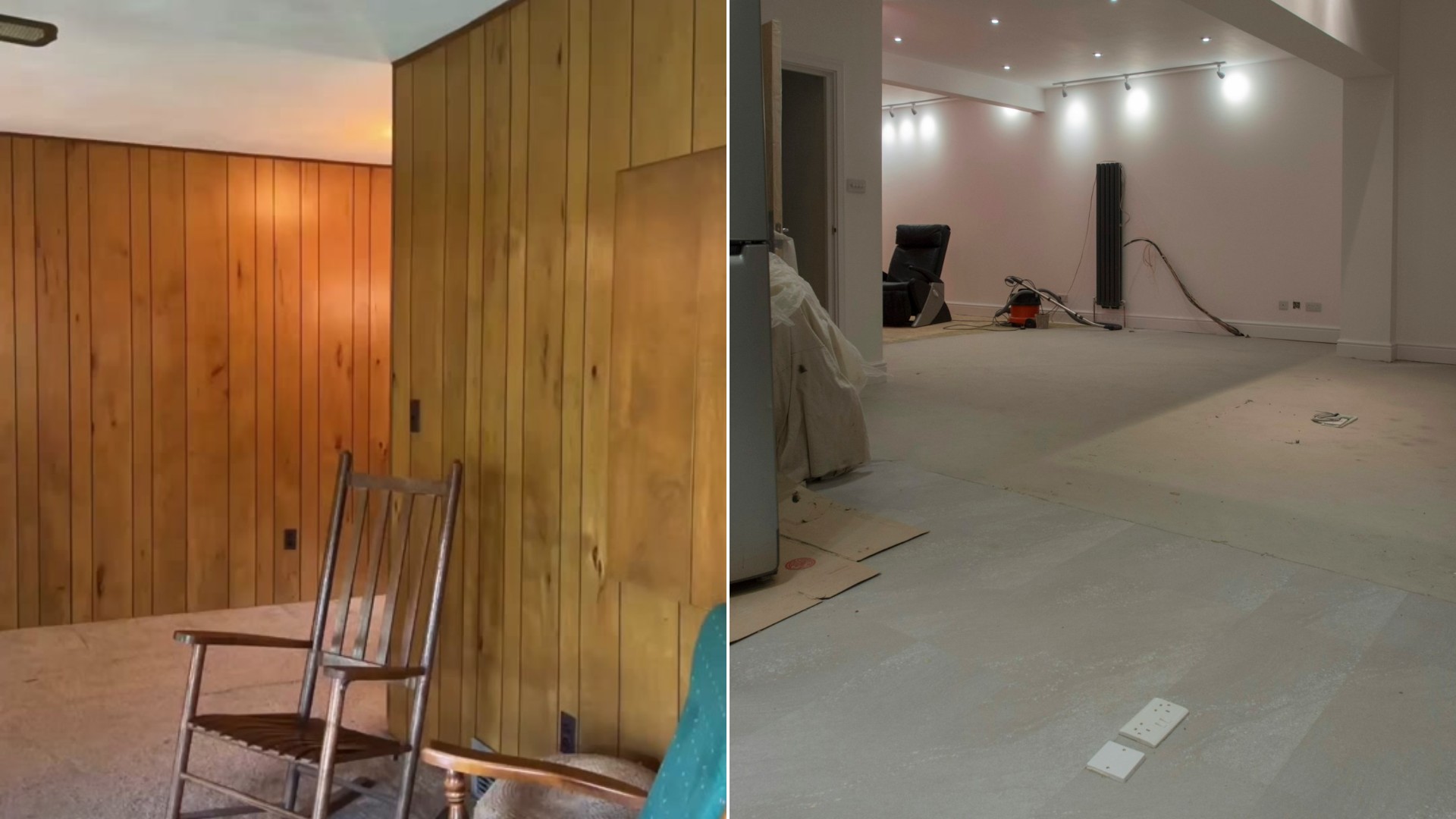
It started with a plan to paint one room. It ended with a dumpster in the driveway and a couple living on bare subfloors for months. The couple behind @onemoreproject bought her grandparents’ house, and one coat of paint led to ripping out every carpet.
The home has a 1970s family room and a lot of memories. It also had carpet in every room except the kitchen and the bathrooms.
Anyone who has said “while we are at it” in the middle of a home project will feel this story in their bones.
@onemoreproject
Buying Her Grandparents’ House Comes With A Lot To Love
There is something special about taking over a home that has been in the family. The rooms hold stories, and every wall has a memory attached.
It also means the house comes with decades of choices from another era. In this case, the 1970s family room set the tone, and wall to wall carpet covered nearly everything else.
One Coat Of Paint Was Supposed To Be The Whole Plan
Fresh paint is the classic first step in a new home. It is cheap, fast and makes a big visual difference.
The trouble is that paint draws the eye to everything around it. Once the walls looked fresh, the old carpet looked tired, and the couple decided the floors had to go.
Every Room But The Kitchen And Baths Had Carpet
Pulling carpet from an entire house is a big job. Carpet, padding and tack strips come up room after room, and the amount of material that piles up is startling.
That is where the dumpster came in. The couple rented one to haul away what came out, which gives you a sense of how much old flooring a house of this size can hold.
Under The Carpet Was 50 Year Old MDF Underlayment
The next surprise sat beneath the carpet: MDF underlayment about 50 years old. MDF is a manufactured board made from wood fibers and resin, and it was a common choice for underlayment in that era.
It is not built to last forever. Over the decades it can swell, crumble or soften if it meets moisture, and it often needs to be removed before new flooring goes down.
That meant even more work. Instead of simply laying new flooring over a clean base, the couple had to deal with what was underneath, and that is how the project stretched into months.
Living On Subfloors For Months
With the carpet and underlayment gone, the family lived on bare subfloors. It is not glamorous, and it takes patience, but it is a common stage in a big flooring project.
Bare floors also tell you the truth about the house. You can see the condition of the boards, find squeaks, spot damage and plan repairs before the new floors cover everything up.
How To Tackle Old Carpet Without Losing Your Mind
If you are planning to pull up carpet in an older home, a few steps will save you grief.
- Work one room at a time, so you always have a place to live comfortably.
- Cut carpet into strips and roll it up for easy hauling, and remove the padding and tack strips carefully, wearing gloves.
- Check the subfloor for moisture damage, loose boards and squeaks before anything new goes down.
- Rent the right size dumpster early, because heavy flooring fills one quickly and weight limits apply.
- Wear a dust mask and eye protection, since old padding and boards can release a lot of dust.
In homes built before the 1980s, flooring and adhesives sometimes contained materials that need special care. If you find old tiles or glue under the carpet and are unsure what they are, have them tested before you disturb them.
Choosing New Floors Once The Old Ones Are Gone
Once the subfloor is exposed, the choices open up. Hardwood, luxury vinyl plank, laminate and even refinished original boards are all options, and each one has its own needs for the surface beneath it.
Most flooring products come with instructions about how flat the subfloor must be and how much moisture is acceptable. Following those instructions closely is often the difference between floors that last decades and floors that buckle in a few years.
Think about how the family lives, too. A busy home with kids and pets usually calls for durable, easy to clean surfaces, while a quiet living room may be a good place for something softer underfoot.
Budget For The Domino Effect
One project rarely stays one project. Paint leads to floors, floors lead to trim, and trim leads to doors. It helps to decide early where you will stop.
A good rule of thumb is to set aside extra money and time beyond your first estimate. Old houses hold surprises, and flooring is one of the places they like to hide.
Take photos at every stage. They will help you remember what is under your floors and make the next owner’s life easier, too.
The Takeaway From One Coat Of Paint
The story from @onemoreproject is a familiar one for any family who has bought an older home. A plan for one coat of paint became a project that took out every carpet and left them on subfloors for months.
It is a reminder that old houses reward patience, and that the best result often comes from doing the hard work underneath first.
More Stories You May Like
- Corpus Christi Council Votes To Ban Short Term Rentals In Every Single Family Zone Starting January 1, 2027 If A Nov. 17 Final Vote Passes, And Every Rental Left Will Need A License With Inspections And Off Street Parking
- Illinois Landlords Will Have To List Every Mandatory Fee On The First Page Of The Lease Starting In 2027, And Any Fee Left Off Is One The Tenant Does Not Have To Pay
- Neighbor Keeps Taking Her Trash Can Off The Porch And Bringing It Back, Then Ring Cameras Catch Her Standing Out Front Holding Up A Phone And Whispering It’s Gone
Leave a Reply