A brand new house is supposed to be the safe choice, with no surprises hiding behind the paint. Then a home inspector walks through one with a camera rolling, and the list of problems starts before he has gone far.
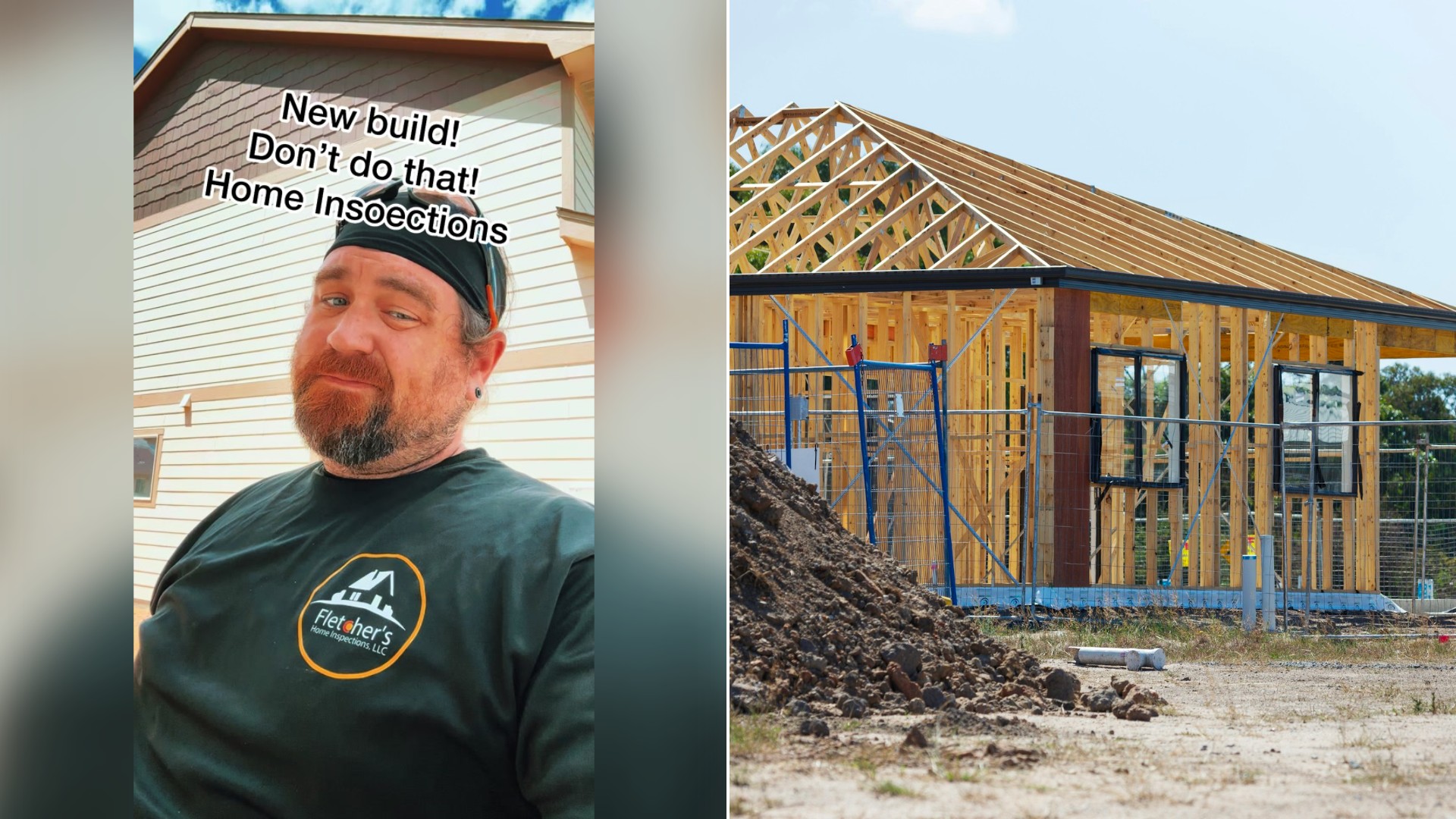
Inspector @inspector_fletch opens his walk-through with a simple line: “If I have a new build, we’ll see what we can find.” Seconds later he says it is “off to a good start,” and he does not mean it as a compliment.
@inspector_fletch
“Off To A Good Start”: Overdriven Nails Go All The Way Through
The first thing he points out is a run of overdriven nails. He says they go “all the way through,” which is the kind of detail a buyer would never notice standing in a finished room.
An overdriven nail is one hammered or shot in so hard that the head sinks past the surface of the material or punches through it. It matters because the nail is no longer holding the way the builder planned, and in framing, sheathing or roofing that can mean a weaker connection.
Many building codes and manufacturer instructions spell out how deep fasteners should sit, so inspectors treat this as more than a cosmetic gripe. It is one of the easier defects to fix while the walls are open, and one of the harder ones to find after drywall goes up.
A Big Soil Drop Right Along The Foundation
Next, he spots what he calls a big soil drop along the foundation. Soil that has sunk away from the house leaves a dip right where you least want one.
Ground around a home is supposed to slope away from the foundation so rain runs off instead of pooling at the wall. A common rule of thumb in home care guides is a drop of roughly six inches over the first ten feet, though local codes vary.
When new fill settles, which is common in the first seasons after construction, the slope can flatten or even reverse. Water then collects against the foundation, which is a setup for damp basements, cracked slabs and mold.
The fix is usually simple and cheap compared with the damage it prevents: add compacted soil, restore the slope and check that the downspouts carry water well away from the house.
“That’s Not Going To Seal Anything”
He then points at a bent piece of material and says plainly, “That’s not going to seal anything.” He voices concern about a spot that was supposed to be sealed and says it looks like a big slob of concrete instead.
Sealing is where many new homes fail, because gaps around pipes, vents, windows and foundation walls let in water, air and pests. A seal that is bent, missing or covered by a splash of leftover material is not doing its job.
For a buyer, the point is that a house can look finished and still be unfinished in the places that keep it dry. Water almost always finds the one spot a crew skipped.
“Possible Mold” In A Home That Has Barely Been Lived In
Then comes the moment that makes him stop. Looking at a surface, he says “we got a possible mold,” and adds, “this one’s rough.”
Mold needs moisture, and new construction can trap plenty of it. Lumber can get rained on before the roof goes on, drywall can be installed while framing is still damp, and a missed leak can keep a cavity wet for weeks.
The word he uses is “possible,” and that is the right way to treat it. Visible growth is worth a closer look, and a lab sample or a qualified mold professional can tell a homeowner what it really is. The more important job is to find and stop the water that fed it.
Concrete Dumped In The Sump Pump Pit: “Don’t Do That”
The strangest find comes last. Somewhere along the line, he says, concrete ended up in the sump pump pit.
His verdict sums up the whole walk-through in three words: “don’t do that.” Anyone who has dealt with a flooded basement can see why.
A sump pit collects groundwater so the pump can send it outside. If that pit is full of hardened material, the pump has nowhere to sit and nowhere to draw from, and the first heavy rain can turn a basement into a pond.
What A Buyer Can Do Before Closing On A New Build
You do not need to be a builder to protect yourself. These steps apply to nearly any new construction purchase.
- Hire your own independent inspector. The builder’s inspection and the city’s code inspection are not the same as someone working only for you.
- Ask about a pre-drywall inspection. Seeing framing, wiring, plumbing and fasteners before they are covered is the best chance to catch problems like overdriven nails.
- Schedule a final inspection before closing and attend the walk-through so the inspector can show you each issue in person.
- Ask for every repair in writing. A verbal promise is hard to prove later, while a signed punch list is not.
- Check the grading and drainage around the whole house, and look at the sump pit if there is one.
- Read the builder’s warranty carefully. Many cover workmanship for one year, systems for two and structure for ten, but terms differ, so confirm yours.
Take photos and dates of everything you find, and keep copies of all emails with the builder. If something shows up after you move in, report it inside the warranty window.
Brand New Does Not Mean Perfect
The inspector’s tour covers overdriven nails, a soil drop along the foundation, a seal that will not seal, possible mold and concrete in the sump pump pit, all in a house that was just built. His own question to viewers, “what do you think, folks,” sums up how many buyers would feel.
The takeaway is practical. A new house deserves the same careful inspection as an old one, and a few hundred dollars for a professional look can save thousands in repairs.
More Stories You May Like
- Couple Prosecuted Over A Veranda And A Backyard Building Added Without Permits Walks Away Without A Conviction After A Judge Finds Their Builder Misled Them
- New York Landlords Who Miss The 14 Day Deadline To Return A Deposit Or Send An Itemized Statement Must Hand Back The Entire Deposit, Damage Or Not
- Flipper Buys A House For $260,000 Fearing A $100,000 Rehab, Then Walks It And Lands On $60,000 And An $80,000 Profit Even With A Busy Road Outside
Leave a Reply