“Today I officially bought my first house at 19 years old.” That is how @landenlevine1 opens a short video that is equal parts proud, funny and a little bit humbling. He went from sleeping in his car to holding the keys to his own home, and then, in true first-timer fashion, he jumped straight into the pool before anyone remembered to turn on the water.
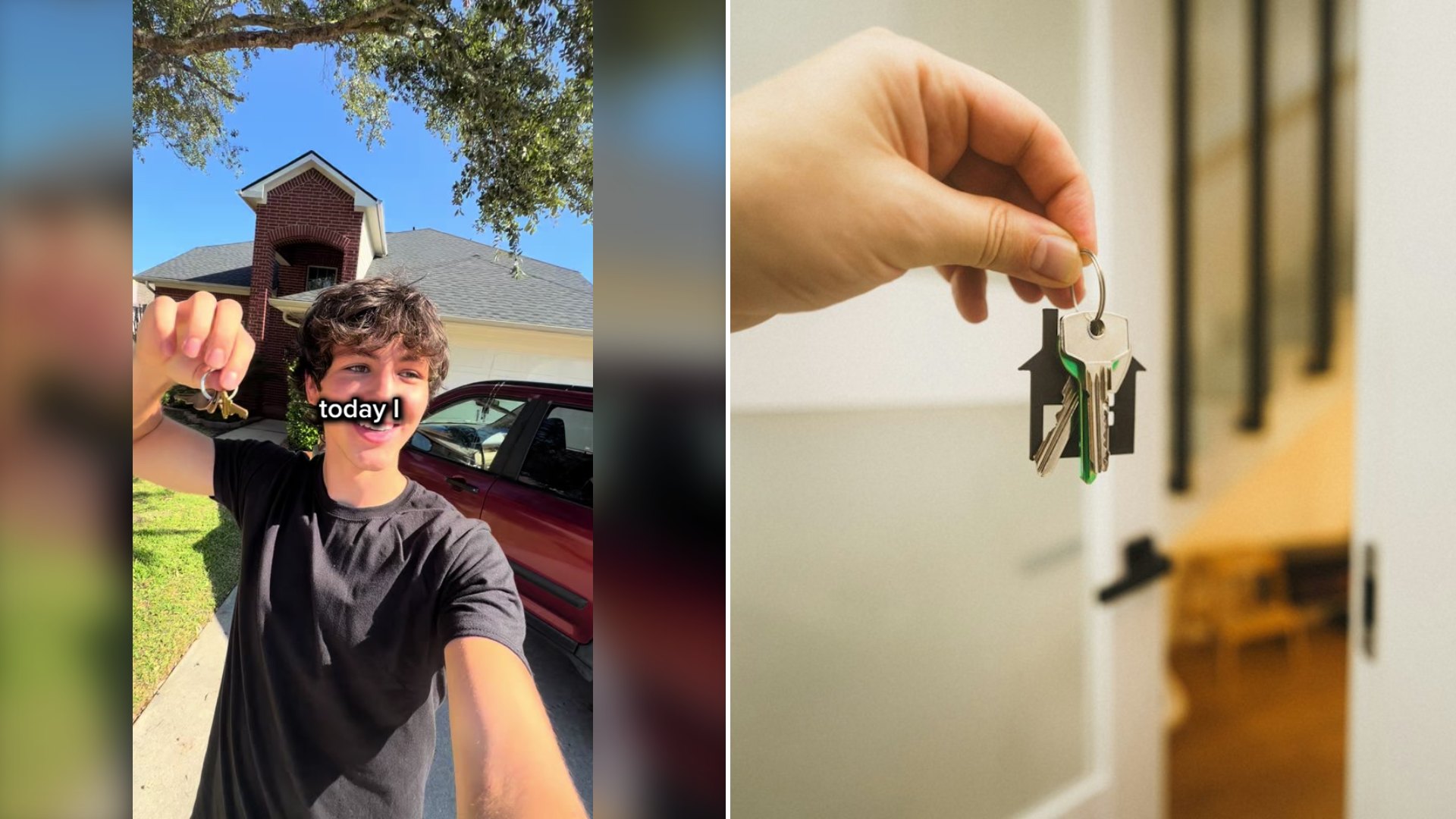
He does not pretend the road was easy. “It’s been the most stressful thing I’ve ever done in my life,” he says. He explains that he lived in his car until he could afford a place, and that the hardest part was getting approved for a home loan as “a teenager who is technically unemployed.”
His goal, he admits, had been to buy a house at 18. That did not quite happen. Then he pokes fun at himself: “I also thought I’d be a millionaire by 17, so I don’t know how realistic I was.”
Unlocking the front door for the first time hit him harder than expected. He describes it as an odd feeling, because it “went from just being a house to my house.” He also knows what comes with it. “That’s also a lot of responsibility,” he says. “Much more than rent.”
@landenlevine1
The Pool Jump, the Gym and the Air Mattress
Then come the rookie moments, which he shares with a grin. “One of the things I didn’t set up was the water,” he says, so the celebratory leap into the pool “ended up not being so great because I couldn’t shower afterwards.”
His priorities, by his own admission, “may have been a little off.” Before he owned a single piece of furniture or even a bed, he started building a home gym in the garage, a plan he says he had before he even picked the house. He could not get it all put together, and he had to run to the store for an air mattress, which is now his bed “until further notice.” His reasoning will make any thrifty grandparent smile: he is not paying two grand for a mattress.
“I am going to make this thing my dream house,” he says, “and this is just the start.”
Why Young Self-Employed Buyers Have a Harder Time
His line about being “technically unemployed” points to a real hurdle. Lenders want to see steady, documented income. A young person who earns money through side work, gig jobs, online business or contract work may be making a solid living and still look unemployed on paper.
For self-employed borrowers, many lenders ask for about two years of tax returns showing that income, along with bank statements. Younger buyers often have a short credit history too, which can make approval harder or the rate higher. Some lenders offer bank-statement loans built for self-employed borrowers, though these often come with higher rates and larger down payments. Anyone in this position should talk with more than one lender and ask exactly what paperwork they will need before house hunting.
How Family Can Help a Young First-Time Buyer
Many readers have children or grandchildren dreaming of their first place. If you want to help, here are a few smart ways to do it.
Gift money the right way. Lenders usually require a signed gift letter stating the money does not have to be repaid, plus a paper trail showing where it came from. Large gifts can also have tax reporting rules, so check with a tax professional before writing a big check.
Think hard before co-signing. Co-signing a mortgage makes you legally responsible for the debt. If payments are missed, your credit takes the hit, and the loan can affect your own ability to borrow. Only co-sign an amount you could afford to pay yourself.
Share the boring wisdom. Encourage a young buyer to keep an emergency fund for repairs, because there is no landlord to call when the water heater fails. A common rule of thumb is to set aside around 1 percent of the home’s value each year for maintenance.
The Move-In Checklist Nobody Remembers
His no-water moment is funny, but it happens to plenty of buyers of every age. Before closing day, make these calls.
Water and sewer. Contact the city or water utility to start service in your name, often a week or more ahead.
Electricity and gas. Set up service to begin on closing day so the lights, stove and furnace work when you walk in.
Trash and recycling. Some areas use the city, others use private haulers or an HOA contract.
Internet. Installation appointments can take a while to book, so schedule early.
Locks. Change or rekey the locks right after closing, since you never know who still has a key.
Insurance. Your homeowners policy should be active by closing day. Lenders require it, and it protects your biggest purchase from the first minute.
Find the shutoffs. Learn where the main water shutoff valve and the electrical panel are. If a pipe bursts, knowing where to turn off the water can save thousands.
Furniture can wait. A gym in the garage, apparently, cannot. For @landenlevine1, the house is a work in progress, and the journey from a car to a home of his own is clearly just beginning. As for that first swim, next time he will probably make sure the shower works first.
More From Willow and Hearth
- Inspector Says He Could Pull Loose Bricks Right Off the Sill of a New Build Then Asks What You Think of a Kitchen in a Closed Off Far Corner
- Pulte New Construction Inspection Shows a Very Different Experience Than the Inspector Expected
- Gardening Fix After an HOA Violation Shows How One Homeowner Solved It Without Paying a Fine
Leave a Reply