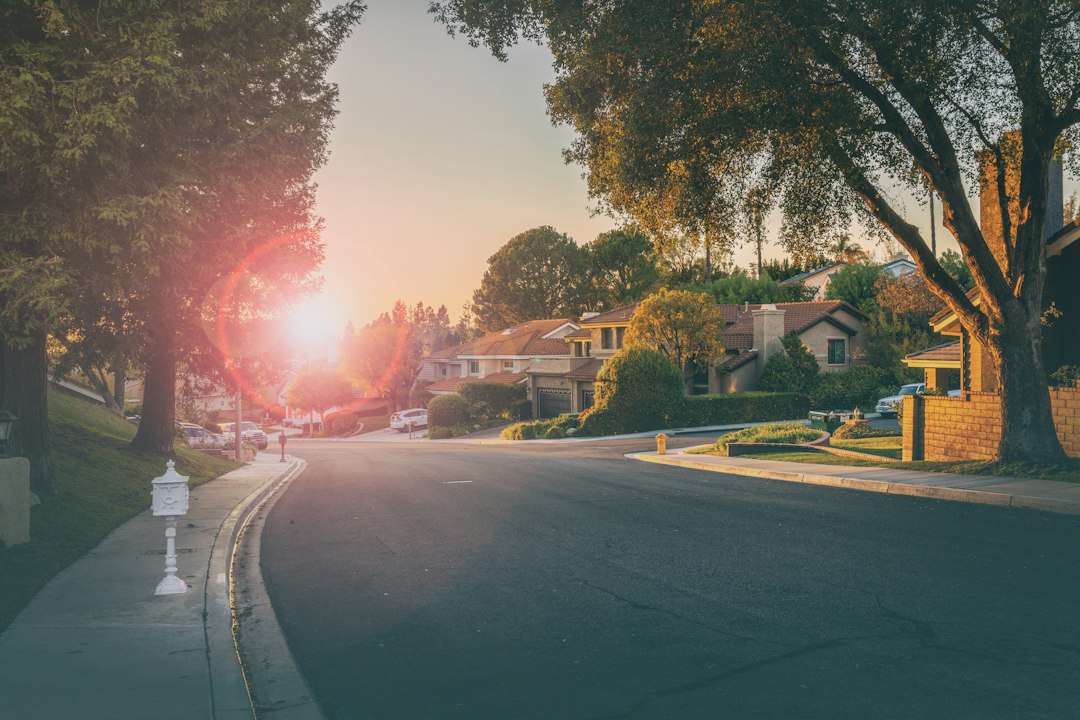
Cul-de-sac houses have a devoted following for good reason: less through traffic, a quiet dead-end feel, and often a bigger lot than a standard street-facing home. Real estate agents will tell you these listings tend to move fast, and the emotional appeal is easy to understand the moment you pull in.
But a cul-de-sac lot has its own quirks that don’t always come up during a quick showing. Here are seven worth thinking through before you assume dead-end automatically means better.
An Awkward, Pie-Shaped Lot
Houses at the curve of a cul-de-sac often sit on pie-shaped or trapezoidal lots, which means a narrow backyard that widens or narrows unevenly rather than the simple rectangle most people picture. This can make it surprisingly difficult to fit a pool, a straight fence line, or a standard-sized shed where you’d expect, and it’s worth actually measuring the usable yard rather than trusting the total square footage on the listing.
Snow Plow Piles and Turnarounds
In snowy climates, plows typically clear a cul-de-sac by pushing snow to the outer edge of the circle, which often means the homes at the end absorb a larger buildup than houses on a straight street. Depending on how the lot is graded, that snow pile can sit against a portion of the yard or driveway apron well into spring, something worth asking a cul-de-sac neighbor about if you’re buying in a region with real winters.
The Circle Becomes a Neighborhood Gathering Spot
The wide, low-traffic pavement of a cul-de-sac is exactly what makes it attractive to families with kids on bikes and scooters, which is a plus for some buyers and a source of noise and activity for others. Basketball hoops, chalk drawings, and evening gatherings tend to concentrate right in front of the end-of-street homes, so a cul-de-sac lot can mean more visible, ongoing neighborhood activity right outside your window than a mid-block address would.
Less Privacy Than the Quiet Reputation Suggests
Because several homes all face into the same small circle, cul-de-sac houses can actually have less privacy from immediate neighbors than a standard street layout, where houses are more spread out along a longer frontage. Sightlines into windows and yards from directly across the circle are often closer than buyers expect, which is worth noticing during a showing rather than assuming a dead-end automatically means seclusion.
Drainage and Utility Easements Concentrated at the End
Many municipalities route stormwater drainage or utility easements to the low point or turnaround at the end of a street, which is often exactly where a cul-de-sac sits. That can mean a drainage swale, a retention area, or utility access restrictions on part of the lot that limit where you can build a shed, plant trees, or install a fence. Checking the plat map for easements is worth doing on any lot, but it’s especially relevant at the end of a cul-de-sac.
A Smaller Pool of Comparable Sales
Pie-shaped, irregular cul-de-sac lots can be harder to comp accurately at resale time, since appraisers and buyers are comparing against a smaller set of similarly shaped properties rather than a street full of uniform rectangular lots. This isn’t necessarily a dealbreaker, but it can mean more variability in how quickly the home sells and how confidently it’s priced when it’s your turn to list it.
Heavy Guest Parking Right at Your Curb
Because a cul-de-sac has limited street frontage split among several homes, overflow parking from gatherings at any house on the circle often ends up along the curb in front of whichever home has open space, which is frequently one of the end lots with the most curved frontage. Buyers who value a quiet, unobstructed view from their front window should ask how parking typically plays out on the specific circle they’re considering.
Leave a Reply