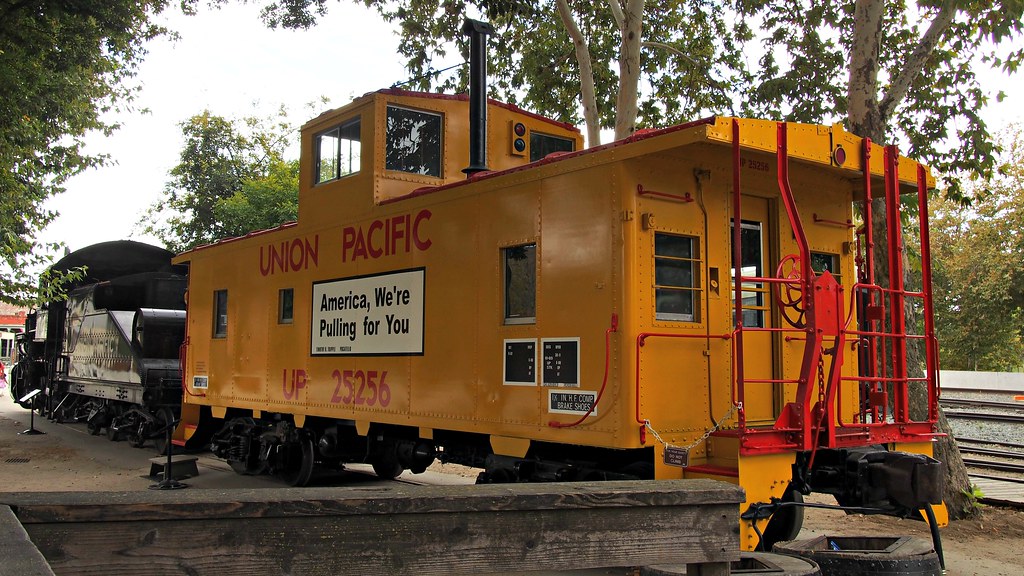
A three-bedroom house on a private acre in Malibu’s Point Dume neighborhood changed hands last year for $11 million, and the most talked-about square footage on the lot isn’t inside the main house at all. It’s a retired railroad caboose sitting in the backyard, fully plumbed and wired, with a kitchen, a bathroom with a rainfall shower, a built-in dining nook and a rooftop deck. TMZ confirmed the sale price after actor David Duchovny put the property on the market that spring. The caboose isn’t a prop or a gimmick tucked next to a pool for photos. It’s a working guest suite that its owner used for years as an actual place to sit down and write.
A guest room built from a car that used to ride the rails
Cabooses like this one spent their working lives at the back of freight trains, riding along for whatever distance the line covered before being uncoupled at the yard. For most of the 20th century, a caboose wasn’t optional. Crews used them to watch for shifting loads, overheating wheel bearings and other trouble a locomotive engineer couldn’t see from the front of a mile-long train. That changed fast in the 1980s. Union Pacific’s own company history traces the shift to small electronic End of Train devices the railroad began installing on rear couplers in 1984, which could relay brake-line pressure back to the engineer and let him trigger an emergency stop without a crew member riding in back. Within a few years, thousands of cabooses across the country were surplus. Some got scrapped. Others got sold off to whoever wanted a piece of railroad history sitting in a field.
That’s the version of a caboose most people picture: rusting out behind a barn, a roadside curiosity outside a small-town museum. This one took the opposite path.
What the listing actually leaned on
Duchovny bought the Point Dume lot in 2016 for $4.75 million and tore down the house that was already there, according to the Malibu Times, which covers real estate in the community where the sale happened. In its place he built a 3,577-square-foot home with a lap pool and deeded access to the beach, and he spent roughly $1 million restoring the caboose alone, per Elite Agent’s reporting on the listing. That’s not a rounding error on a $12.5 million asking price.
It’s a real construction budget for one small structure, and it shows in the details: Douglas fir paneling, accordion glass doors that fold the whole front wall open, refrigerator drawers built into a mini kitchen, and a stone vanity in the bathroom, according to Fox Business’s coverage of the sale. A covered deck with built-in heaters sits just outside, per TMZ’s original report on the listing that April. None of that reads like a novelty add-on. It reads like someone treated a piece of scrap railroad equipment the way most owners treat a primary bedroom.
Why the history matters more than the gimmick
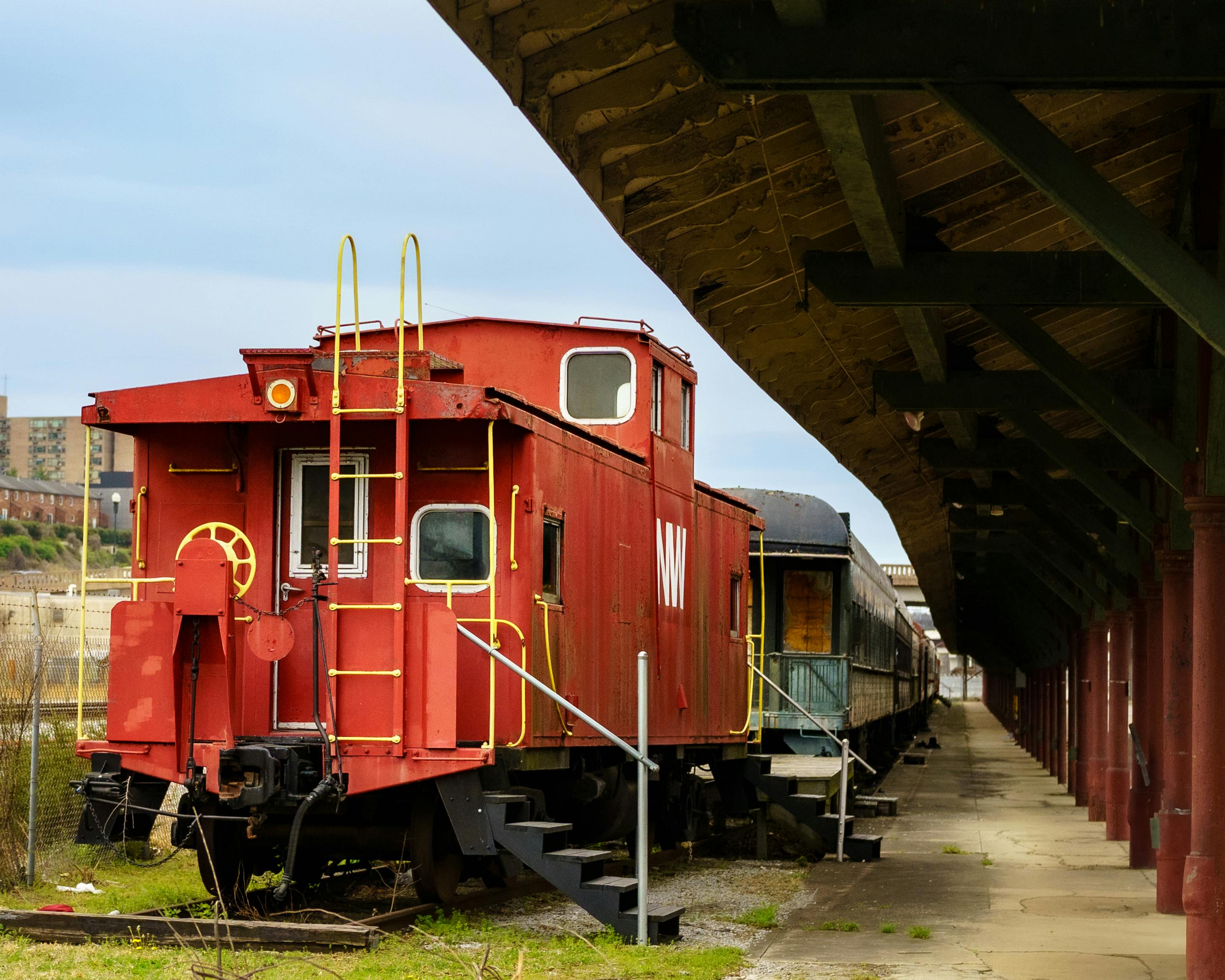
The listing materials didn’t specify which railroad the caboose rode for or what decade it was built, and no outlet covering the sale has pinned that down either — which is honestly typical for this category of property. Most cabooses change hands two or three times between a railroad’s retirement yard and someone’s backyard, and paperwork tracing a specific car back to specific freight routes rarely survives the trip. What buyers and agents lean on instead is the type itself: the boxy silhouette, the cupola or bay window crews used to watch the train, the steel or wood-sided body built to take decades of vibration and weather.
That’s the part real estate listings for these conversions are selling as much as square footage. Elite Agent and Fox Business both frame the caboose as one of the property’s defining features rather than a footnote, and Duchovny is reported to have used it as his actual workspace, writing his 2021 novel “Truly Like Lightning” and recording episodes of his podcast inside it rather than in the main house. That’s the pitch a caboose conversion makes to a buyer that a converted shed or prefab studio can’t: this specific object did a job for decades before it did this one.
The house sold for $11 million against a $12.5 million ask, a gap that’s ordinary in a slower luxury market and says nothing about whether the caboose delivered on its own terms. What it did do was give a fairly conventional new-construction listing in a neighborhood full of them a detail nobody else on the block can match. Whoever bought the place inherited a guest suite with a working history behind it: the last stop on a train car’s second career, parked for good in the one place it was never designed to sit still.
Leave a Reply