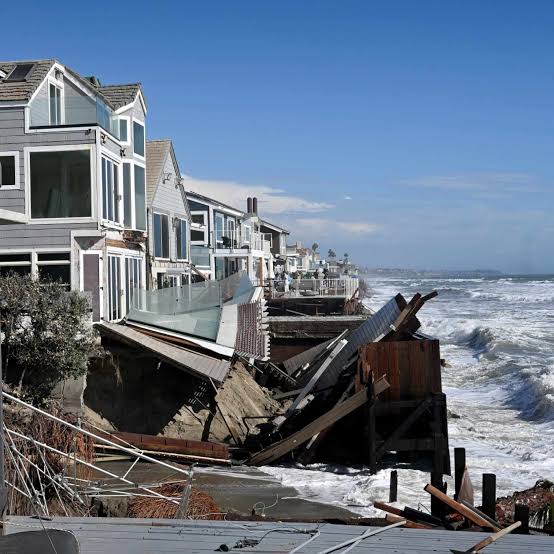
Beach Road in Dana Point looks like a construction site right now, and for once that’s a welcome sight to the people who live there. Crews spent this week hauling roughly 500 boulders, some weighing up to three tons apiece, onto the sand at low tide after punishing surf from Tropical Storm Marie undermined seven oceanfront homes so badly that Orange County inspectors red-tagged every one of them as unsafe to enter, according to NBC Los Angeles.
Marie never made landfall. The storm stayed hundreds of miles offshore, but it aimed a long, steady swell straight at Southern California just as evening high tides were already running elevated. That combination is what did the damage, not any single dramatic wave. Along the Capistrano Bay District stretch of Beach Road, the pounding surf chewed through decking, stairways and, in at least one case, the ground supporting the home itself. MyNewsLA reported that one house partially collapsed into the sea, while two additional homes were yellow-tagged, meaning residents can enter briefly but not stay.
A Neighborhood Built for a Gentler Ocean
Most of the houses now wrapped in rock were built in the 1950s, back when the beach in front of them sat much wider and the tide didn’t reach the foundations. Orange County Board Vice Chair Katrina Foley toured the damaged stretch and has been coordinating with residents on next steps, including faster permitting for emergency repairs and a longer-term look at replenishing sand along that part of the coast, per MyNewsLA. The California Coastal Commission has already issued emergency coastal development permits so the boulder placement could move fast enough to matter, since every day of exposed foundation is another day of risk.
Dana Point wasn’t alone in getting battered. Up the coast in Long Beach, roughly 20 homes were evacuated as the same swell pushed water further inland than expected, and Malibu saw its own share of damaged decks and flooded ground floors, according to NBC Los Angeles. CBS Los Angeles confirmed the same seven-home red-tag count on Beach Street, describing entire sections of homes essentially washed away by the repeated wave impacts.
Why Boulders, and Why Now
The rock isn’t a permanent fix. It’s a stopgap, dropped in place during the narrow low-tide windows when crews can actually get trucks onto the sand without themselves getting swamped. The goal is simple: absorb the next round of wave energy before it reaches what’s left of these foundations, buying homeowners time to figure out real repairs while the emergency permits are still active. County officials have also flagged that the underlying problem is bigger than one storm. Beach nourishment, essentially trucking in new sand to widen the buffer between the surf and the houses, is now part of the longer conversation for that stretch of coastline.
For homeowners, the math right now is brutal. A red tag means no insurance adjuster is going to let anyone move back in until an engineer signs off, and getting that engineer scheduled during a countywide surge in storm damage claims is its own headache. Every one of the seven households is effectively displaced, watching contractors and geologists pick through what’s left of their decks and pilings while the rocks outside do the job the sand used to do on its own.
A Preview of a Bigger Question
Southern California’s coastal towns have leaned on seawalls, rock revetments and sandbags for decades, and each fix tends to buy a decade or two before the next serious swell tests it again. Marie wasn’t even a landfalling storm, just an offshore system strong enough to send a swell this far, and it still managed to red-tag seven houses in a single week. That’s the part locals keep circling back to: it didn’t take a hurricane hitting Dana Point directly to produce this kind of damage, just a well-timed combination of surf and tide.
The boulders will likely stay through the rest of storm season while county planners and Coastal Commission staff sort out what comes next for Beach Road. Whether that ends with a formal seawall, a sand replenishment project, or something else entirely is still an open question. For now, the rocks are doing exactly what they were trucked in to do: holding the line, one low tide at a time.
Leave a Reply