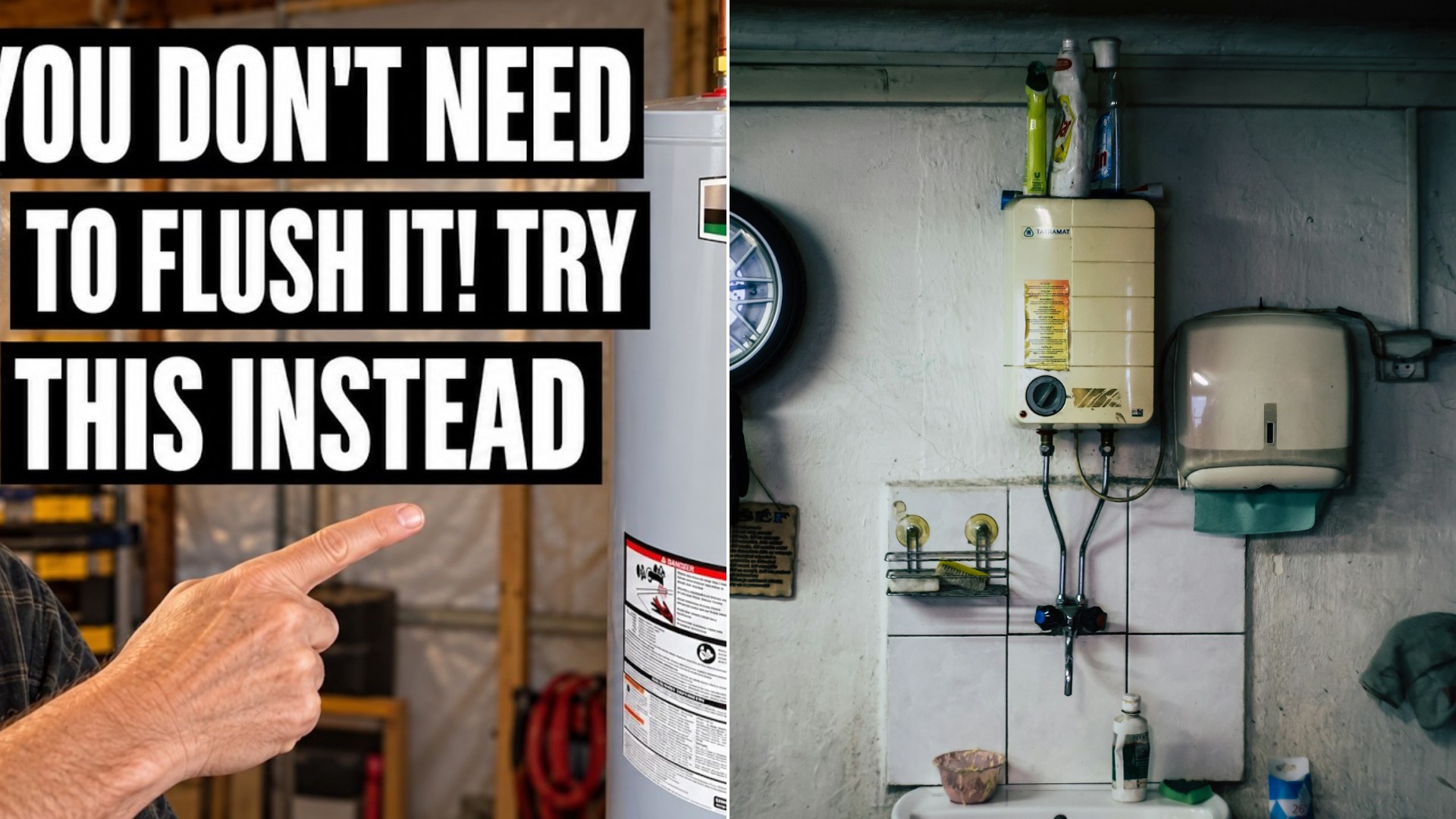
Every spring somebody tells you to flush your water heater. A retired home inspector says that on an older tank, that advice can turn a heater that works into a heater that leaks.
He spent 31 years inspecting homes, and he says in a video on his YouTube channel that he has seen it happen more times than he would like to count.
He stops short of calling flushing always wrong. He walks through the four problems folks try to flush away, and how to tell which one you have before you touch that drain valve.
The Flushing Advice Sounds Reasonable, But Old Sediment Does Not Wash Out Like Sand
The first problem is sediment, and it is where the flushing advice started. Minerals settle out of the water and pile up in the bottom of the tank. Open the drain valve once a year, the thinking goes, and the crud runs out the garden hose.
On a newer heater that has been flushed since day one, he says that is more or less how it works. An older tank is different.
On a tank that has sat in a basement for years, that material is no longer loose sand. A good bit has packed down and hardened, and with hard water it gets “hard as a rock.”
When you open the valve, the water takes the easy way out. He compares it to a creek cutting through a gravel bar. Soon it runs clear, you figure you did the job, and most of the build-up is still sitting where it was.
“The Bigger Risk Is That Valve You Just Opened”
He says the sediment that stays put is the smaller risk. The bigger one is the drain valve near the floor, which is plastic on most builder-grade tanks and brass on some others.
If it has not been turned since you moved in, it has been sitting under water pressure with sediment packed right behind it. When somebody opens one for the first time in years, he has seen three things happen.
- Sediment plugs it and you get barely a trickle.
- It drains fine and then will not seal back up, leaving a slow drip on the basement floor.
- An old plastic valve cracks or the stem snaps off, and water comes out that the valve cannot stop.
A drip at the drain valve is fixable, he says, but it is a repair you did not have until you went looking for maintenance. On an older tank, the plumber may be fighting rusted threads, too.
His advice is that if your heater has some years on it, has never been flushed and is not giving you trouble, think long and hard before poking at it just because a checklist says so. If you already opened it and it will not quit running, call a plumber.
If you do have it flushed, ask one question first. What is the plan if that valve will not close back up? A good plumber will have an answer, and often has a new valve on the truck.
A Rumbling Tank Is “A Clue, Not A Diagnosis”
The second problem is noise. Many people flush because of a popping, rumbling sound, like an old coffee pot, usually right after the burner kicks on in a gas heater.
The usual explanation is that water trapped under sediment is heated and pops up through as steam bubbles. He says that is real on some tanks. But he has been in houses where the heater rumbled just as loud after a flush, and he has seen heaters make that racket for years and keep going.
On a newer tank that just started making noise, a professional flush or descale might be worth a try, especially if the manual calls for it. On an old tank that has rumbled for years, he says flushing is usually a good way to spend money and disturb a valve, while the noise stays.
What he watches instead is what is around the noise. Is there water under the tank? Rust on the bottom seam or at the fittings on top? Is the heater near the end of its expected life?
He also tells people to find the temperature and pressure relief valve, the one with a little lever and a pipe running toward the floor. Its job is to keep the tank from building dangerous pressure. If it is dripping or hissing, do not play with it and never cap that pipe. Call a licensed plumber.
Rotten Egg Smell In The Shower Will Not Be Fixed By Draining The Tank
Problem three is the smell, which he says flushing does the least for. People turn on the shower, get a rotten egg odor, flush the tank, and about a week later the smell is back.
Inside the heater is an anode rod, a metal rod whose job is to corrode so the steel tank does not. In many heaters it is magnesium. When certain bacteria meet that rod in a warm, dark tank, they can make hydrogen sulfide gas, the rotten egg smell.
Draining and refilling does not change the rod, and does little about the bacteria.
Before spending a dime, he suggests a test at the kitchen sink. Run only cold water and sniff, then only hot. If just the hot water stinks, the heater is very likely the source. If the cold smells too, the sulfur is coming in with your water, which is common with well water, and neither a new rod nor a flush will fix it.
For a hot-only smell, talk to a plumber who knows your local water. There are anode rods made of different metals and powered ones, and he can say which makes sense. Do not pull the rod and plug the hole, he warns, since that rod protects the tank and you may trade a smell for a tank that rusts out sooner and a voided warranty.
Hot Water That Runs Out Fast May Be A Burned Out Element, Not Sediment
The fourth problem is hot water that does not last. A shower that used to go on and on now goes lukewarm halfway through, and people assume sediment.
On an electric heater, he says look elsewhere first. An electric tank usually has two elements, one up top and one low. The top one heats first, then hands off to the bottom one. The bottom element sits where sediment collects, and is usually the first to give out.
When it quits you do not lose hot water altogether, because the top element still heats the upper part. You get some hot water and then it runs out fast. Flushing will not help a burned-out element.
Checking one means working around 240-volt wiring, so he leaves that to a plumber or electrician who will shut off the breaker and test it right. The good news, he says, is that an element is usually a much smaller bill than a new heater.
For a gas heater that runs short, the causes involve the burner and gas controls, so have a pro look. And if you ever smell gas, get everyone out of the house and call the gas company from outside.
When He Would Not Argue Against A Flush, And How He Sorts The Rest
He says there are times he would not argue. First, read the owner’s manual, since some manufacturers call for draining on a schedule. Tankless heaters usually need descaling. Second, think about your water, because hard and well water put more minerals in the tank. Third, check age and history by finding the label on the side, since the serial number usually tells when it was made.
He also suggests taping a card to the heater with the install date and every flush or part replaced. When he found one in a house, he says, he knew somebody was paying attention.
Here is how he would sort it on an inspection report.
- Fix it now: water on the floor, a leak at the tank or fittings, a relief valve that drips or lets go, or any smell of gas.
- Get it looked at soon: hot water that runs out fast, especially on an electric heater, and a rotten egg smell only in the hot water.
- It can wait: an older heater that rumbles a little but works. Watch the floor, know its age, and set a little money aside for replacement.
- Get another opinion: anyone who says a flush will cure the noise, the smell or short showers on an old tank, or who says you need a new heater before an element or anode rod is checked.
Paying for a yearly flush on an old tank that has never been flushed and gives no trouble, he says, does you more good in the replacement fund.
More Stories You May Like
- Couple Turns Grandma’s Bare Concrete Shell Where She Lived 10 Years Without Running Water Into A Cozy Modern Home For Only $600
- Inspector Is Told the Builder’s Quality Control Team Already Fixed Everything on a New Build and Finds a Toilet That Will Not Flush and Water Coming Up the Shower Drain
- EPA Says Every Home Should Be Tested For Radon Because High Levels Turn Up In Every State And Many Kits Cost Under $25 But 4 Picocuries Per Liter Means Fix It
Leave a Reply