Home inspector Jordan, who posts as @inspector.jordan, has a favorite moment on the job, and it is not a happy one for builders. He pulls up to a new build inspection and steps out of his truck, and the project manager is waiting out front with a smile and a speech.
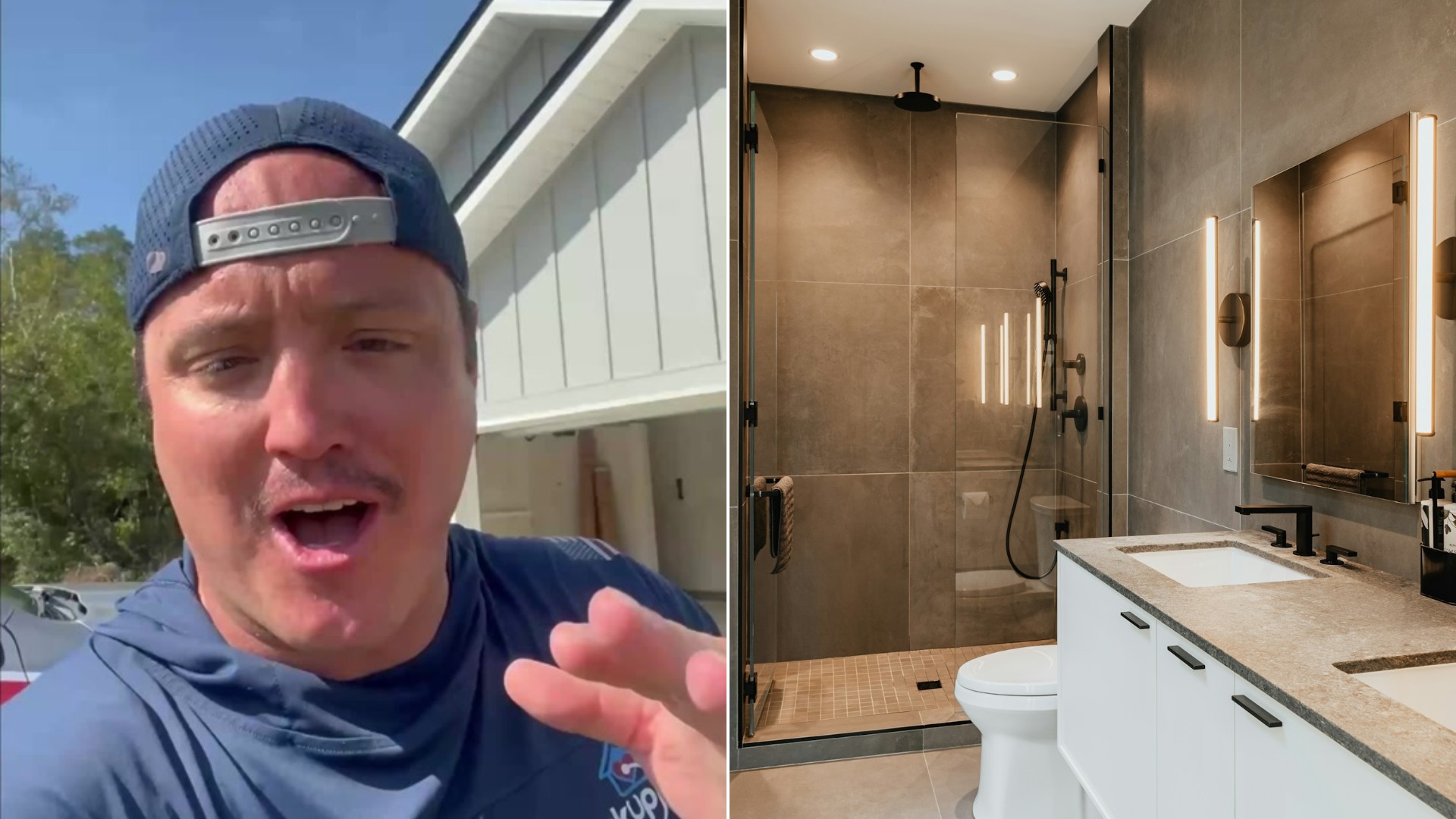
“Jordan,” the manager says, “we already had our own quality control team come through here. We had a few things that needed fixed. We got it all fixed, and this house is ready for you to inspect.”
Jordan has heard that one before. “Let’s have some fun,” he says.
@inspector.jordan
Starting on the front porch
The first stop is the front porch, where there is an exterior receptacle. His tester shows power at the outlet, so he holds down the test button. He keeps it held down in case the panel is an Eaton, and the outlet still does not trip. The outlet is not GFI protected, and it should be.
That is a big deal, because a GFCI outlet is designed to cut power fast if electricity strays, which matters a great deal outdoors, where moisture is common. Electrical code in the United States calls for it on outdoor receptacles.
Gurgling, then a toilet that will not flush
Inside, things get stranger. He hears gurgling at the kitchen sink. Then there is gurgling at the toilet. He also points to an expansion joint in the exterior brick. It belongs there, but it needs to be sealed so moisture and bugs cannot get in, and he notes that the real county code inspector will require it.
Then he tries a toilet and finds it will not flush. Water appears to be coming out of the bathtub as well. He glances at a big white plumbing vent pipe that may need to be strapped, and then it happens: water comes up through the shower drain.
“Okay, we better shut the water off,” he says, “because I have a feeling we’ve got an issue with the sewer line.” In his words, it is bringing so much joy to his life.
The rest of the walk-through is a string of smaller problems. The front door will not latch. A closet door will not shut. Something is loose. He closes on a light note, saying he really likes the two-tone brick option on the house and hopes nobody power washes it, and he leaves the builder with plenty to fix.
If a vent pipe is not strapped, it can shift or loosen over time, so even small items on an inspection report are worth fixing now. Sealed expansion joints matter too, since gaps in exterior brick let in water and insects, and that kind of damage is slow and quiet until it gets expensive.
What the “we already fixed it” line really means
Builders do have quality control walks, and a good one catches real problems. But a builder’s checklist is not the same as an independent look by someone working for you. A line like “everything is fixed” should be a starting point, not a promise.
Look at what Jordan found in a short walk: an unprotected outdoor outlet, drains that gurgled, a toilet that would not flush, water backing up in a shower and doors that did not work properly. A backed-up drain is more than an annoyance. It can mean a blockage or a problem with the sewer line, and wastewater backing up into a home is a health concern as well as a mess.
The takeaway is not that every builder cuts corners. Most do not. It is that a second set of eyes costs little compared with the repairs and headaches that can follow a home purchase.
How to protect yourself when buying new
- Hire your own inspector. Pick someone with no ties to the builder, and ask for a sample report so you know how detailed it is.
- Schedule it before closing. Everything on the list can still be fixed by the builder at no cost to you.
- Be there if you can. Following the inspector shows you how your house works, from the main water shutoff to the panel.
- Test it yourself. Flush every toilet, run every tub and sink at the same time for a few minutes, and watch the drains for slow draining or gurgling.
- Try every door and window. Make sure they latch, lock and close without force.
- Ask about the sewer line. If there are signs of trouble, a camera inspection can show what is going on underground.
- Put the repairs in writing. Get a list of what the builder will fix, with dates, and check the work before you sign.
- Do a final walk-through. Once the repairs are done, take another look rather than assuming they were completed.
A new house should be the easy kind of purchase. As Jordan shows, the smartest buyers are the ones who still take a careful look, even when someone swears the job is done.
More Stories You May Like
- Homesteader Tests Pappy’s Banana Peel Water On Tomatoes Against A Control Group To Find Out If The Old Timer Was Right Or Needs To Get Off Facebook
- Couple Bought 10 Acres of Land and Ended Up in a Fence War With the Neighbor That Is Now on Part Seven, and Their Advice to New Landowners Is Simple
- Couple Restoring An 1888 Home Clears The Attic And Finds A Sewing Machine, A 1920s Chemical Company Ledger And A Glass Display Cabinet
Leave a Reply