Anyone who has cleaned out an attic knows the feeling: hours of dust, a mountain of boxes, and the quiet hope that something wonderful is hiding in the back. One couple restoring a Victorian home says they got a little of both. Creator @paulinekulka shares what her husband turned up after spending a full day clearing the attic of their 1888 house, and a few of the finds are real conversation pieces.
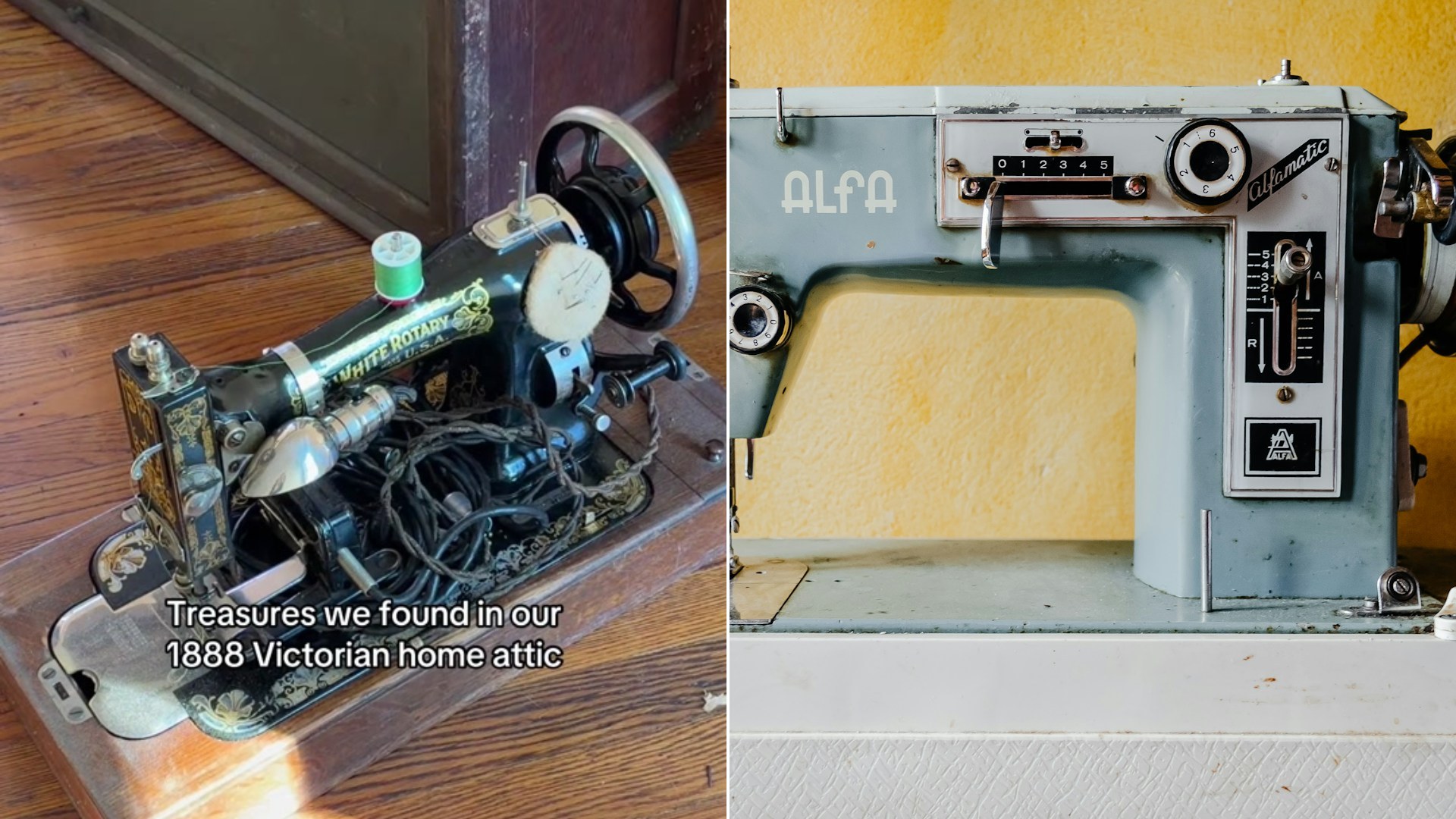
The attic, she says, was mostly tax returns and a pile of wood. But tucked in among the paperwork and lumber were a few items she calls “gems.” Here is what they found, and how to care for the things you uncover when you start digging into a house this old.
@paulinekulka
The attic finds, one by one
The creator walks through the haul as she goes. Her husband spent all day clearing the space, and she says he left one item as a surprise for her. Here is the list as she tells it:
- A sewing machine. The surprise her husband left for her to find.
- A business ledger from the 1920s. She says it is one of the working ledgers kept by a former owner of the house, who she believes ran a chemical company. From what she has read about him, that fits.
- A glass display cabinet. She asked her husband to bring it down from the attic so they could restore it. She thinks it dates to the late 1800s and says it is a glass display cabinet, though she admits she is not quite certain what it is yet. A good cleaning, she says, should help her see it better.
- Old wood and trim. She still needs to work out which of it is actually original to the 1800s.
- One more mystery piece. She says she does not know what it is yet, but she plans to find out.
That last item is a lovely reminder that restoring an old house is part construction project and part detective story. Every unknown object is a puzzle that can tell you who lived there and how they spent their days.
Why that 1920s ledger matters
Of everything in the attic, the ledger may be the most valuable in a way that has nothing to do with money. A working ledger from the 1920s is a snapshot of a real person’s business: what he bought, who he sold to and what things cost. If the owner really did run a chemical company, the pages could even help the couple understand who he was and how the house fit into his life.
Old paper is fragile, though, and an attic is one of the worst places to keep it. The Library of Congress, in its guidance on caring for paper, recommends keeping papers cool and relatively dry, around 35 percent relative humidity, and says to avoid attics and basements. It also advises keeping them away from direct light, radiators and vents.
A few more handling tips from the same guidance are easy to follow:
- Keep your hands and work area clean, and keep food and drink well away.
- Do not use tape, glue, rubber bands or paper clips on old paper.
- Use a pencil, not a pen, for any notes you need to make.
- Store papers in acid-free and lignin-free folders and boxes.
- If the paper is damaged or has a persistent problem, ask a paper conservator for help. The American Institute for Conservation keeps a directory you can search by location.
That guidance covers flat papers rather than bound books, so for a bound ledger the safest plan is to handle it gently, support the spine, and ask a conservator before attempting any repair.
Tips for the glass cabinet and the old trim
The creator says she wants to clean the cabinet up before deciding exactly what it is. That is a smart instinct. With antiques, the gentlest approach is almost always the right first step.
- Start dry. Dust and soft-brush the piece before using any moisture. Many old finishes are shellac or varnish, which can cloud or lift if they get too wet.
- Test in a hidden spot. Try any cleaner on the back or an inside corner first.
- Look for clues. Dovetail joints, hand-cut nails, hardware and the type of glass can all help date a piece. Wavy or slightly bubbled glass is often a sign of older manufacturing.
- Take photos before you touch anything. Document the condition first so you always know what was original.
- Do not strip or sand too early. Once original finish is gone, it is gone for good.
The salvaged wood and trim deserve the same patience. The creator says she needs to figure out what is truly from the 1800s. A simple way to start is to compare the profile and thickness of the old pieces with the trim still in place around the house. Original trim in a Victorian home is often taller and more detailed than what was added in later decades, and it tends to have a distinctive, aged look. Keep anything that matches, label it by room if you can, and store it flat and dry so it does not warp.
Finding the story behind the stuff
You do not need a library degree to learn about the people who lived in your home. The couple already has a head start in the ledger and the owner’s name. A few simple steps can turn that into a real story:
- Ask your county recorder’s office for the chain of deeds so you can see who owned the property and when.
- Check with the local historical society, which often keeps city directories, photographs and maps.
- Look through old newspapers, many of which are now searchable online, for mentions of the owner or his business.
- Talk to longtime neighbors, who sometimes remember details that never made it into any record.
As for the sewing machine, the maker’s name and a serial number are usually printed on the machine itself, and those can help narrow down when it was made. It is also worth checking whether it turns freely and whether all the parts are present before deciding to restore it, display it or pass it along.
The best part of a slow restoration
What stands out in this update is how relaxed and curious the owners are. They did not rush to throw everything away. The husband sorted a whole attic by hand, set aside the interesting pieces, and left one as a gift. The wife is planning to clean, research and identify before making any big decisions. That slow, careful approach is exactly what makes old houses worth saving.
Tax returns and scrap lumber may not sound like treasure, but sometimes the real find is the ledger that tells you who built the life inside your walls. For anyone clearing out an attic of their own, the lesson is simple: look closely at the boring-looking boxes before you haul them away.
Leave a Reply