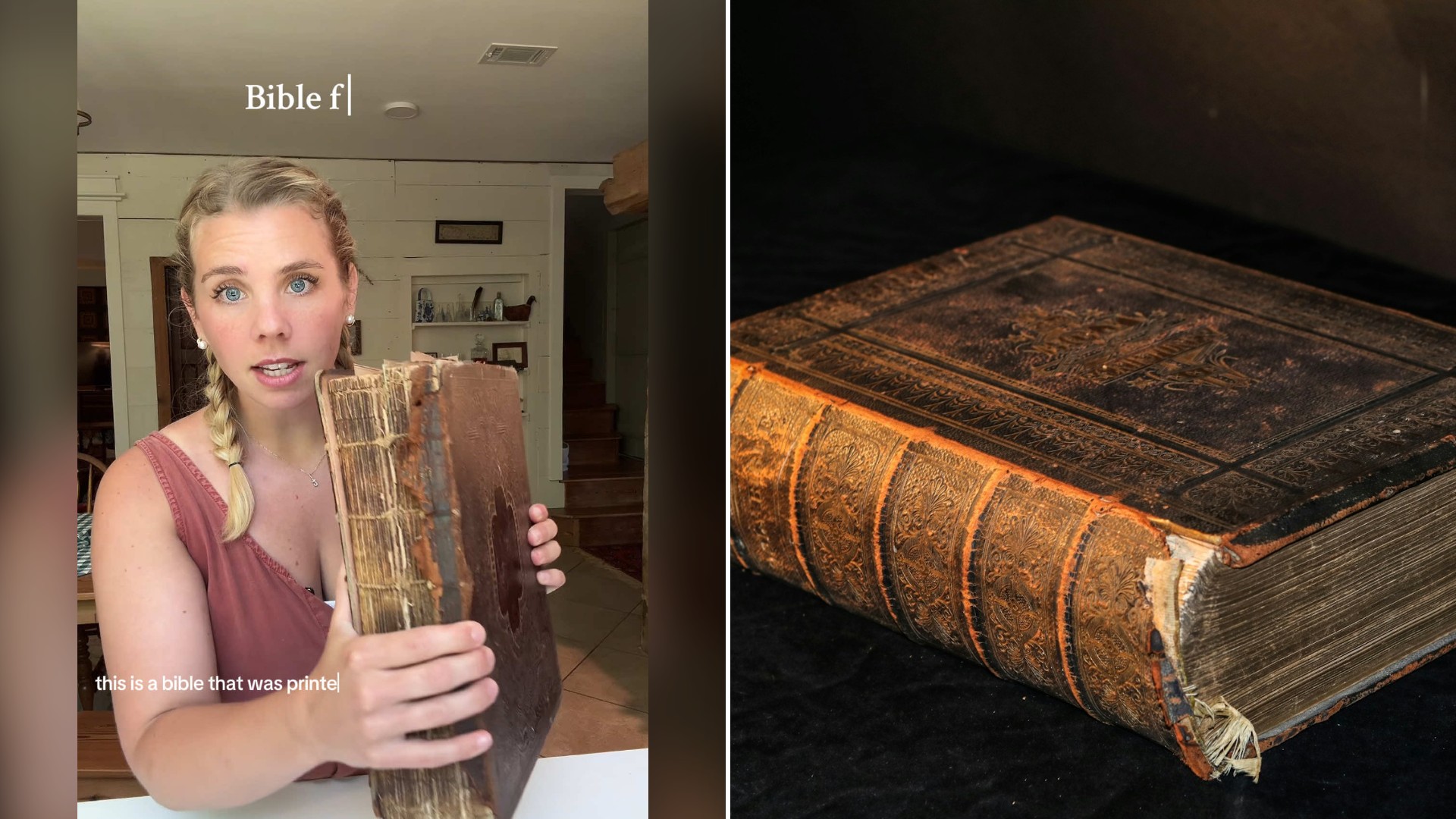
Buying a house usually means getting keys and an empty set of rooms. For @marykateblount, it meant inheriting a home still full of the previous owners’ belongings, and months of sorting turned into a real treasure hunt. Two finds stood out above the rest: a Bible printed in 1870 and a book of poetry written by her own great grandmother.
The poetry book came as a complete surprise, because she had no idea her great grandmother ever wrote anything. Here is how the story unfolded, followed by general advice for anyone who ends up with a house full of someone else’s things.
@marykateblount
A Deal With the Previous Owners
The creator explained that the arrangement she worked out with the previous owners was unusual. They did not have to move anything out. They held a couple of estate sales, and whatever they did not want or did not sell was simply left in the house for the new owners to deal with. The result, she said, was that she ended up with a lot of stuff. Rather than hauling it all to the curb, she and her family went through everything slowly, and the process stretched over months.
The Bible From 1870
The first item she shared was a Bible that was printed in 1870. She was upfront that it had not been well cared for over the years, and the spine was falling apart. Even so, she was clearly delighted by the age of it and asked how cool it is to hold something from 1870. Inside, she pointed out an inscription written in memory of a Mrs. Bloodworth, found in the book of Isaiah. She also noticed a piece of paper tucked in the pages that looked as if someone had been calculating ages, subtracting years as they went. Small, handwritten traces like these are what make old books feel personal.
A Poetry Book With a Family Name
The second find was even more personal. While going through the house, she came across a poetry book called The Celebration of Faith, written by May English, who turned out to be her great grandmother. She had never known her great grandmother wrote poetry. The book was a full collection of poems, and she thought it was really cool to find it in her own home.
Asking Meemaw
She took the book to her meemaw and said that nobody had told her Nanny wrote poetry and self published a book. Her meemaw’s answer was casual. Oh yes, she did that in the 90s. For one generation it was ordinary family knowledge, while for the next it was a discovery tucked inside a house that had once belonged to someone else. That small exchange is a good reminder of how much family history can go unspoken simply because nobody thought to bring it up.
Months of Sorting Pay Off
In the caption she described the whole experience as a treasure hunt that took months. That patience paid off. By going through everything instead of rushing, she turned a house full of leftover belongings into a collection of stories, including a connection to her own family that she never expected to find.
General Tips for Sorting a House Full of Belongings
If you ever inherit or buy a home with things left inside, these general tips can help you work through it well.
Old books deserve some care once they turn up. Dust the cover gently with a soft brush, avoid tape or glue on loose pages, and keep the book lying flat on a shelf rather than leaning, since a weak spine can crack under its own weight. If a volume looks rare, a local library or rare book dealer can offer guidance on its condition and worth.
- Get the arrangement in writing. If belongings will stay after closing, make sure the agreement says who is responsible for them and what happens to anything left behind.
- Sort in small sessions. Working one room or one shelf at a time keeps the job from feeling overwhelming and helps you notice details you might miss in a rush.
- Open every book. Old books often hold notes, dedications, pressed papers and family records tucked between the pages.
- Handle fragile items gently. For old paper and bindings, clean hands, a flat surface and support under the spine go a long way, and a conservator can advise on anything truly valuable.
- Store keepsakes well. Acid free boxes and a cool, dry spot away from direct sunlight help paper last longer than a damp basement or a hot attic.
- Ask relatives questions. An older family member may recognize a name, a book or a photograph and can fill in the story behind it.
- Write down what you learn. Notes about who owned an item and where it was found make it far more meaningful for the next generation.
A House That Kept Its Stories
What began as a practical problem, a house stocked with leftovers, ended with an 1870 Bible and a poetry book from a great grandmother who had quietly published her own work. The lesson is a gentle one. Before you donate, discard or box up a stranger’s belongings, take the time to look closely. Sometimes the most meaningful part of a new home is something the last owners left behind, and sometimes it was part of your own family story all along.
Leave a Reply