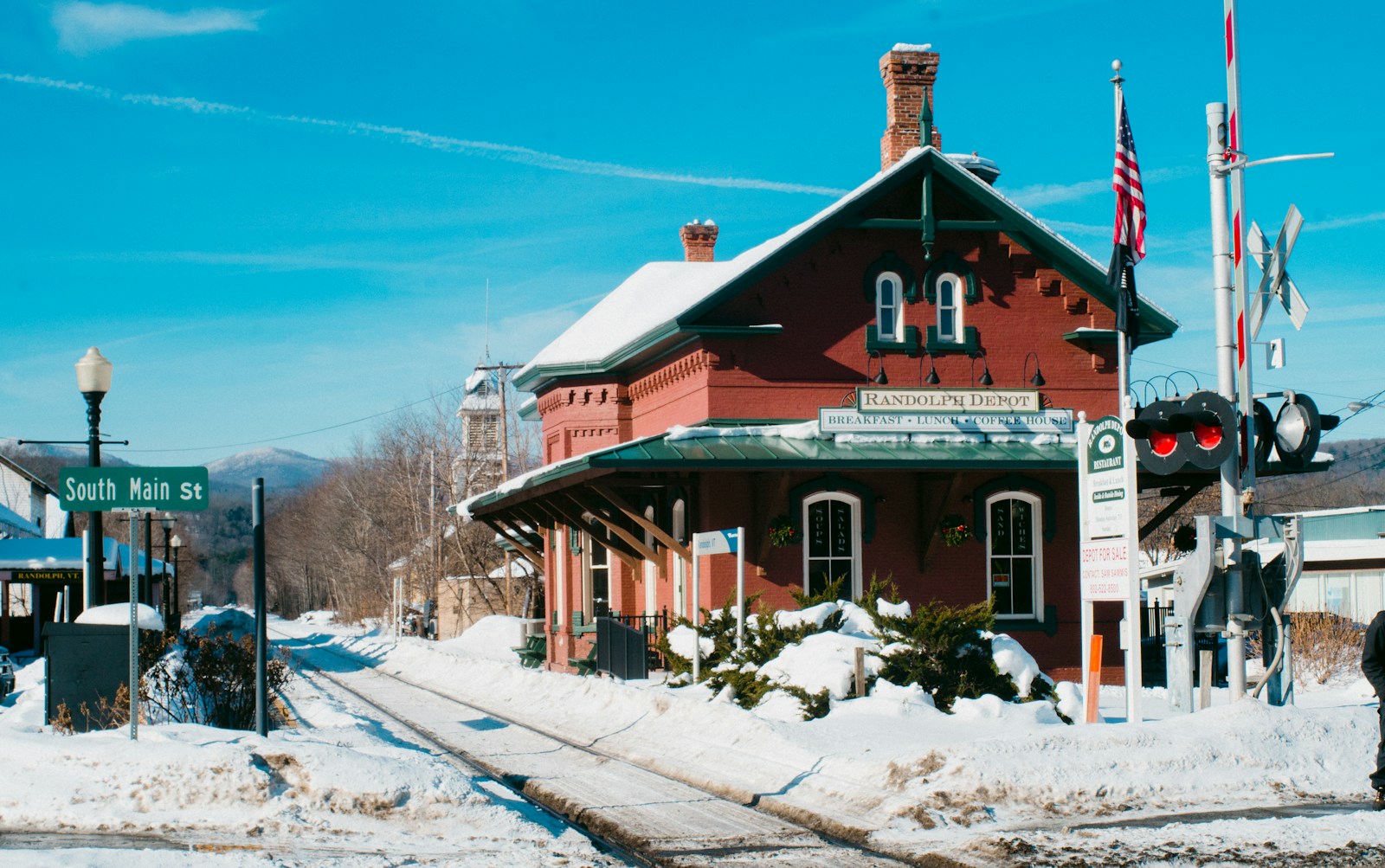
For most of the twentieth century, small-town train depots were the busiest buildings on Main Street, handling mail, freight, and passengers until the railroads that built them pulled back and left the platforms empty. Many of those depots sat boarded up for decades, too solid to tear down and too specialized to easily repurpose, until a wave of buyers started looking at their soaring windows and open interiors and seeing something else entirely: a house.
A Depot That Waited More Than a Century
One of the clearest examples of this shift comes from upstate New York, where a historic train depot has found new life 120 years after it was built, according to a recent Times Union feature. The building spent generations as a working piece of railroad infrastructure before it was eventually left vacant, and its return to use as a residence required treating the structure less like a renovation project and more like a restoration, with the depot’s original bones kept intact rather than gutted and replaced.
That approach is what tends to separate a successful depot conversion from a standard old-house remodel. A depot was never designed around bedrooms and hallways. It was designed around a ticket window and a wide-open waiting room meant to move people and freight efficiently, so turning one into a home means finding a way to live inside that original logic instead of erasing it.
Land, Acreage, and a Six-Figure Price Tag
The scale of what buyers are getting for their money is part of the appeal. An Upstater listing for a converted train depot highlighted a property that came with 3.6 acres of land alongside the building itself, priced at $695,000, with what the site described as creative architectural details throughout. That combination, a substantial lot plus a structure with genuine railroad history, is difficult to find anywhere else on the market, and it explains why these listings tend to draw attention well beyond their local area.
Depots also frequently sit on land that was cleared and graded for platforms and side tracks, which means many conversions come with generous, largely flat acreage that a typical historic home in a denser part of town simply would not have. That platform-adjacent land can become a yard, a garden, or simply buffer space that keeps the building’s railroad-era proportions from feeling cramped once it becomes someone’s front door.
Part of a Recognized National Niche
These are not isolated projects. A loveproperty.com gallery surveying trains you can call home rounds up depot and train-car conversions from across the country, making the case that this has become its own real estate category rather than a one-off curiosity. Some of the properties in that gallery started life as full stations with ticket counters and freight rooms, while others began as individual rail cars, but the pattern holds across nearly all of them: buyers are drawn to structures built with materials rarely used in residential construction today, carrying a sense of civic presence that a standard house was never meant to have.
What It Actually Takes to Make One Livable
Converting a depot into a functioning residence is rarely a cosmetic job. The waiting room, often the most architecturally distinctive space in the building, usually becomes the living area or great room, since gutting it to create a more conventional layout would erase the very feature that made the property desirable in the first place. Exposed timber trusses and brick walls, original to the depot’s construction, are typically cleaned, stabilized, and left visible rather than covered over with drywall.
The tall windows that once let station agents watch for arriving trains present their own challenge, since they need modern glazing and weatherproofing without losing their original proportions or muntin patterns. Plumbing, wiring, insulation, and climate control all have to be added into a structure that was never built with any of them in mind, which is one reason these projects often take longer and cost more than a typical historic renovation. Depots were built for open, unobstructed space rather than separated rooms, so architects and owners frequently have to get creative about where a kitchen or bathroom can go without chopping up the volume that makes the building special.
Zoning and preservation rules add another layer, since many depots carry some form of historic designation or sit on land with restrictions tied to their former railroad use. Buyers taking one on typically need patience for permitting on top of the usual demands of an old-house renovation.
Why Buyers Keep Coming Back to Depots
What keeps drawing buyers to these properties is the combination of scarcity and story. There is a finite, shrinking number of depots left standing, and each one comes with a documented history tied to a specific place and era. For house hunters tired of new construction that looks the same from one subdivision to the next, a former train depot offers a home that could never be mistaken for anything else, built on land that once mattered to an entire town’s daily rhythm and now belongs, quietly, to whoever moved in.
Leave a Reply