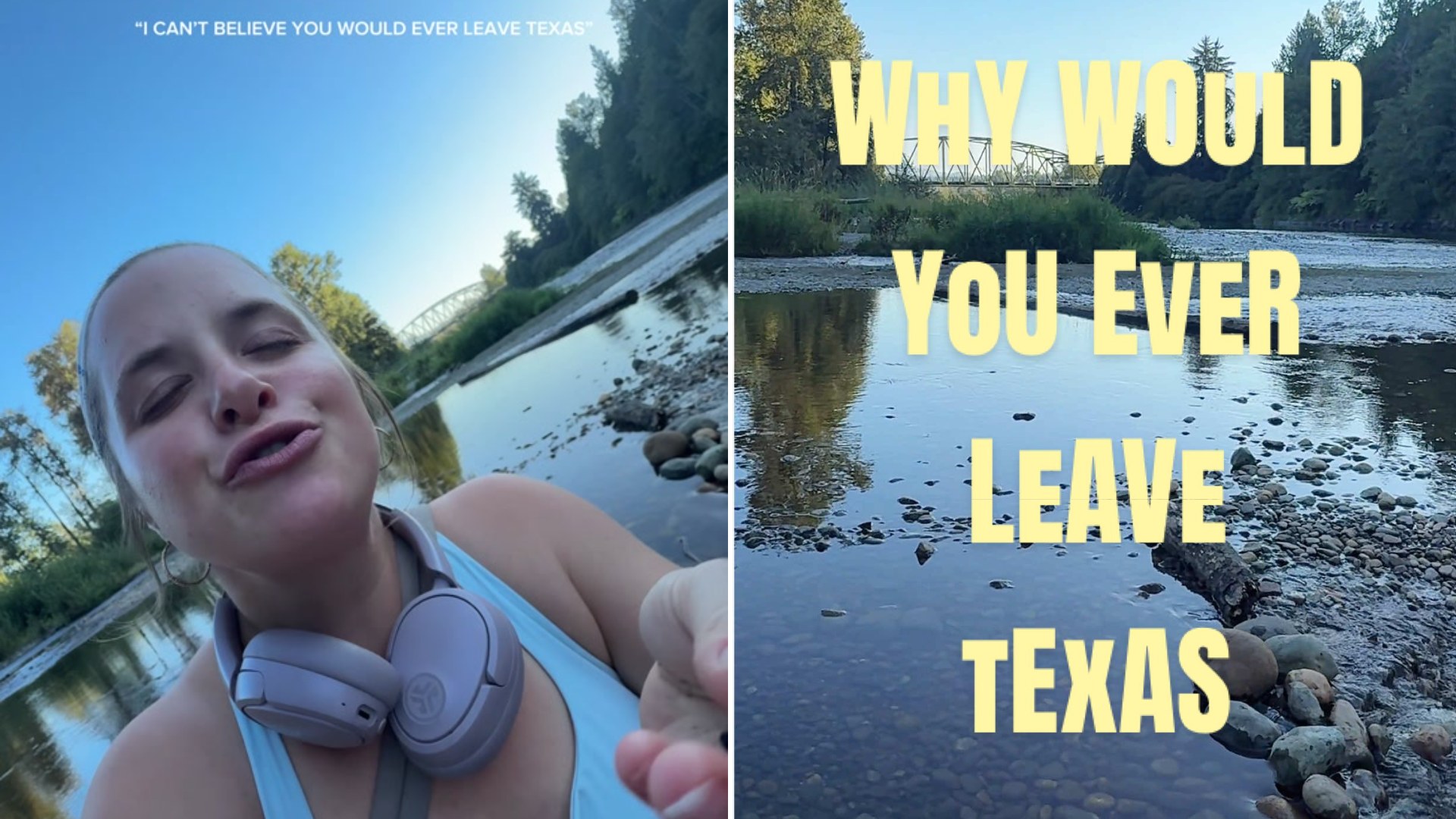
A creator who goes by thewoodleefam on TikTok got tired of fielding the same question from strangers online, why would you ever leave Texas, and finally sat down, camera rolling by a scenic river, to explain exactly why her family packed up and moved to Washington state instead.
There’s a particular tone that comes through when someone answers a question they’ve clearly been asked one too many times, and that’s the energy running through this video. It’s not defensive so much as it is finally-getting-around-to-it. The Woodlee family’s TikTok, tagged with #leavingtexas, #texastowashington, #movingtowashington and #crosscountrymove, reads less like a brag reel and more like someone clearing the air after enough comment-section skepticism piled up that a proper answer became necessary.

The Texas-to-Washington move runs against the grain of what most people assume about state-to-state migration right now. The dominant narrative for years has been people leaving colder, pricier states for Texas, not the reverse, Texas has built an entire economic development pitch around being the destination, not the departure point. So when a family does the trip in the opposite direction, on purpose, and films themselves justifying it, it tends to generate exactly the kind of pushback the Woodlee family says they were responding to. People don’t just ask “why,” they ask it like the decision needs defending, which is presumably what finally prompted a dedicated video instead of one more comment reply.
Answering the Question Everyone Keeps Asking
What makes this video worth more than a typical moving vlog is the setup itself: filmed on the family’s own account, from their own perspective, standing by a river rather than staged in a living room with moving boxes as a backdrop. It reads as a direct, first-person rebuttal rather than a curated highlight reel. The hashtags she chose, leaving Texas, Texas to Washington, moving to Washington, cross-country move, aren’t just for discovery. They’re a map of the exact conversation she’s stepping into, the one happening in comment sections and group chats every time a Texas family makes a move like this.
Cross-country relocations built around climate and lifestyle preference rarely get the sympathetic hearing that job-driven moves do. Tell someone you moved for a promotion and the conversation ends there. Tell someone you moved because you wanted a different kind of state to live in, and suddenly everyone has an opinion about what you’re supposedly giving up and what you must not understand about where you’re going. That’s the exact dynamic the Woodlee family’s video seems built to cut through, not by arguing that Texas is bad, but by simply laying out, in her own words, why Washington fit her family better.
The Bigger Pattern Behind One River-Bank Video
Washington state pulls a specific kind of transplant: people drawn to a landscape defined by water and evergreens rather than heat and open plains, and to a different rhythm of life than what a lot of fast-growing Texas metros currently offer. The river backdrop in the video isn’t incidental, it’s doing some of the persuading on its own, standing in as visual evidence for whatever verbal case she’s making about scenery, pace, or quality of life. Families who make this particular move tend to be trading something specific for something else specific, rarely a wholesale rejection of where they came from.
What the Woodlee family’s video ultimately captures is less about Texas or Washington individually and more about how exhausting it can be to have a personal decision treated as a public referendum. Every cross-country move invites outside opinions, but leaving a state as culturally confident about itself as Texas seems to invite more than most. Filming a direct answer, complete with a river view and a set of hashtags aimed squarely at the skeptics, is one way of ending the conversation on your own terms instead of relitigating it one comment at a time. Sometimes the most honest answer to “why would you ever leave” isn’t an argument at all, it’s just showing people where you landed and letting the view speak for itself.
Interstate moving data has shown a real, if modest, current running the other direction from the usual Texas-bound migration story, with families citing cost-of-living plateaus, congestion in fast-growing metros, and a desire for a slower pace as reasons to look toward the Pacific Northwest instead. The Woodlee family’s video doesn’t cite any of that data directly, but the reasoning she lays out in her own words tracks closely with what researchers have found driving that smaller, reverse migration pattern.
Leave a Reply