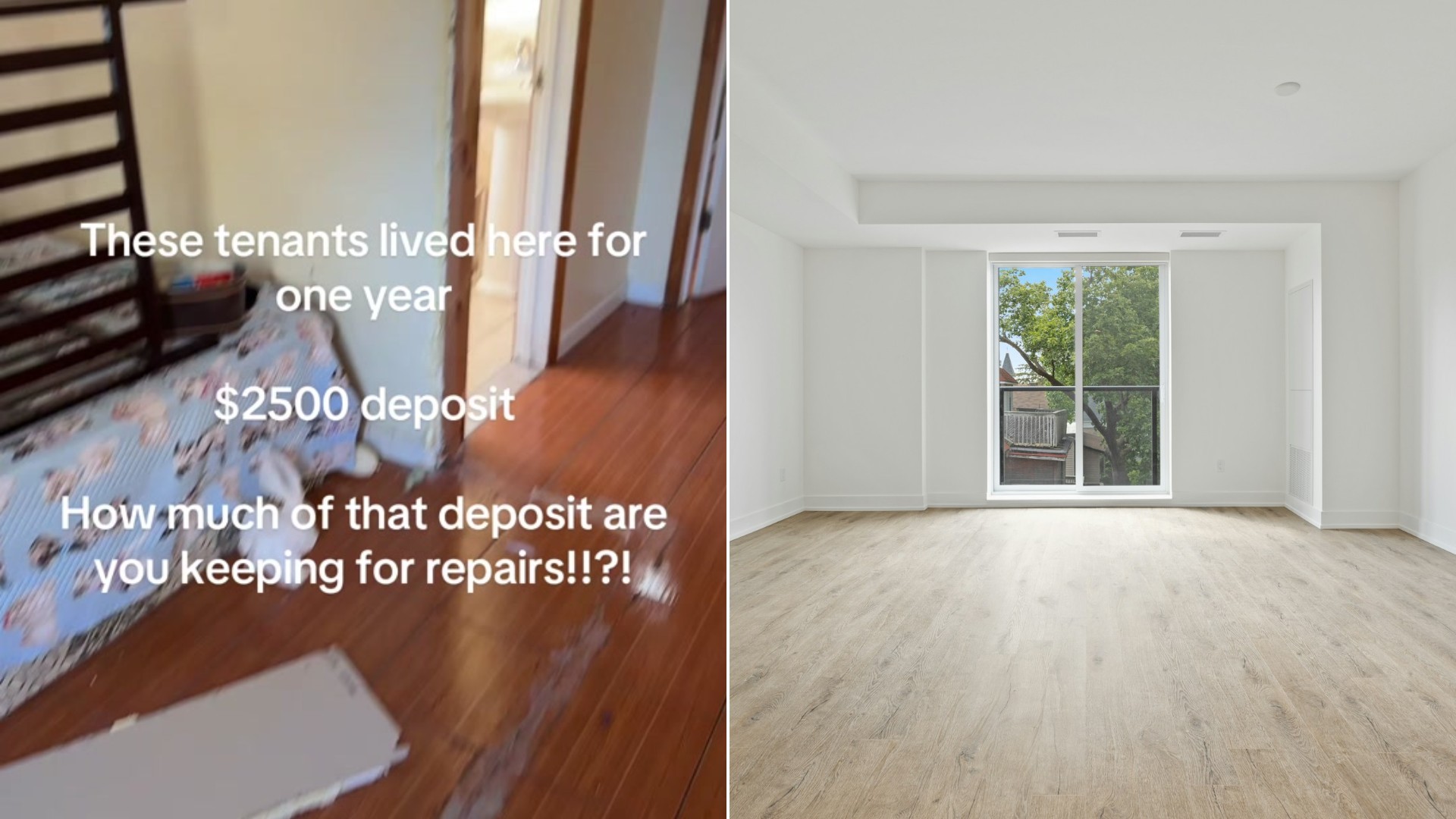
Move-out day is supposed to be a quick walkthrough and a handshake. For property manager @sam_cory_propertymanager, it turned into a room-by-room tour of an apartment that a group of tenants left in shambles after one year.
His opening line says it all: “These tenants just moved out. They had an illegal wall in the living room.” From there, the list only grows.
@sam_cory_propertymanager
A Sublet, A Pile Of Furniture And A King Bed He Calls Disgusting
According to the property manager, a subletter moved out and simply left all of their furniture behind. The tenants, he adds, left behind all of their own furniture too, so the apartment was packed with castoffs.
The king-sized bed gets special attention. He calls it huge and “so dirty,” and says flatly, “It’s disgusting.” In the second bedroom, the tenants also left a bed frame, another bed, a dresser, and a second dresser in the closet.
The Illegal Wall That Wrecked The Ceiling
Then he gets to the damage. The tenants built a wall in the living room, and he says they left it standing, “destroying the ceiling.” The wall runs up the side of the room, and the walls beside it are destroyed as well.
The floor took a hit too. He says the tenants “destroyed the tile floor” by putting screws into it, which is the kind of damage that does not wipe away with a mop.
Missing Thermostat, Busted Doors And A Cabinet Torn Off The Wall
The thermostat is gone. A doorknob is missing, and one door is completely busted and broken in another spot. A cabinet has been broken off entirely.
He also reports a missing smoke detector. That one matters beyond the paperwork, because a smoke detector is a basic safety device in any rental.
Coloring On The Walls, Phone Cases And LED Lights That Will Not Come Off
The walls tell their own story. He describes coloring all over them, “more stuff all over the walls for some reason,” and phone cases hanging up. When he reaches the fridge and freezer, he jokes that it would not be a full video without them, then says, “Let me just take a deep breath real quick. My eyes are burning.”
The tenants also ran LED lights around their rooms. He says they are impossible to remove without destroying the walls, which he does not consider normal wear and tear. The same goes for stickers on a door, which cannot come off without taking the paint with them.
The Lock Change And The Full Repaint
There is a cost the tenants may not have thought about. Because they were subletting a bedroom, they installed a key lock, and now the landlord has to replace it. “Now we have to pay to replace that lock,” he says.
His plan for the rest is simple: “We’re going to have to spackle, prime, and paint the entire apartment all coming out of the deposit.” The tenants lived there for one year with a $2,500 deposit.
“Are You Giving It Back?” The Question He Puts To The Comments
He closes by asking his audience a direct question. He asks how much of that $2,500 you would keep for repairs, given the garbage and damage left behind, or whether you would give it all back.
Notice how he frames the damage. He keeps returning to the phrase “normal wear and tear,” because that phrase is the heart of nearly every deposit dispute between landlords and tenants.
Wear And Tear Versus Damage: What Renters Should Know
In general, landlords can use a deposit for unpaid rent and for damage beyond ordinary use. Faded paint, light scuffs on walls and carpet that has softened with age are usually considered normal wear. Holes, broken fixtures, missing parts and heavy dirt are typically treated as damage.
The details depend on the state, and most states set deadlines and rules for how a landlord must return a deposit or explain deductions. If you are a renter, look up your state’s rules before you move out so nothing catches you off guard.
How Tenants Can Protect Their Deposit
- Photograph and video every room on move-in day, and again on move-out day. Dated pictures are your best proof.
- Read your lease before you add a roommate or sublet a room. Many leases forbid it without written permission, and a lock change or extra damage can follow.
- Skip permanent changes. Walls, screws in flooring and strong adhesives can turn into deductions. Ask your landlord what is allowed first.
- Clean thoroughly and take out everything you own. Left-behind furniture can mean hauling and disposal fees.
- Ask for an itemized list of any deductions in writing.
A Few Tips For Landlords, Too
Property managers can protect themselves with a signed move-in condition report, clear photos, and a lease that spells out rules on alterations and subletting. Keep receipts for every repair so deductions are easy to explain and defend.
As for the question at the end of the tour, the property manager made clear which way he leans: this was not normal wear and tear. What would you do with that $2,500?
More Stories You May Like
- Residents Of A 57 Lot Mobile Home Park Win A Two Year Fight To Stay In Their Homes After A Regulator Rules The Owner’s Eviction Notices Were Invalid, For Now
- Pressure Washers Sold On Amazon For About $130 Are Recalled Because Their Power Cord Is So Short It Pushes Owners To Use Extension Cords, And Owners Get A Refund Only After Cutting The Cord In Half And Emailing A Photo
- About 200 Families Wake Up In March To Orders To Leave A Central Florida Apartment Building After A Resident Hears Popping And Cannot Open Her Door, And Engineers Now Say A Sinkhole Opened Underneath It
Leave a Reply