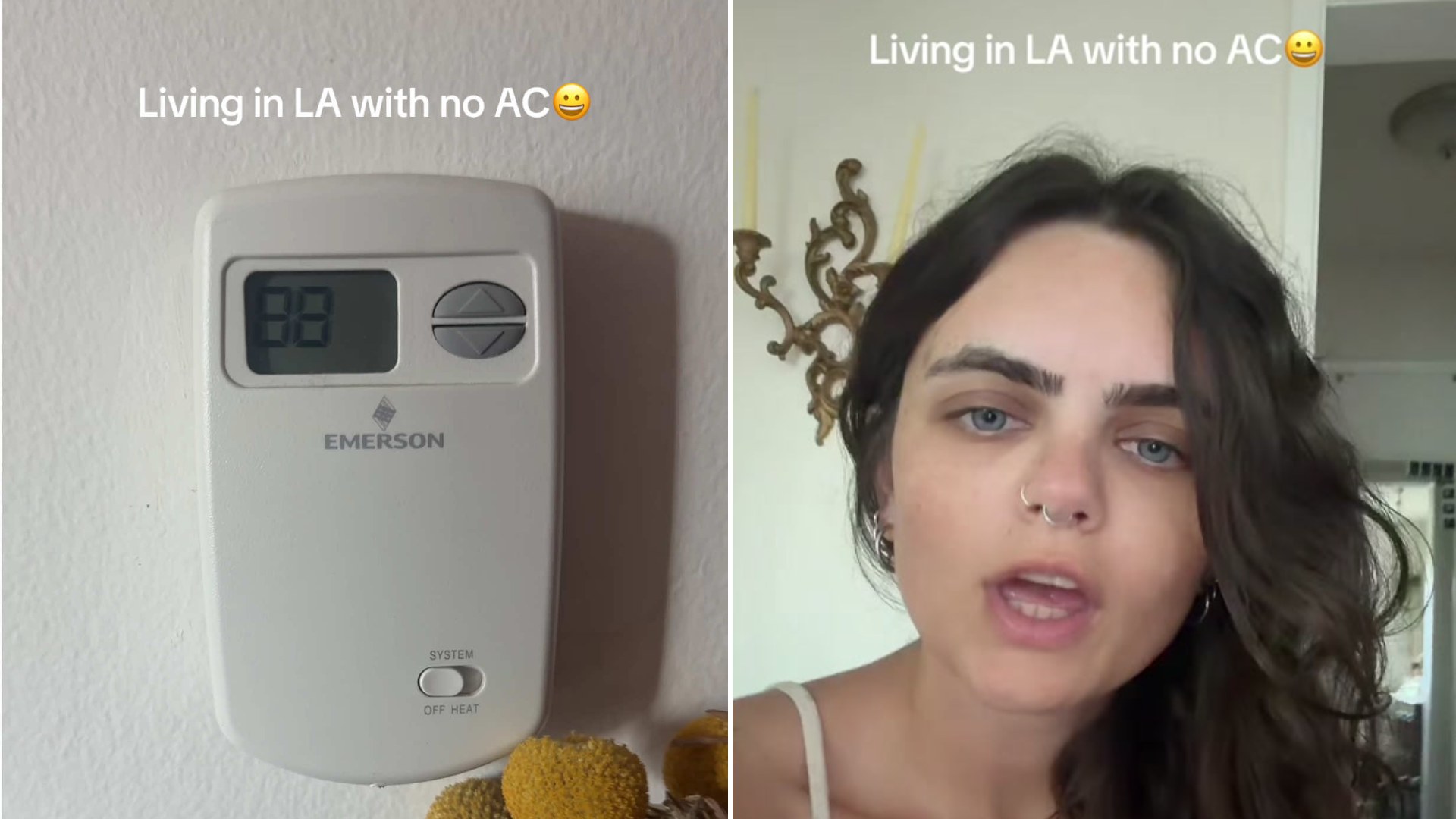
It’s one thing to say an apartment is hot. It’s another to hold up a thermometer on camera and let the number speak for itself. That’s exactly what creator @jennna.leigh did in a video venting about her Los Angeles apartment — and the reading is hard to argue with.
“If you’re wondering what it’s like to live in a Los Angeles apartment with no air conditioning, this is currently what the temperature gauge reads in my apartment,” she says, pointing the camera at a digital thermometer. “88 degrees.” She explains that when she got home from a weekend trip the day before, it read 91 — with her portable window AC unit running nonstop the entire time she was gone.
“It’s been on all night and all morning, and that’s still the fucking temperature of my apartment,” she says. Walking a few steps down the hallway makes it worse, she says, guessing the gauge there would read closer to 98 degrees. The kitchen is its own problem entirely: “I literally can’t even keep food in the pantry because I’m scared it’s gonna go bad, because it’s definitely easily over 100 degrees in here.”
What makes the situation worse is that she works from home, meaning she’s not escaping the heat during the day the way someone with an office job might. “I work from home, so I’m here all the time sitting in this heat,” she says, with visible sarcasm. “It’s awesome.”
She also reveals she’s already tried to solve the problem the obvious way — and been blocked. “I did ask my property manager if I could put an actual window AC into the window, and they said no.” Sitting on her bed, roughly ten feet from her portable unit, she says she can’t feel any cool air from it at all unless she’s sitting directly in front of it.
Why So Many Older Apartments Still Don’t Have Central Air
This clip resonated far beyond her existing audience because it names something a huge number of renters in older buildings quietly deal with every summer: a housing stock that was built before central air conditioning was standard, especially in cities like Los Angeles where historically mild nights meant AC was long treated as optional rather than essential.
Portable and window units can help, but they’re a poor substitute for central air in a poorly insulated unit, especially in a heat wave — they cool the immediate area around them while the rest of the apartment, and especially interior rooms without direct airflow, stays dangerously warm. An indoor temperature above 90 degrees isn’t just uncomfortable; sustained heat exposure indoors is a genuine health risk, particularly for anyone with a heart or respiratory condition, young children, or older adults.
If your property manager denies a window AC request like hers did, it’s worth knowing that many local housing codes have habitability standards that address extreme indoor temperatures, and some cities (Los Angeles among them, in certain circumstances) have begun exploring or enforcing maximum indoor temperature rules the way they’ve long enforced minimum heating requirements in winter. It’s worth checking your specific municipal code, and documenting indoor temperatures with photos and timestamps the way she did here — that kind of record is exactly what you’d want if you ever needed to push back formally.
In the meantime, renters in similar situations often find some relief from reflective window film, blackout curtains, sealing gaps around windows and doors to keep portable units from losing their cooling, and running units on a timer before you get home rather than trying to cool a space that’s already fully heated. None of it fixes a building’s underlying design problem — but as her video makes clear, sometimes just naming the problem loudly enough is the first step toward getting it taken seriously.
You can watch the full video and follow @jennna.leigh on TikTok for more.
Leave a Reply