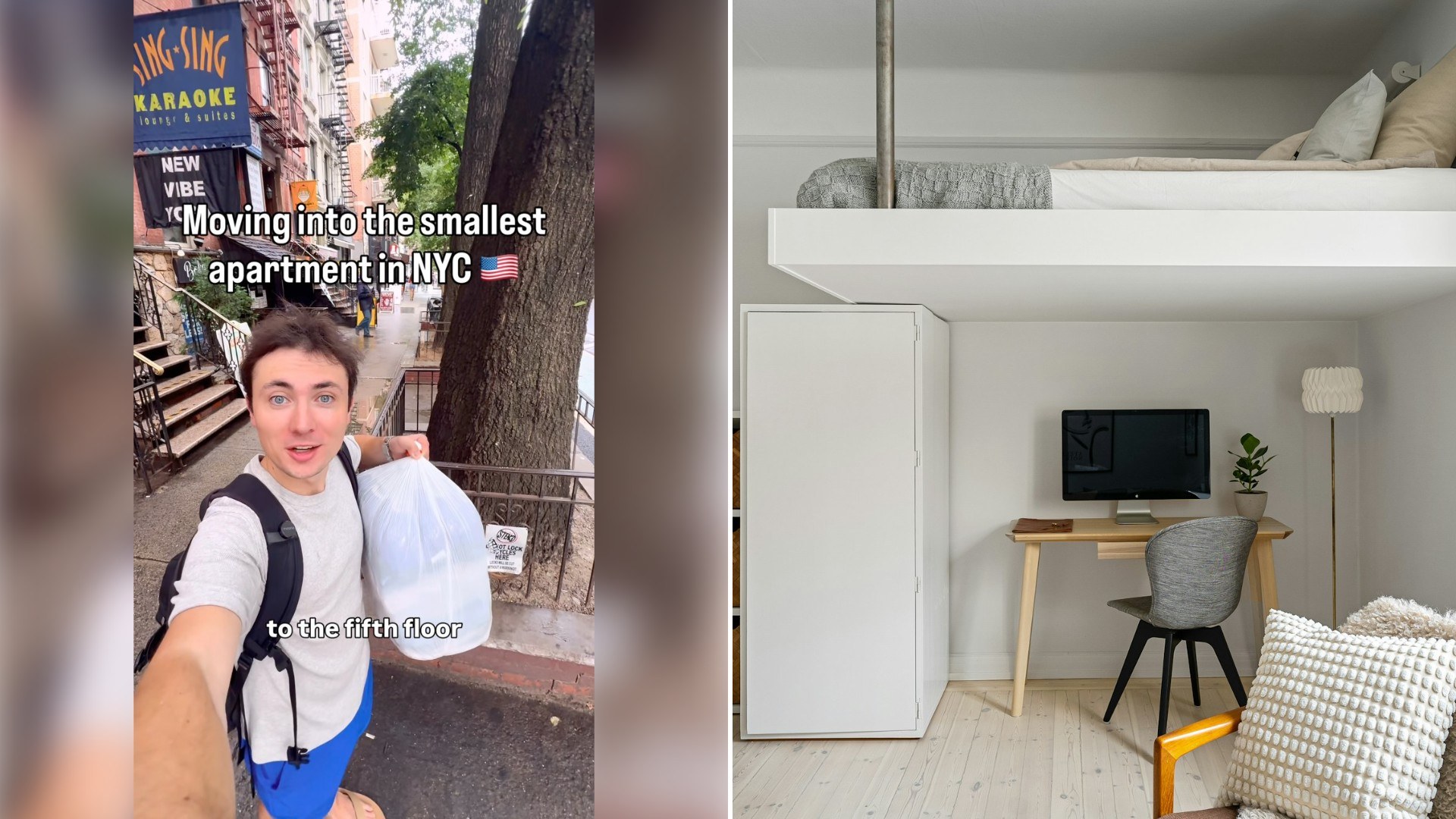
Moving into a notoriously tiny New York City apartment is one thing; filming the process and turning it into a running series is another. The creator behind this clip hauls boxes and laundry bags up a narrow stairwell before the video cuts to the real challenge: fitting a bed, a desk, and everything else he owns into a footprint that would barely qualify as a single bedroom anywhere else in the country. He doesn’t try to downplay how small the space is, which ends up being the whole point.
The solution he lands on, a compact Japanese-style mattress that sits low and folds away rather than a standard bed frame, says as much about New York apartment living as any of the boxes being carried up the stairs. It’s a workaround built entirely around square footage rather than aesthetics, and the video treats that tradeoff as a given rather than something to apologize for.
View this post on Instagram
As @brightonpollard sets up the series, the running joke isn’t that the apartment is small, it’s exactly how small, which is the kind of specific detail that turns a familiar New York complaint into something worth actually watching play out.
New York City apartment hunting has produced its own subgenre of social content for years, but most of it stops at the walkthrough, a quick pan of an impossibly cramped layout followed by a punchline about rent. What separates this series is that it keeps going past the tour, into the unglamorous work of actually making the space livable day to day, which is a much harder thing to film and a much harder thing to fake.
Carrying laundry and boxes up a narrow stairwell might read as filler to anyone skimming past, but it’s doing real work in the video: it establishes scale in a way a static photo of an empty room never could. A viewer watching someone physically struggle to maneuver a mattress through a doorway understands the space’s limits instantly, without needing a single square-footage number on screen. Even the stairwell itself becomes part of the story, narrow enough that the ordinary act of moving in looks like its own small feat of logistics before the apartment door is even open.
The choice of a low, foldable mattress instead of a conventional bed frame is a small design decision that speaks to a much bigger pattern in how people adapt to expensive, undersized city housing. Furniture built around flexibility rather than permanence, items that fold, stack, or roll out of the way when not in use, has become its own quiet category of home goods aimed specifically at renters who don’t have the floor space to spare.
Part of what makes a series like this compelling over multiple installments is the structure it sets up without saying so directly: each new post is implicitly measured against the first one, so a viewer who saw the empty apartment is primed to notice every subsequent change, no matter how small. That built-in before-and-after framework is doing a lot of narrative work that a single standalone video couldn’t manage on its own.
There’s also something quietly reassuring in watching someone make an objectively difficult living situation work on camera, rather than simply complaining about it. The video doesn’t pretend the apartment is spacious or ideal, but it also doesn’t treat the small square footage as a tragedy, landing instead on the more useful note that constraints like this are survivable, even if they take some creative problem-solving to manage.
For anyone who has lived through a cramped first apartment in an expensive city, the appeal here isn’t aspirational in the usual sense, nobody is watching this hoping to move into a smaller place. It’s recognition instead, the sense that someone else has gone through the exact same logistical puzzle, down to figuring out where the mattress goes, and come out the other side with a functioning home rather than a cautionary tale.
A series format also lets the creator do something a single clip can’t: build in a sense of ongoing stakes. Each new post raises an implicit question about what still needs solving, whether it’s storage, a kitchen setup, or simply where a guest would even sit, and that open-ended structure is part of why people keep checking back in rather than treating the move-in day as the end of the story.
New York’s rental market has made a certain kind of extreme-smallness almost a badge of honor among renters trying to make it in the city on their own terms, and that cultural context is doing a lot of work here even though the video never states it outright. Viewers bring their own assumptions about what a “smallest apartment” claim means before the first clip even starts playing, and the footage mostly exists to confirm, and occasionally exceed, those assumptions.
What ultimately makes the series worth following isn’t the apartment’s size record, verifiable or not, but the specific, repeatable problem-solving on display: how do you fit a full life, clothes, a bed, workspace, into a footprint most people would consider only barely livable, and do it in a way that still feels like an actual home rather than a glorified storage unit. That’s a more universal question than the headline number suggests, and it’s the real reason the series has an audience well beyond the people who happen to live in New York City themselves.
Leave a Reply