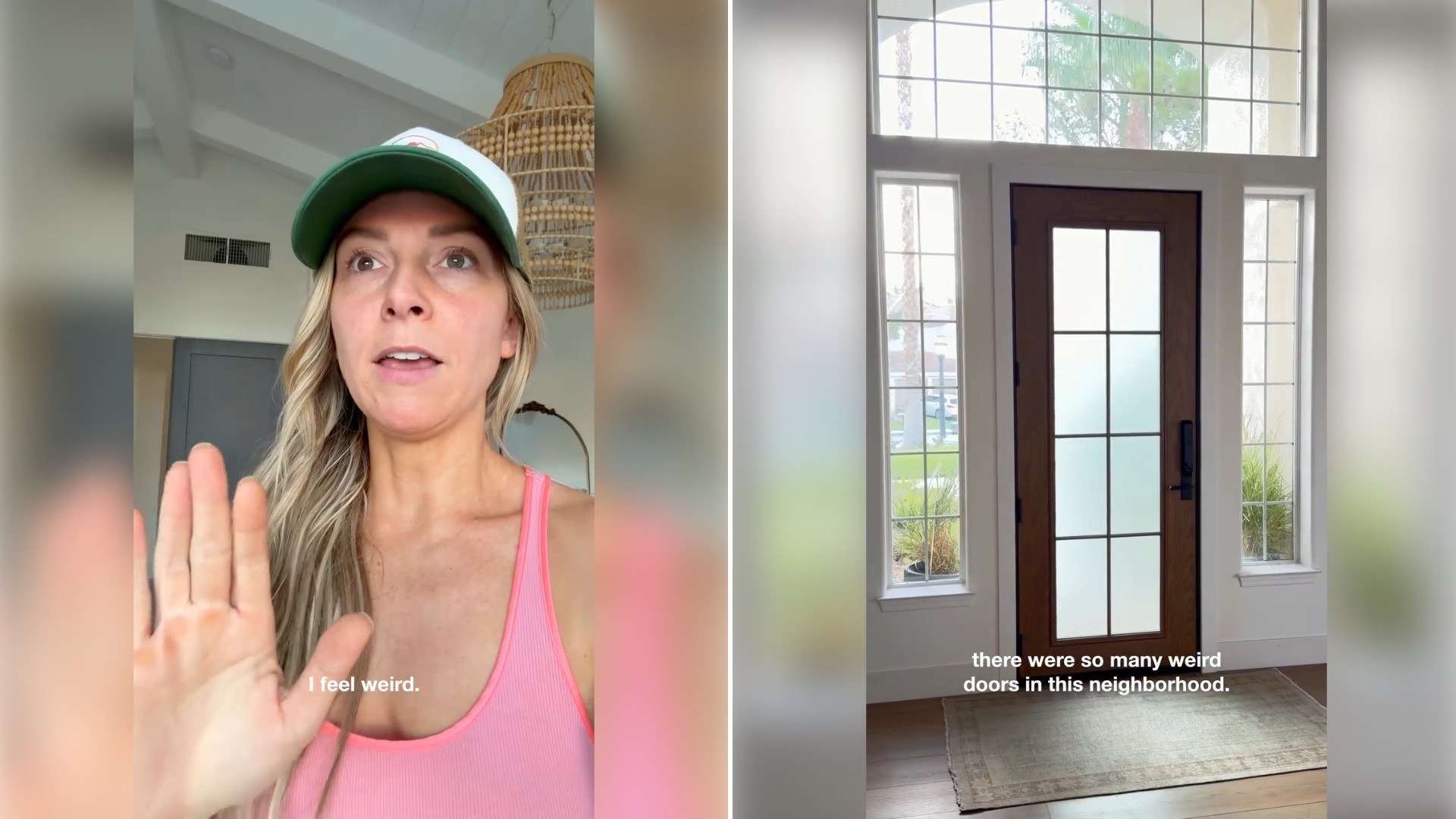
A homeowner explains that her HOA sent her a violation letter that included a cropped screenshot pulled directly from one of her own public Instagram reels, meaning the HOA appeared to be actively monitoring her social media for rule violations. She shares her reaction and asks followers how they’d handle it. There’s nothing staged about the setup here, just a straightforward premise that plays out exactly the way the caption promises, which is precisely why it’s resonated with the people who’ve seen it.
There’s a flatness to her delivery that reads as genuine unease rather than manufactured outrage, someone visibly working through what a discovery like this actually means rather than performing indignation for the camera. That measured tone is part of why the story lands as a real concern rather than a manufactured controversy.
View this post on Instagram
As @angelarosehome shows it, the appeal isn’t really about the size of the number or the scale of the transformation on its own, it’s about the willingness to document the process honestly, warts and all, instead of only posting the polished result once everything was already finished.
HOA violation letters typically arrive after a board member or a hired inspector drives past a property and notes an issue in person, so a letter built around a cropped screenshot from a resident’s own social media account represents a meaningfully different, and more unsettling, kind of enforcement. It means the surveillance isn’t confined to the physical neighborhood anymore, it extends into whatever a homeowner chooses to post publicly, even content with no intent to document a violation at all.
The specific mechanics matter here: an Instagram reel is, by definition, something the homeowner chose to make public, which puts this squarely in a legal gray area rather than a clear-cut privacy violation. An HOA generally has standing to document and act on anything visible from a public vantage point, and a resident’s own public post arguably counts, even if it feels like a different kind of exposure than a drive-by photo taken from the street.
What makes a story like this spread far beyond the HOA’s own community is the broader discomfort it taps into: the sense that content posted for one audience and one purpose, documenting a home project, sharing a moment, can be repurposed by an entirely different party for an entirely different reason, without the original poster ever imagining that outcome when they hit publish.
HOAs occupy a strange position in American homeownership, wielding real enforcement power, fines, liens, in some cases foreclosure, while often operating with minimal transparency about how violations are actually identified and documented. A screenshot pulled from social media is a vivid, concrete example of that enforcement machinery in action, which is part of why it resonates with people who have never personally dealt with an HOA violation but recognize the underlying dynamic of being watched by an authority with limited accountability.
For the broader audience of homeowners living under an HOA, the story functions as a kind of early warning: anything posted publicly, a renovation update, a backyard project, even an off-hand joke about ignoring a bylaw, could theoretically end up as evidence in an enforcement letter. That realization alone is often enough to change how carefully people think about what they post, regardless of whether their own HOA has ever done anything similar.
Comment sections under stories like this one tend to fill quickly with people sharing their own HOA horror stories, disputes over paint colors, parked cars, holiday decorations left up too long, and that pile-on effect says something about how widely shared the underlying frustration with HOA overreach actually is, far beyond this one specific screenshot.
Whatever happens with this particular violation, the video has already done the thing stories like it tend to do best: turn one resident’s individual frustration into a wider conversation about how much homeowners actually know, or don’t know, about who’s watching and how.
Most HOA governing documents say remarkably little about how violations are supposed to be identified in the first place, focusing instead on what counts as a violation rather than how evidence of one is gathered. That silence leaves a lot of room for boards or management companies to use whatever documentation happens to be available, including a resident’s own public posts, without that practice ever being explicitly addressed, let alone restricted, in the community’s actual bylaws.
For homeowners who run any kind of public account showing their property, even casually, this story is a reminder to think through the gap between an audience they imagine and an audience that might actually be watching. A post meant for friends, followers, or a small home-content community can end up read by people with a very different, and far less friendly, reason for paying attention.
The practical advice that tends to surface in response to stories like this one is straightforward even if it’s not always easy to follow consistently: setting accounts to private, being deliberate about what’s visible in the background of a post, or simply accepting that anything shared publicly should be treated as potentially visible to anyone with a reason to look, HOA board members very much included, whether or not that’s the audience a post was ever actually written for in the first place.
Leave a Reply