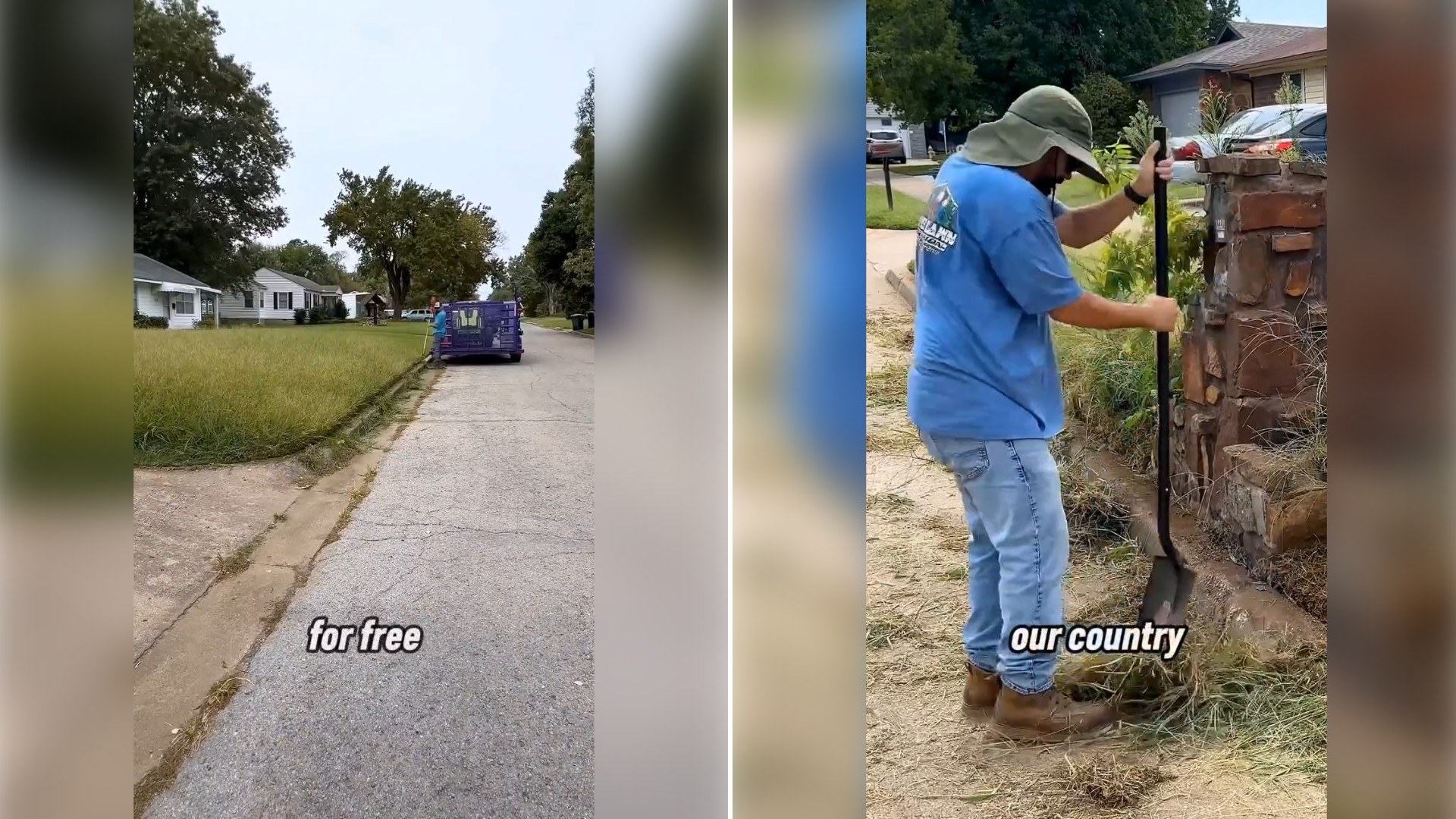
A group of volunteers is in the middle of clearing an overgrown yard for a 78-year-old veteran facing a city fine when a police officer arrives and confronts them, apparently believing something is wrong. The video shows the tense exchange, then the team finishing the yard cleanup and the veteran’s emotional reaction. There’s nothing staged about the setup here, just a straightforward premise that plays out exactly the way the caption promises, which is precisely why it’s resonated with the people who’ve seen it.
What comes through most clearly in the footage is how quickly the mood shifts, from a routine volunteer project to a tense standoff and back to a routine volunteer project again, all inside a single continuous clip, which is part of what makes it worth watching closely rather than skimming past.
View this post on Instagram
As @obscura.exe5 frames it, there’s no attempt to smooth over the messier parts of the story, and that candor is a large part of why the post has resonated with people well beyond the creator’s usual audience.
A city fine for an overgrown yard is a specific, bureaucratic kind of pressure that disproportionately lands on homeowners who can no longer keep up with yard maintenance themselves, whether because of age, mobility, or simply not having the resources to hire it out. A 78-year-old veteran facing that fine isn’t an unusual story in isolation; municipalities issue overgrowth citations constantly. What makes it notable here is a group of volunteers stepping in specifically to resolve it before it became a bigger problem.
The responding officer’s confrontation is the pivot the entire video is built around, and it works precisely because it inverts the expected roles. A uniformed authority figure arriving mid-project reads, for a few tense seconds, like the volunteers are about to be in trouble, before the context reshapes the scene entirely into something closer to a misunderstanding resolved on the spot. That brief ambiguity, order to a stranger that something is wrong, then handled reasonably once as explained, is what gives the clip its tension and its payoff in the same sequence.
Veteran-focused goodwill content occupies a specific, well-established corner of social media, but most of it centers on a single clean gesture, a mortgage paid off, a surprise visit, a thank-you card. This video is unusual in including a genuine complication along the way rather than presenting an uninterrupted feel-good arc, which paradoxically makes the ending land harder, since the volunteers had to get past something unplanned before they could finish what they set out to do.
For viewers who’ve had their own tense, confusing interaction with a responding officer over a misunderstood situation, there’s a specific kind of recognition built into watching this one resolve peacefully. Confrontations that start with raised voices and uncertain footing don’t always end with everyone on the same page, which is part of why the de-escalation shown here, however brief, carries its own quiet weight separate from the yard work itself.
The veteran’s reaction at the end does the emotional work that no amount of narration could replace. A city citation reduced to a line item on paper becomes, once you see the actual person facing it, something closer to a small crisis being resolved by neighbors who had no obligation to get involved in the first place.
Comment sections under videos like this one tend to split between people praising the volunteers’ persistence through an unexpected obstacle and people asking pointed questions about what exactly prompted the officer’s initial response, and that second thread is a reminder that even a resolved, feel-good clip can surface real questions about how quickly suspicion gets directed at people doing something entirely legitimate.
Whatever this group of volunteers tackles next, this particular project ended up telling two stories at once: a yard cleared in time to avoid a fine, and a brief misunderstanding defused before it became something worse, both resolved in the same afternoon.
Elderly homeowners facing code-enforcement pressure over yard maintenance represent a specific, often invisible gap in how cities handle aging housing stock. A fine assumes the homeowner is simply choosing not to comply, when in plenty of cases the real barrier is physical capability or cost, not willingness. Volunteer interventions like this one are, in a sense, patching a hole that municipal enforcement policy rarely accounts for on its own.
It’s also worth sitting with how differently this clip might have read without the full context attached. A few seconds of a uniformed officer confronting a group of people in someone’s yard, taken entirely out of sequence, could easily be mistaken for something far more adversarial than what actually happened here, which is part of why the full, continuous version of the exchange matters so much to how fairly the moment gets interpreted.
Volunteer yard-cleanup efforts aimed at elderly or disabled homeowners have become a recognizable enough category online that they’ve started attracting their own dedicated following, viewers who specifically seek out this kind of content because it offers a clear, achievable model for small-scale neighborhood help that doesn’t require any formal organization, fundraising, or special training to actually go out and attempt, just a willingness to show up, knock, start working, and stay long enough to finish the job before anyone has time to overthink it.
Leave a Reply