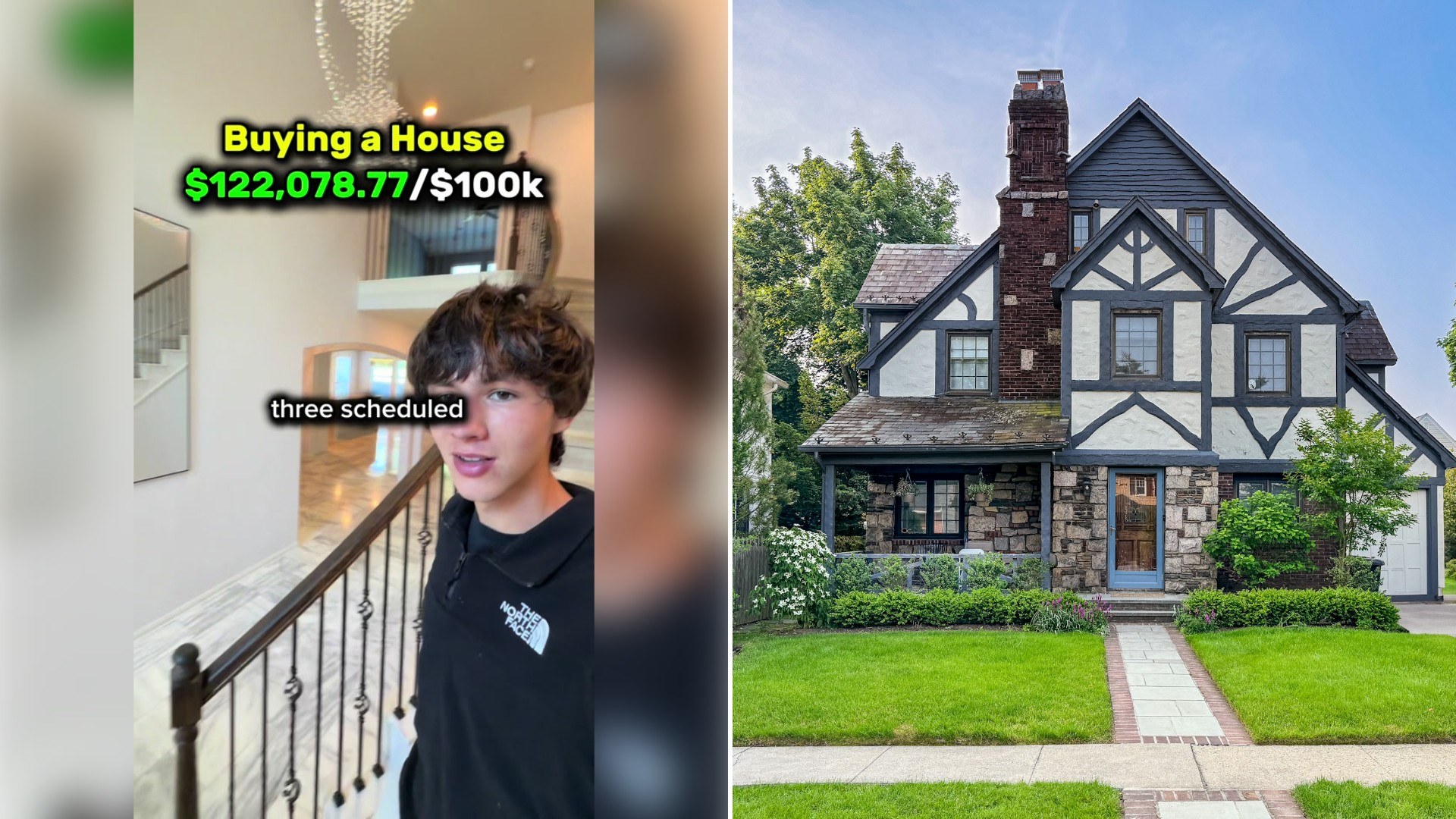
A young first-time homebuyer tours three different houses in one outing, tracking his savings progress toward a $100k goal in on-screen text while giving quick reactions to each property’s pros and cons. There’s nothing staged about the setup here, just a straightforward premise that plays out exactly the way the caption promises, which is precisely why it’s resonated with the people who’ve seen it.
What makes a three-house outing more interesting than a single showing is the built-in comparison: each property gets judged not in isolation but against whatever came right before it, which forces a kind of running tradeoff analysis that a lone walkthrough video never has to attempt.
@landenlevine1House Hunting 🙈🏡🏝️
As @landenlevine1 shows it, the appeal isn’t really about the size of the number or the scale of the transformation on its own, it’s about the willingness to document the process honestly, warts and all, instead of only posting the polished result once everything was already finished.
Touring three houses back to back in a single afternoon is its own specific kind of exhausting that rarely gets captured on camera the way the houses themselves do. By the third showing, kitchens blur together, the specific layout of the second house starts bleeding into memories of the first, and a buyer has to actively fight the fatigue just to keep giving each property a fair, individual assessment instead of judging it against whatever came right before it.
Tracking a $100,000 savings goal in on-screen text turns an otherwise private financial milestone into something a stranger can follow along with in real time, which is a meaningfully different kind of transparency than most home-buying content offers. A lot of renovation and real estate videos talk around money in vague terms, “it cost more than we expected,” without ever putting a number on the screen. Naming the actual target here gives viewers something concrete to measure the buyer’s progress against with every new video in the series.
A first-time buyer touring multiple houses in one day is also, whether intentionally or not, demonstrating a specific kind of house-hunting discipline that real estate agents often recommend but that plenty of buyers skip under time pressure: comparing properties in close succession rather than spacing showings out over weeks, when memory of the first house has already faded by the time the fourth one gets toured.
The quick-reaction format, pros and cons delivered almost instantly after walking through each door, mirrors how a lot of real buyers actually process a showing in the moment, forming a gut impression within the first thirty seconds that then gets reinforced or revised as the tour continues. Watching that unfiltered first reaction, rather than a polished, after-the-fact summary, is part of what makes the video feel like an authentic snapshot of the search rather than a curated recap.
For anyone else chasing a specific savings number before a first home purchase, there’s a quiet kind of accountability built into posting the progress publicly the way this creator has. A savings goal tracked only in a private spreadsheet is easy to quietly let slide; one tracked in a running video series, with an audience checking in on the number, carries a different kind of pressure to actually keep showing up and keep saving.
There’s also a generational angle worth noting in how openly this buyer talks about the specific dollar figure he’s working toward. Older generations of homebuyers were often taught to treat savings numbers and mortgage math as private, even slightly taboo, subjects to discuss outside close family. A younger buyer putting the exact target on screen, update after update, reflects a broader shift toward treating personal finance as something worth discussing openly rather than something to keep quiet about until the deal is already done.
Comment sections under a series like this one tend to split along predictable lines, some viewers cheering the progress and asking for updates on which house eventually won out, others using the thread to share their own savings targets or to debate whether $100,000 is actually enough in the buyer’s specific market. Both reactions point to the same underlying appeal: a concrete number gives strangers something specific to engage with, in a way that a vaguer “saving up for a house” caption never could.
Multiple-house, single-day tours also tend to reveal something about a buyer’s priorities that a single showing can’t. Watching someone instantly rule out a property over a cramped kitchen, then light up walking into a house with a usable backyard, tells a viewer more about what this particular buyer actually values in a home than any written list of must-haves ever could, because the reactions are happening before there’s time to overthink or perform them.
For a creator building a series out of an ongoing house search, there’s also a structural advantage to posting progress incrementally rather than waiting for a single triumphant reveal at closing. Each new tour, each updated savings figure, gives an audience a reason to come back, and that serialized format turns what could have been one video into an ongoing story with real stakes that build with every new post.
Whatever house this particular search eventually lands on, the series has already captured something a single finished-home reveal never could: the specific, occasionally repetitive grind of actually getting there, one showing and one saved dollar at a time.
Leave a Reply