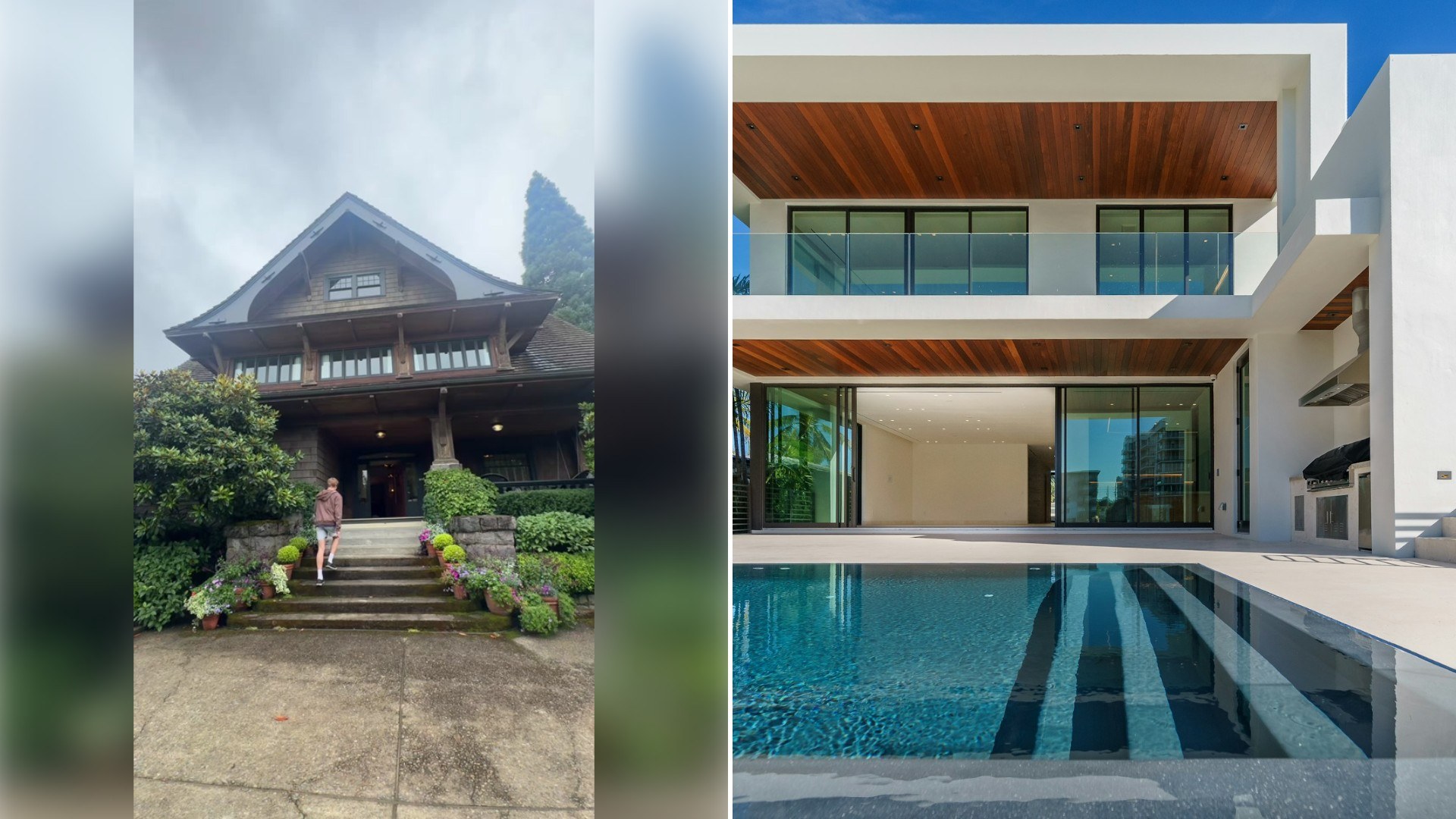
A creator tours a $3,000,000 open house in Portland, Oregon, walking through each room and giving a critical, somewhat sarcastic commentary on the design choices, calling the home “insane but not my fav” despite its price tag. There’s nothing staged about the setup here, just a straightforward premise that plays out exactly the way the caption promises, which is precisely why it’s resonated with the people who’ve seen it.
What makes the tone work is the mismatch it sets up from the very first frame: the caption’s near-reverent “I can’t stop thinking about this house” sits right alongside a verdict that ultimately lands somewhere short of full enthusiasm, and that gap between the hook and the conclusion is what keeps viewers watching to the end.
@willllthomas I can’t stop thinking about this house. They don’t make them like they used to 😮💨 #housetour #mansion #portlandoregon #portland #ugc ♬ original sound – will
As @willllthomas shows it, the appeal isn’t really about the size of the number or the scale of the transformation on its own, it’s about the willingness to document the process honestly, warts and all, instead of only posting the polished result once everything was already finished.
A $3 million price tag sets a specific expectation before a viewer even sees the first room, and part of what makes this tour work is how openly the creator pushes back against that expectation rather than simply confirming it. Calling the house “insane but not my fav” refuses the easy, predictable reaction that a price tag like this usually gets online, where expensive automatically gets treated as synonymous with desirable.
Portland’s housing market occupies a specific niche in the broader national conversation about home prices, less extreme than the coastal markets that dominate most luxury real estate content, but still expensive enough that a $3 million listing reads as a genuine outlier rather than an ordinary upper-tier home. That regional context shapes how local viewers in particular react to a tour like this, since the number means something different in Portland than the same figure would in a market where eight-figure listings are routine, and it’s part of why out-of-state commenters and local ones so often read the same price tag so differently.
Sarcastic or mixed commentary on a luxury home tour tends to perform differently than straightforwardly admiring content, precisely because it gives viewers permission to have their own complicated reaction instead of simply being told to be impressed. A viewer who also finds something slightly off about an expensive house’s design choices gets to feel validated rather than talked past, which is part of why a clip built around genuine ambivalence can travel further than unqualified luxury-home admiration. It also means the comment section fills with actual debate rather than a string of identical admiring reactions, since disagreement over a specific design choice gives people something more substantive to respond to than the number itself.
The specific hashtag choice of #ugc alongside more straightforward location tags like #portland and #portlandoregon signals something about how this creator thinks about the content itself, less as a personal diary entry and more as a piece of marketable, reusable material built for a platform where user-generated content has become its own commercial category independent of who happens to be touring the house on camera.
What makes a tour like this rewatchable isn’t the square footage or the price, it’s the specific friction between the home’s objective scale and the creator’s subjective, slightly critical verdict. A viewer can agree or disagree with “not my fav” after seeing the same rooms, and that built-in invitation to form an opposing opinion is part of what keeps a comment section active long after the initial view.
Craftsman-style architecture, the style hinted at in the home’s exterior, carries its own set of built-in expectations that a $3 million price tag puts under extra scrutiny. Buyers drawn to the craftsman aesthetic are often looking for exposed beams, built-in cabinetry, and a sense of old-growth-timber craftsmanship that mass-produced new construction can’t easily replicate, which raises the bar for what “impressive” actually has to look like once the price climbs into eight figures of monthly mortgage payment territory.
There’s also a specific kind of expertise a creator needs to pull off this format convincingly: enough fluency in architectural and design vocabulary to make a critique land as informed rather than reflexive, paired with enough personality to keep a room-by-room walkthrough from feeling like a dry appraisal report. Viewers can tell the difference between someone genuinely evaluating a space and someone simply narrating what’s visible on screen, and that distinction is part of what separates a tour people rewatch from one they scroll past.
Luxury home content in general tends to split audiences into those who watch purely for the aspirational fantasy and those who watch specifically for a reality check on whether the price is actually justified by what’s behind the front door. A tour that ends in qualified praise rather than unconditional admiration speaks directly to that second group, giving them the kind of grounded, slightly skeptical read on a high-end listing that a real estate agent’s own marketing material would never include.
Whatever this particular listing eventually sells for, the tour has already done something a glossy real estate brochure never could: given viewers a genuinely mixed, specific reaction to a home most people will only ever see through a screen, price tag and all.
Leave a Reply