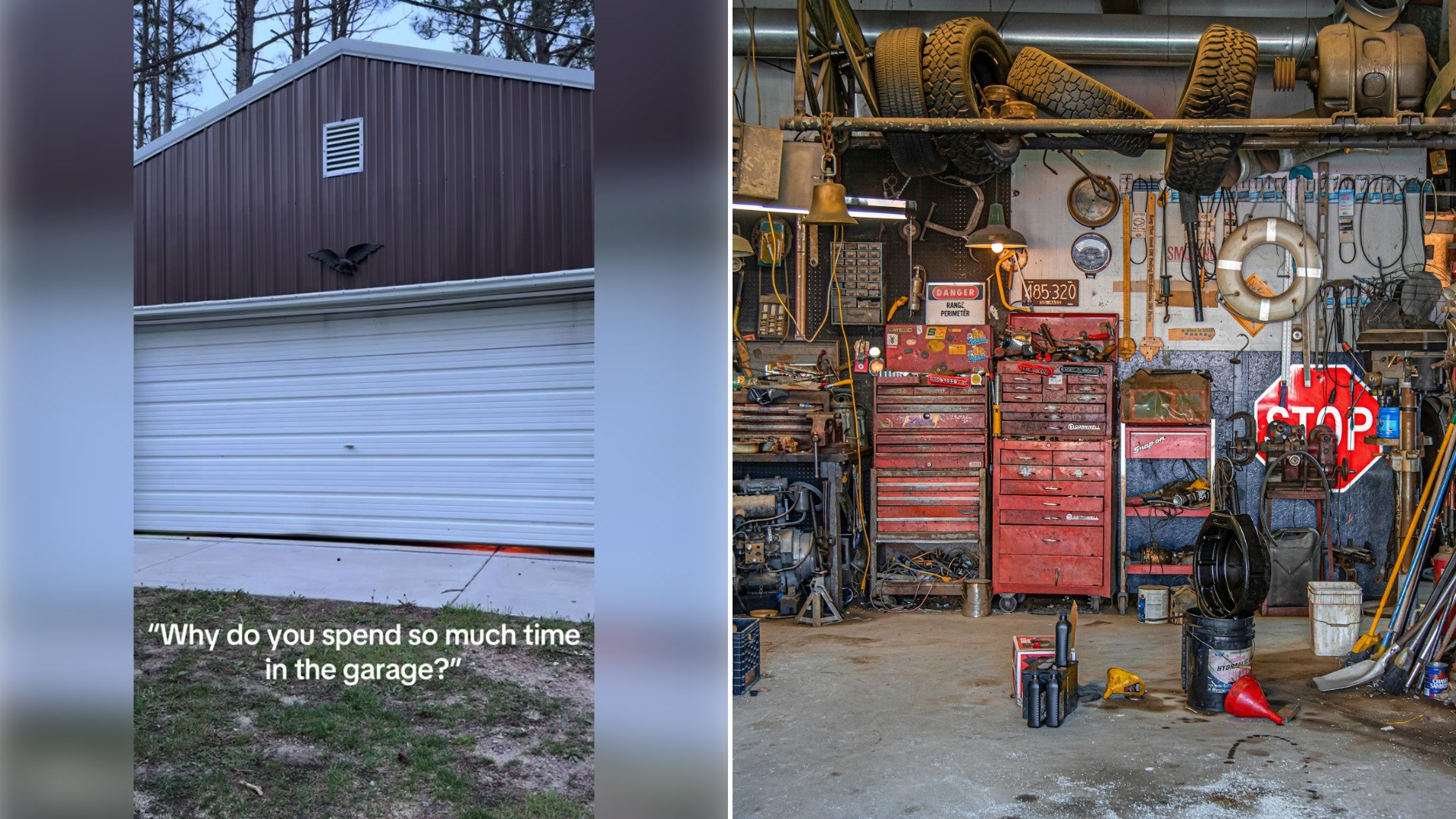
After being asked why they spend so much time in the garage, a creator opens the garage door to reveal a surprisingly cozy, nostalgically decorated interior space set up like a retro hangout rather than a typical garage. There’s nothing staged about the setup here, just a straightforward premise that plays out exactly the way the caption promises, which is precisely why it’s resonated with the people who’ve seen it.
The question embedded in the caption, why spend so much time out here, is the kind most people have either asked a family member or been asked themselves about a garage, a shed, a basement corner. Answering it by simply opening the door and letting the room speak for itself, rather than explaining in words, is part of what makes the reveal land as genuine rather than defensive.
@stillframspaces My happy place #retro #nostalgia #airbnb #wisconsingetaway #vhs ♬ original sound – rand6m11
As @stillframspaces tells it, the story is grounded in specifics rather than generalities, and that groundedness is exactly what separates a clip like this one from the more staged, aspirational content that tends to circulate in the same corners of social media.
Garage conversions built around nostalgia rather than function have become their own small niche of home content, and the Wisconsin tag attached to this clip suggests the space may double as a short-term rental rather than a purely personal retreat, which changes how a viewer reads every detail inside it once the door finally lifts.
The hashtags accompanying the clip point to a deliberate theme rather than an accidental collection of secondhand furniture: retro, nostalgia, Airbnb, VHS. That kind of intentionality is part of what separates a curated throwback space from a garage that simply never got cleaned out, and it suggests whoever built this room thought carefully about the era it was meant to evoke.
A garage door reveal works as a visual device because it mimics the structure of a stage curtain. The audience sees a plain, unremarkable exterior right up until the moment it lifts, and the contrast between the ordinary outside and the decorated interior does most of the storytelling without a single word of narration being necessary to explain what just happened.
Converting a garage into a usable room rather than leaving it as storage is one of the more common renovation moves among homeowners looking for extra square footage without the cost of a full addition, and the retro theme on display here suggests a conscious choice to lean into character rather than aiming for a neutral, resale-friendly finish that would appeal to the widest possible buyer.
Whether the space functions as a weekend getaway listing, a personal hangout, or some combination of both, the specificity of the theme is what makes it memorable. A generic finished garage rarely earns the same kind of attention that a fully committed design choice, built around a specific decade and a specific feeling, tends to draw from strangers scrolling past it.
The caption itself, simply “My happy place,” does a lot of work in under three words. It frames the space not as a showpiece built for an audience but as something built first and foremost for the creator’s own use, which tends to read as more credible than content that feels engineered from the outset for maximum shareability.
Turning an unused garage into a dedicated retreat also requires solving a handful of practical problems that rarely make it into a thirty-second clip: insulating a space that was never designed to be climate controlled, running enough electrical capacity for lighting and electronics, and finding flooring that can stand up to a converted structure without feeling like an afterthought. None of that groundwork is visible once the lights come up and the decor is on display, but it’s part of what makes a space like this actually livable rather than simply decorated for a single photo.
Short-term rental platforms have increasingly rewarded exactly this kind of specific, thematic design over the generic, neutral-toned listings that used to dominate the market. A guest booking a stay built around a retro aesthetic already knows what they’re getting before they arrive, which tends to produce the kind of detailed, enthusiastic reviews that keep a themed property near the top of search results in a crowded travel market.
Viewers responding to a clip like this one aren’t just reacting to the furniture choices, they’re reacting to the completeness of the vision. A single vintage lamp in an otherwise ordinary room reads as decoration; an entire garage committed to one era, down to the song chosen for the clip itself, reads as a genuine passion project, and that distinction is often what separates a video that gets scrolled past from one that gets saved and shared.
Garages lend themselves to this kind of transformation precisely because they start as a blank, low-stakes canvas. Unlike a bedroom or a living room, there’s rarely an existing layout or sentimental furniture to work around, which means a creator can commit fully to a single theme without compromise, something that’s much harder to pull off in a room that already has to serve several competing everyday functions.
The VHS tapes and retro signage visible in the space aren’t just set dressing either, they’re the kind of secondhand finds that typically take months of patient thrifting and estate-sale hunting to accumulate rather than being purchased all at once from a single retailer. A themed room this cohesive usually represents a slow collection built up over time, not a weekend shopping trip, which is part of why it reads as a genuine long-term passion rather than a one-off content gimmick.
Whatever this creator does with the space next, the garage-door reveal has already done the thing this particular format does best: turn a question meant as mild teasing, why do you spend so much time in there, into the setup for an answer nobody watching expected.
Leave a Reply