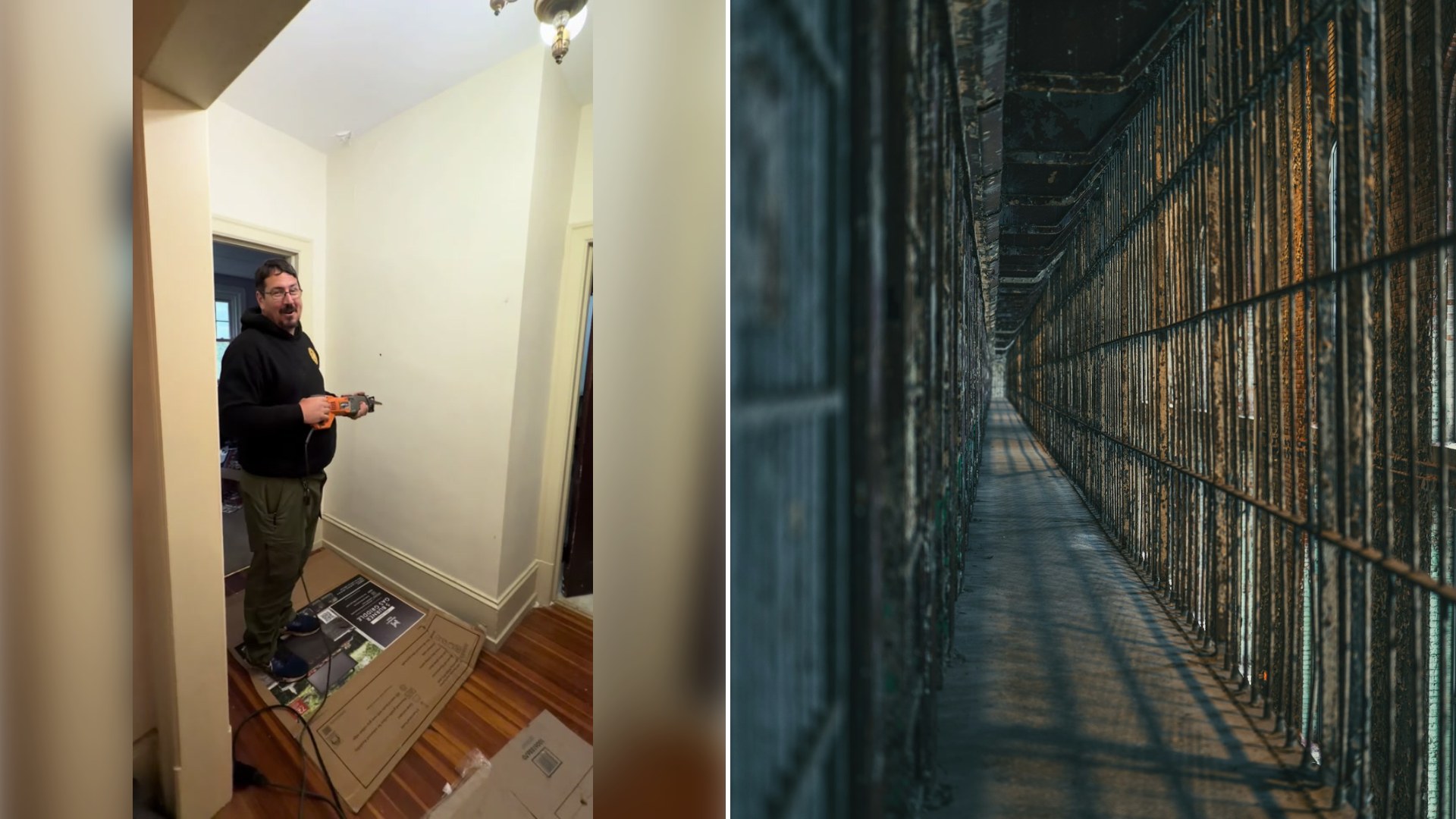
Buying an unusual property almost guarantees an unusual story eventually, and creator @playerswanted (TikTok) proves it by documenting what happens when he cuts into a wall inside the former prison property he purchased and finds something hidden behind it, turning an already unconventional real estate purchase into a genuine, real-time discovery.
Adaptive reuse of institutional buildings, old schools, churches, firehouses, and yes, former correctional facilities, has become one of the more fascinating corners of the real estate and renovation world. These structures were built to standards and specifications entirely different from residential housing, which means their conversion into livable space almost always surfaces surprises that a standard home renovation simply wouldn’t produce.
A former prison specifically carries an unusually dense and complicated structural history. Walls built for security rather than comfort, often far thicker and more heavily reinforced than typical residential construction, can conceal utility chases, old security infrastructure, or simply sealed-off sections from past renovations that nobody bothered to document when the building changed hands or changed purpose over the years.
There’s also something worth examining about why institutional-to-residential conversions have grown so popular as a genre of content specifically. These buildings tend to be dramatically larger and more architecturally distinct than a typical home, giving creators a visual and narrative canvas that a standard renovation project simply can’t match, every original feature becomes a story, and every anomaly becomes a potential reveal.
It’s also worth considering the emotional complexity of renovating a building with a history this charged. A former prison carries real weight, decades of a very different kind of human experience than the comfortable home life the new owner is presumably building toward. Discoveries made during that renovation inevitably carry some of that weight too, turning a simple construction surprise into something that invites a more reflective reaction than a typical hidden-room reveal would.
From a purely practical renovation standpoint, buildings like this also demand a different kind of due diligence before any work begins. Understanding original blueprints, researching the building’s institutional history, and consulting with contractors experienced in heavy commercial or institutional construction all become essential steps that a typical residential renovation wouldn’t require, steps that can prevent a surprise discovery from becoming a safety or structural issue.
This kind of project also reflects a broader cultural fascination with buildings that carry an unconventional past. There’s a growing market, and a growing audience, genuinely drawn to properties with real institutional history rather than the blank-slate appeal of new construction, a preference for buying something with a story already built in rather than starting from nothing.
There’s a resourcefulness story here too worth highlighting. Former institutional buildings often come to market at a steep discount relative to their square footage, precisely because the specialized renovation required scares off conventional buyers. Homeowners willing to take on that complexity, and document it along the way, often end up with dramatically more space and architectural character than a comparable budget could buy in standard residential housing stock.
In the end, what makes this kind of discovery so compelling isn’t just the mystery of what’s behind the wall, it’s the reminder that a building’s past doesn’t disappear just because its purpose has changed. Every unconventional property carries hidden chapters, and sometimes all it takes to find one is a homeowner curious enough, and brave enough, to start cutting into the walls.
Leave a Reply