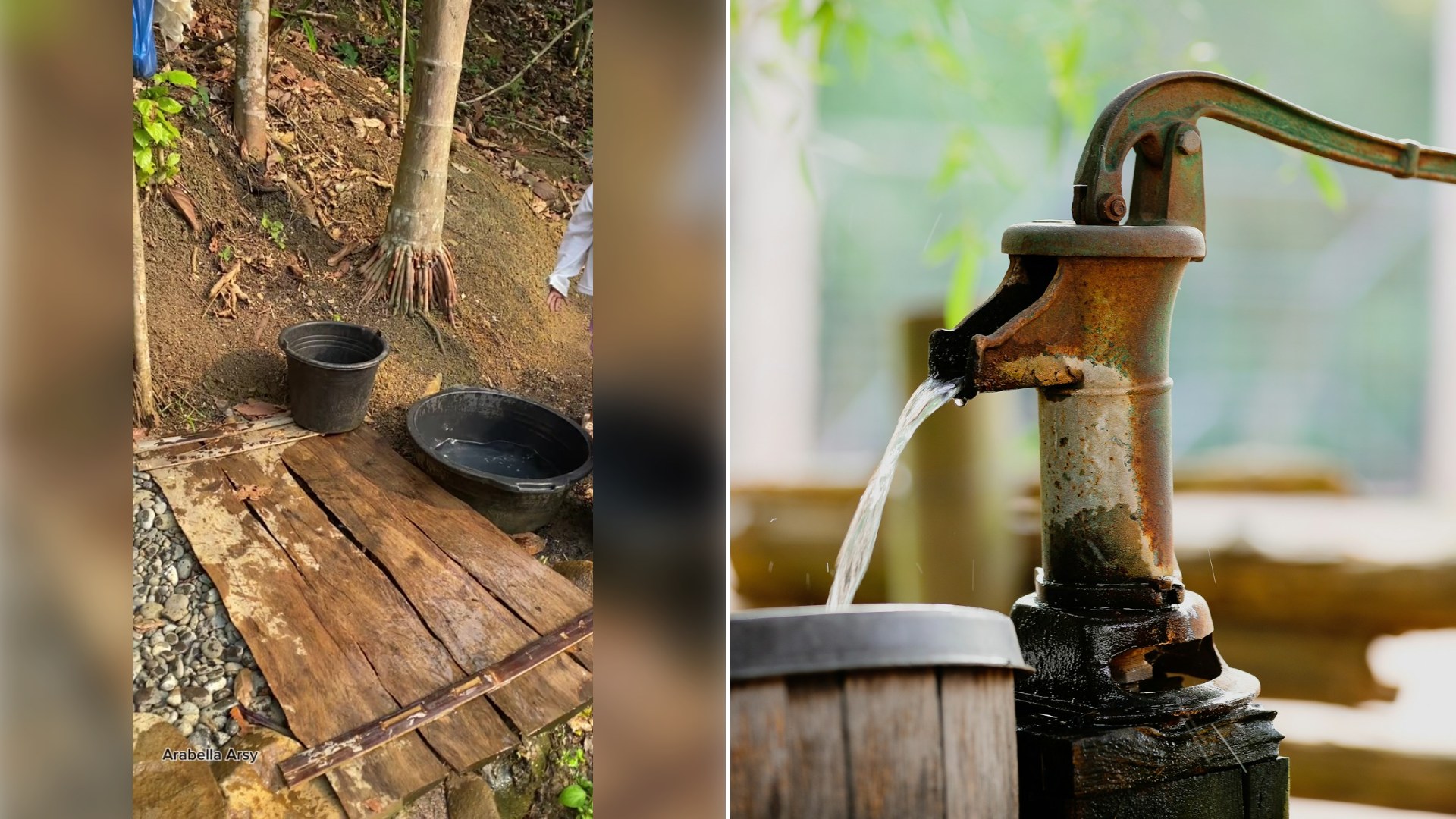
Some of the best property discoveries aren’t inside the house at all. @arabella.arsy (TikTok) documents a family effort to clear mud and overgrowth from a natural spring-water pool on their rural property, restoring its water flow entirely by hand and revealing a feature of their own land that had sat buried under years of neglect.
Natural spring-fed water features represent one of the more genuinely remarkable kinds of land assets a rural property can hold, offering a renewable, chemical-free water source that no amount of modern landscaping budget could replicate from scratch. Discovering, or in this case rediscovering, one on a family’s own land carries a different kind of value than almost any built amenity, precisely because it was a feature of the land itself long before any structure was built on it.
There’s a particular satisfaction to restoration projects that work with natural systems rather than imposing something artificial. Clearing mud and debris to let a spring flow freely again isn’t construction, it’s closer to ecological restoration, undoing years of accumulated sediment and growth to return a natural feature to a state it would maintain on its own if left properly cared for.
This kind of project also speaks to a broader renewed interest in understanding and working with the natural features already present on a piece of land, rather than defaulting immediately to manufactured landscaping solutions. A family willing to invest real physical labor into restoring a spring, rather than simply installing a conventional pool or water feature, reflects a genuine appreciation for what makes their specific property unique.
It’s worth considering the technical knowledge actually required to restore a feature like this properly, even when the work looks as simple as clearing mud by hand. Understanding a spring’s natural drainage pattern, avoiding damage to the underlying water source during cleanup, and recognizing which overgrowth is safe to remove versus which plants may actually be helping filter or stabilize the water all require a kind of hands-on ecological literacy that develops through direct experience with the land.
There’s also a multigenerational dimension worth appreciating in a family project like this one. Restoring a natural feature together, rather than hiring out the labor, creates a shared physical experience and shared ownership over the outcome that a purely financial transaction, paying a landscaping company, simply wouldn’t produce in the same way.
This kind of content also reflects a broader cultural reconnection with rural land stewardship happening alongside the homesteading and off-grid movements more generally. Understanding and actively maintaining the natural systems on a property, water sources, soil health, existing vegetation, represents a different relationship with land than simply owning it passively, one rooted in genuine care rather than pure utility.
There’s also something worth noting about how previously neglected natural features like this one tend to accumulate without anyone fully realizing what’s being lost. Years of mud and overgrowth don’t happen overnight, they build up gradually enough that a family can genuinely forget, or never fully realize, exactly what their own land is capable of until someone finally does the work to uncover it again.
In the end, this project is a reminder that not every valuable feature of a property needs to be built, sometimes it just needs to be rediscovered and cared for. A natural spring, restored by hand, offers something no renovation budget can manufacture: a genuine, living connection to the land a family already calls home.
Leave a Reply