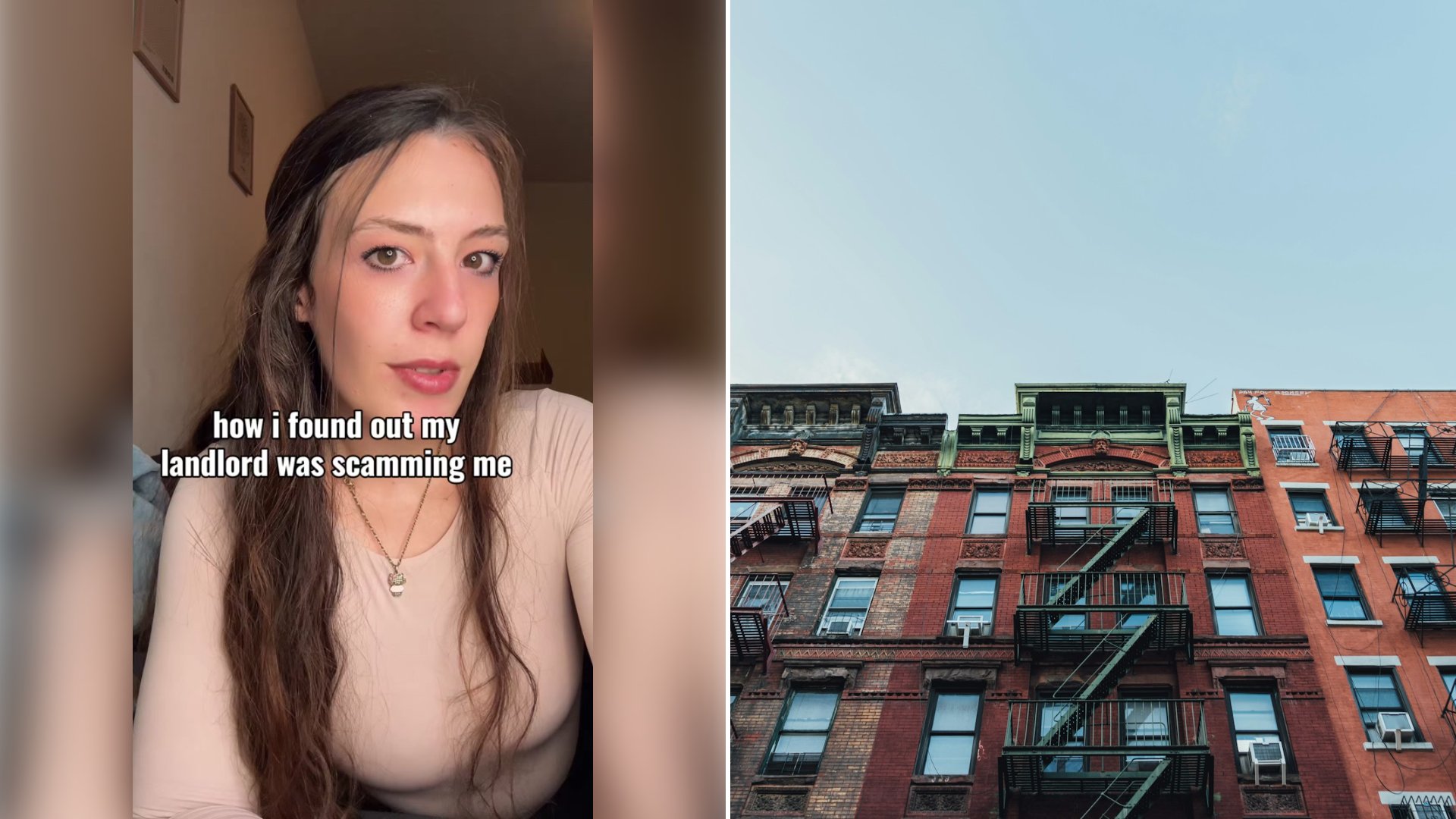
When the rent history for her Bronx apartment arrived in the mail, the tenant who posts on TikTok as @court0o0 looked for her own name and could not find it. For the full three years she has lived there, she says, the report listed a man as the legal tenant. “A man’s name I’ve never heard of,” she says in her video. “I don’t know who he is. I don’t even know if he’s a real person.”
The second thing she noticed was the number. According to her, the legal rent on the report was about $200 lower than what she has paid every month since she moved in. Her caption puts what she lost at “over $10k.”
The video carries the on-screen line “how i found out my landlord was scamming me,” and she spends nearly six minutes talking straight to the camera from her apartment. She opens by telling anyone in New York City in a rent stabilized apartment to “stop scrolling.” She does not name the landlord or the management company and does not show the report, so everything below is her account of what it says.
She says there were no warning signs. She signed what she calls “a real lease” with her landlord and paid rent every month to his management company. “I had no idea that anything was wrong,” she says. The discrepancy only surfaced because she ended up in housing court, where, in her words, “it just happened to come up in the process.” That is when she ordered the report from the DHCR, the agency she says landlords report rent stabilized tenants and rents to.
She rules out the ordinary explanation for a different name on the report. “I am not in a sublet. I am not in a sublease,” she says. “I am the tenant of this apartment and I signed an official lease with the landlord.” Her reaction on reading it: “Where is my name? Why is my name not on this report?”
She calls what she believes happened an “illusionary tenant scam.” As she explains it, a rent stabilized apartment has a legal rent, and the landlord is only allowed to charge that amount. In the scheme she describes, the landlord tells the DHCR that one person holds the lease and pays the legal rent. That person might be someone cooperating with the landlord or, she says, “a completely made up person.” Meanwhile the landlord signs a real lease with someone else at a higher figure.
She walks through it with invented names and round numbers. The report says the legal rent is $1,400 and lists one woman as the leaseholder. A different woman signs a lease for the same apartment at $1,600 and pays on time every month. “Everything looks official, everything looks legitimate,” she says.
She admits she is “still a little lost” on why a landlord would go about it this way. What she is sure of is the result for the person paying: rent above the legal amount, with a filing that says otherwise. She calls that fraud, and says landlords get away with it because “most people are not out here just requesting” these reports and analyzing them.
Her instructions for other rent stabilized tenants in the city start with one request. Go to the DHCR’s website and ask for the paperwork for your apartment. She says a tenant is legally allowed to request it, and that it arrives by mail.
When it arrives, she says to read four things for the period you have lived there: the name of the legal tenant, the legal rent, any preferential rent, and the rental history. She gives three red flags. One is a name you do not recognize during your own tenancy. Another is your name not appearing at all. The third is a legal rent “much lower than you’re paying” with no preferential rent or other reason listed for the gap.
Her story rests on two documents that did not match the report, so have both ready before you compare: the lease you signed with the landlord and your record of monthly payments to the management company. Mark the month you moved in on the rent history and check every line from that date forward, because she says the wrong name on hers ran “from the day that I moved in” to the present.
If anything is off, she says not to rely on your own reading. Take the report to “someone who works in housing court or legal aid and have them look it over.” After that, she says, a tenant can file a complaint with the DHCR.
On what a complaint can lead to, she is careful to say “it’s possible,” not guaranteed. If a landlord is found to have committed fraud or violated the rent stabilization laws, she says he can owe back what the tenant overpaid, up to three times the overcharge for each month. In her example, a $200 monthly overcharge becomes three times $200 for every month it was paid.
She also sets the timeline plainly: the investigation and the court process “can take years.” Her reason for reporting anyway: “Otherwise he’s just going to keep doing it and keep doing it to other people as well.”
More from Willow and Hearth
- Corporate Landlord Bought an Entire Apartment Complex and Renewed Every Single Lease at Once With One Rent Hike Nobody Was Ever Allowed to Negotiate
- Rent Payment Apps Are Quietly Bleeding Renters With a Convenience Fee Every Single Month, and Regulators Are Finally Demanding to Know Why
- Woman Strips Every Upgrade From Her Old Apartment to Reclaim Her Deposit as She’s Determined to Get Every Cent of Her Security Deposit Back
Leave a Reply