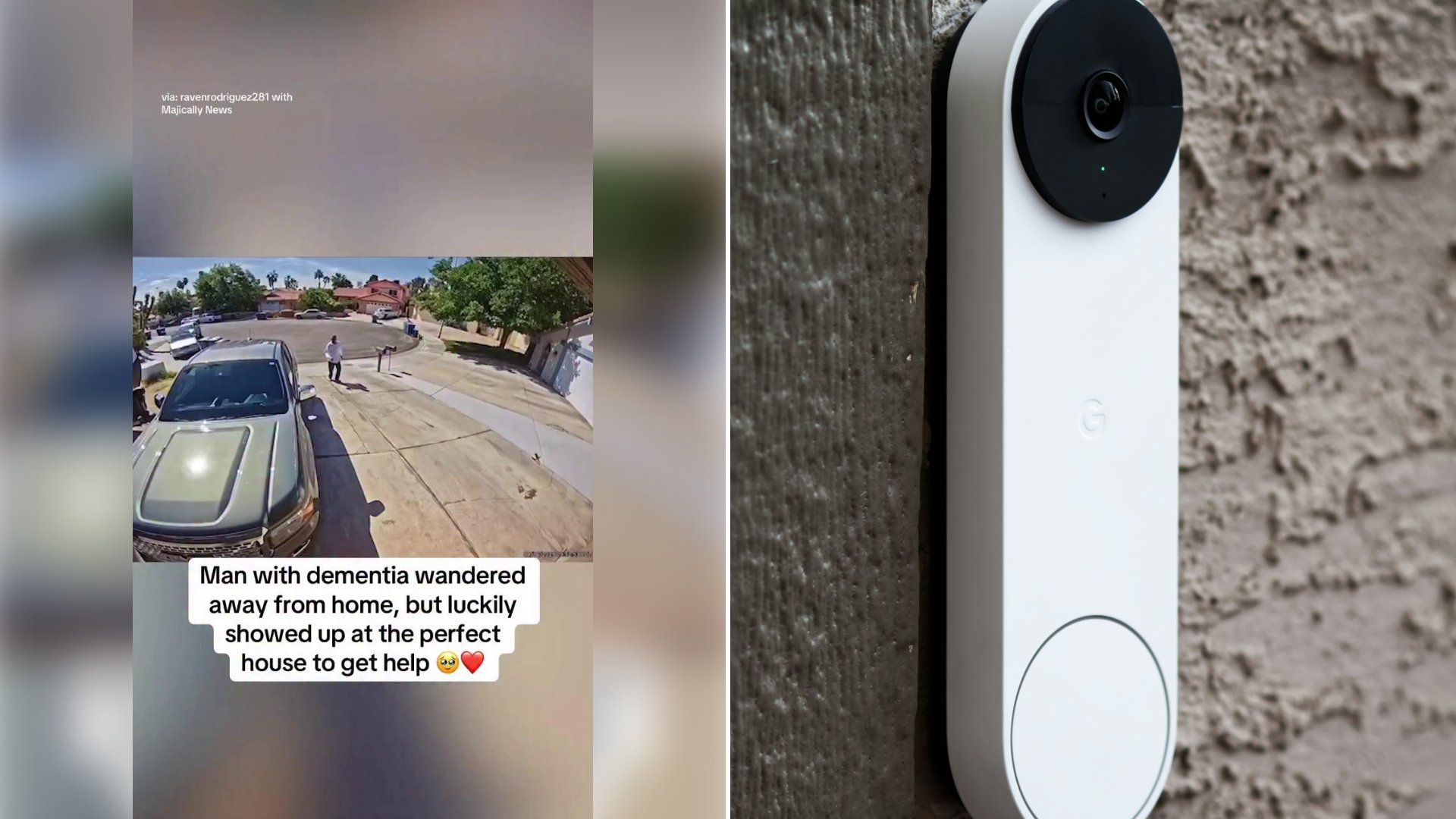
A doorbell camera looks down a sunlit driveway. A man walks up from the street, and white text over the footage reads: “Man with dementia wandered away from home, but luckily showed up at the perfect house to get help.” The clip is a reshare. An on screen credit at the start attributes the footage to another account, and the post itself comes from @corybooker. The original post could not be found, so this article describes only what the shared reel shows.
The subtitles follow what happens next. They start with “No…” and “Huh?” as a woman walks up beside the man. Then come the lines “You don’t know where your home is?” and “and we’ll get someone here to take you…” A second card explains what made that possible: “Thankfully he was wearing a bracelet with his info and this kind woman was able to take action…”
From there the footage runs about a minute and keeps its focus on the driveway. The subtitles show an offer of water (“Ok, want some water?”) and an invitation inside (“Come in”). A phone call appears next, in which a caller says they think they have the man there and asks whether the person on the line is related to him, then says “he’s here at my house.” Later lines read “Come on, I’ll give you something to drink” and “We’ll talk while you’re getting yourself together…” The video does not show family arriving or say how the day ended.
The caption from the account that shared it is a message, not a description of the footage: “Every day, ordinary people show extraordinary spirit, stepping up to help someone in need.” It ends, “They see a stranger in need and become a neighbor.” The bracelet is the one item in the clip that the on screen text credits for the outcome.
One viewer who says she is a nurse wrote in the comments that people with dementia can have an impaired swallowing mechanism, so some need thickened liquids, and that the caller should be asked about any drink restrictions before water is offered. That is her view, not something the video addresses, but it points to a practical step: when you reach the family or a dispatcher, ask what the person can safely eat or drink before offering anything.
The U.S. National Library of Medicine’s MedlinePlus guide to keeping a person with dementia safe at home advises having the person wear an ID bracelet or necklace with their name, address and phone number, adding a caretaker’s contact information if possible. It also advises telling neighbors and others nearby that the person may wander and asking them to call you or help the person get home, and it suggests considering a GPS device or a phone with a GPS locator. A brief from the Administration for Community Living on wandering similarly recommends using medical ID bracelets “so emergency personnel know whom to call if they find the person.”
If you find a confused person on your driveway, the subtitles in this clip suggest a sequence: ask whether they know where home is, look for identification such as a bracelet, contact the person named on it, and offer a seat and a drink. Before the drink, ask the contact or a dispatcher whether there are any restrictions, as the nurse commenter suggested. For a household caring for someone who might wander, the same sources point to the preparation that makes that sequence possible: an ID with a phone number that someone will answer, and neighbors who already know to call.
More from Willow and Hearth
- Woman Spends Months Secretly Renovating Her Elderly Neighbor’s Home Using Community Donations
- Landscaper Helps an Elderly Man Reclaim His Overgrown Yard, Tying the Work to His Granddaughter’s Favorite Childhood Memory
- Anker’s Newest Sensor Watches for Falls Without Wearables or Cameras So Aging Parents Can Stay in Their Own Homes Longer
Leave a Reply