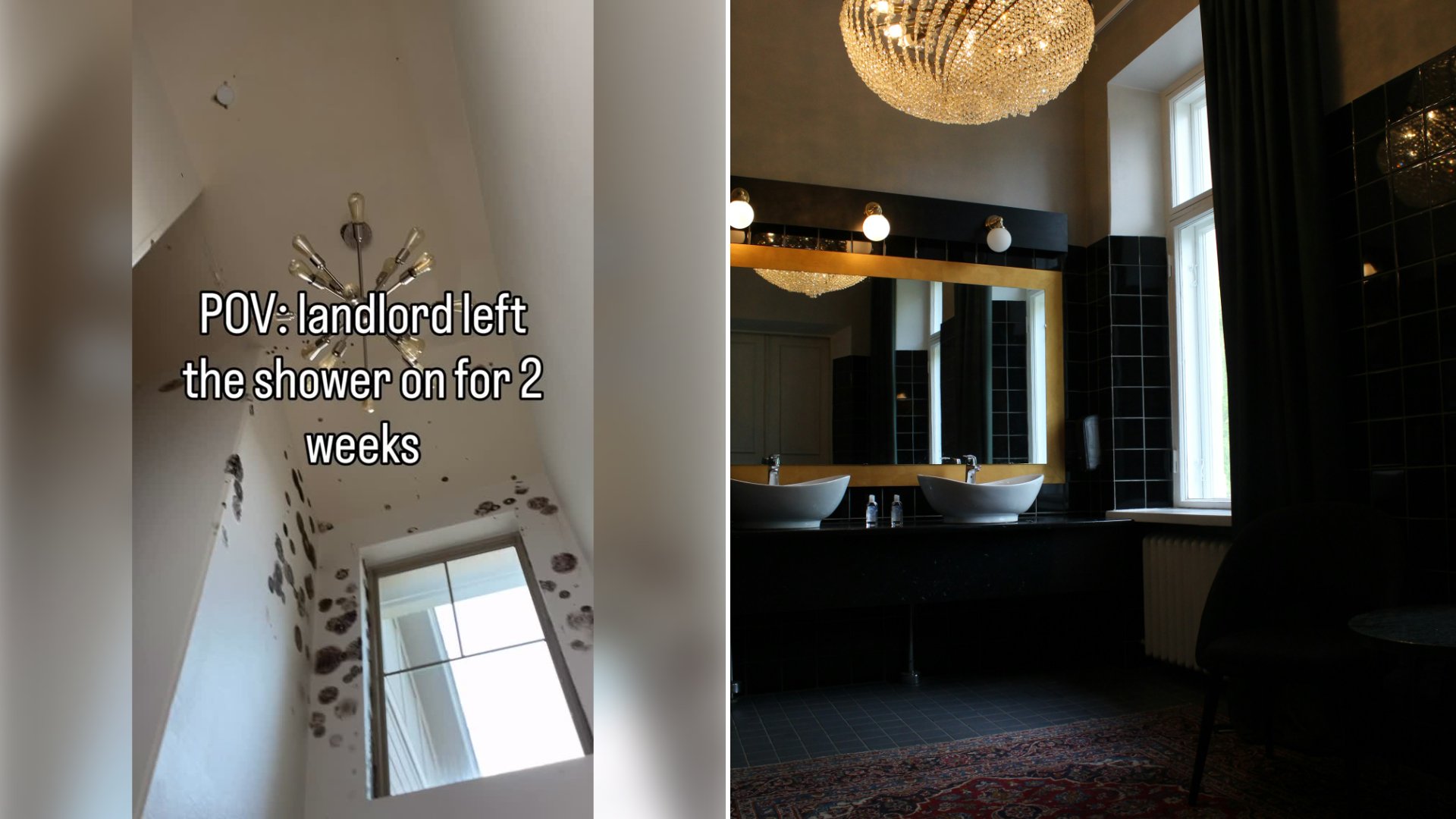
A restoration contractor who posts as @diegonewkirk.atx opens a 20 second Instagram reel on the ceiling of a stairwell, and the ceiling is covered in dark spots. The first line of on screen text sets up the story: “POV: landlord left the shower on for 2 weeks.” What follows is a quick walk through the house the creator says that happened in, with a new line of text for each stage of the damage.
The camera moves up the stairs while the text reads “This was the resulting mold and steam damage.” Black spotting runs across the ceiling and down the walls, around a light fixture and over a vent. Next comes “100% interior loss. All drywall had to go.” The frames show a ceiling access hatch with mold along its edges, then the laundry area, then a bare room with the walls and floor stripped back.
The text keeps listing what was lost. “Trim board? Trash. Doors? Toss em.” Then, over a room with a ceiling fan still hanging above bare subfloor: “The fan; bye bye.” The last line is “Water can mess a paper house up quick,” shown as the camera looks through a doorway at a hallway and bathroom where black mold still stains the door edge and the wall beside it.
The caption fills in what the video only hints at. According to the creator, two straight weeks of trapped steam and moisture left “mold across every ceiling and wall,” drywall that “had to be completely gutted,” trim and doors thrown out, and even the fan ruined. The creator writes that water and time together can take a home “down to studs if nobody’s paying attention,” and tells neighbors that if they have a leak they have been meaning to deal with, this is their sign.
The landlord claim is the creator’s own framing, shown as on screen text. The video does not say who paid for the work, and nothing in it names the property owner.
For a renter, the practical step is to report a running fixture, a stuck valve or a persistent drip in writing as soon as it is noticed, and to keep dated photos. For a buyer touring a house, mold spotting around vents and ceiling hatches, like the spotting shown in this reel, is worth asking about before making an offer.
The timeline in the caption matches what federal guidance stresses. According to the U.S. Environmental Protection Agency’s guide to mold, moisture and your home, water-damaged areas and items should be dried within 24 to 48 hours to prevent mold growth, and if wet materials are dried in that window after a leak or spill, mold will in most cases not grow. The same guide says absorbent or porous materials, such as ceiling tiles and carpet, may have to be thrown away if they become moldy, because the mold can be difficult or impossible to remove completely. It also says a homeowner can usually handle a moldy area smaller than about 10 square feet, and points to its commercial building remediation guidance when mold covers more than 10 square feet.
Leave a Reply