Real estate investor @richardgrandintaylor posted a September 17 video built around a recorded phone call, captioned “Realtor tries screwing me over,” capturing what he describes as the moment a realtor attempted to work against his interests on commissions and closing costs in the middle of a property deal. The creator says the deal in question was a substantial one, and hearing the actual exchange unfold in real audio — rather than a text recap — gives the video a rawness that a written account of the same dispute couldn’t match.
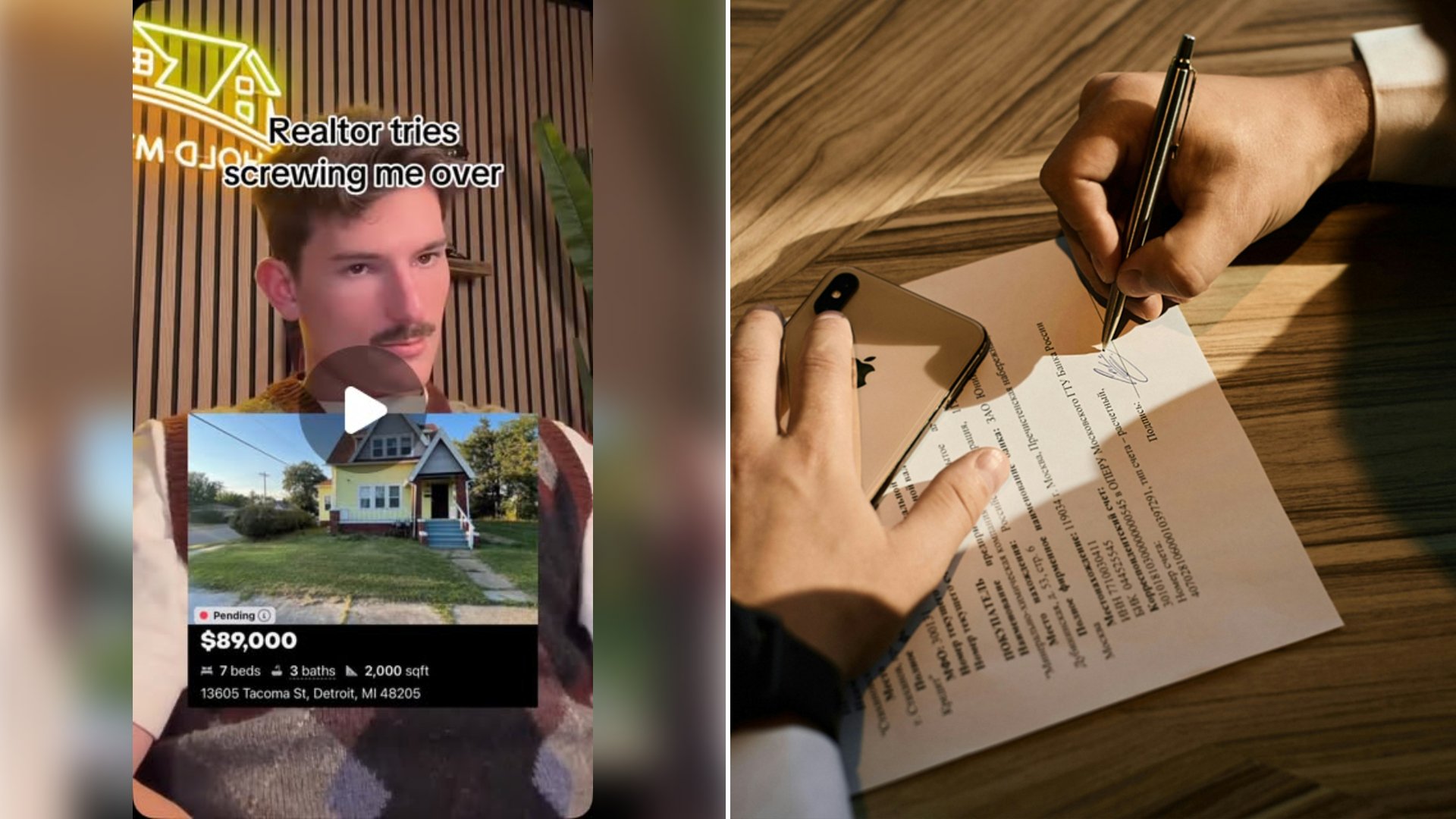
The specific dollar figures and exact circumstances of this particular deal are the creator’s own account of what happened, but the broader dynamic he’s describing — tension between a buyer and a realtor over how commission gets split and who absorbs certain closing costs — is one of the most common flashpoints in real estate transactions, and one most buyers only encounter for the first time when it’s already happening to them.
Real estate commissions have traditionally been paid by the seller and split between the listing agent and the buyer’s agent, often in the range of 5 to 6 percent of the sale price combined, though that figure has always been negotiable rather than fixed by law. Following a major 2024 legal settlement involving the National Association of Realtors, the industry shifted its practices nationwide: buyers now generally sign a written agreement with their agent up front spelling out exactly how much that agent will be paid and by whom, rather than commission terms being folded invisibly into the listing. That change was intended to make commission structures more transparent, but it also means buyers today have to pay closer attention to those agreements than they may have in the past, since the realtor representing them is now more likely to negotiate commission directly with the buyer rather than relying entirely on the seller’s side to cover it.
Closing costs are a separate, equally negotiable line item, typically running anywhere from about 2 to 5 percent of the purchase price and covering things like lender fees, title insurance, appraisal costs, and recording fees. Who pays which portion of those costs is usually settled during the purchase offer stage, and buyers represented by an agent who isn’t clearly advocating for their side can end up agreeing to cover costs that, in a different negotiation, a seller might have been willing to absorb instead. Real estate attorneys who review these disputes generally advise buyers to get every commission and cost-sharing term in writing before signing a buyer-representation agreement, and to ask directly whether their agent is receiving any additional compensation or incentive tied to a specific lender, title company, or even the specific property being sold.
When a buyer suspects their own agent isn’t representing their interests, the most concrete recourse is usually a formal complaint to the state real estate licensing board, which can investigate fiduciary-duty violations and, in serious cases, suspend or revoke an agent’s license. Buyers can also request a different agent from the same brokerage before a deal closes, or in a worst-case scenario, walk away from a specific agent relationship entirely if a signed agreement allows for it. Whatever the resolution of this particular confrontation, the video is a useful reminder that a buyer’s agent is legally obligated to act in the buyer’s financial interest — and that obligation is worth verifying in writing, long before a six-figure deal is anywhere near closing.
More from Willow and Hearth
- Consumer Financial Protection Bureau Says to Compare Three Groups of Fees on Your Loan Estimate and Closing Disclosure Because Some Can Never Rise and Others Can Change by Any Amount
- National Association of Realtors Says the Typical First Time Buyer Is Now 40 Years Old and Puts Down 10 Percent, According to Its 2025 Profile of Home Buyers and Sellers
- Federal Housing Finance Agency Raises the 2026 Baseline Conforming Loan Limit to $832,750 and Caps High Cost Areas at $1,249,125, Which Leaves Some Buyers Still Borrowing Jumbo
Leave a Reply