A new homeowner on TikTok is walking followers through her latest purchase: an entire 1975 single wide mobile home, bought for just $8,500. In the video, she steps through the front door and immediately points out the original wood paneling running down the hallway, the vintage layout, and the kind of details builders simply do not replicate anymore. She is not trying to gut the place and start over. She is thrilled it still looks like 1975.
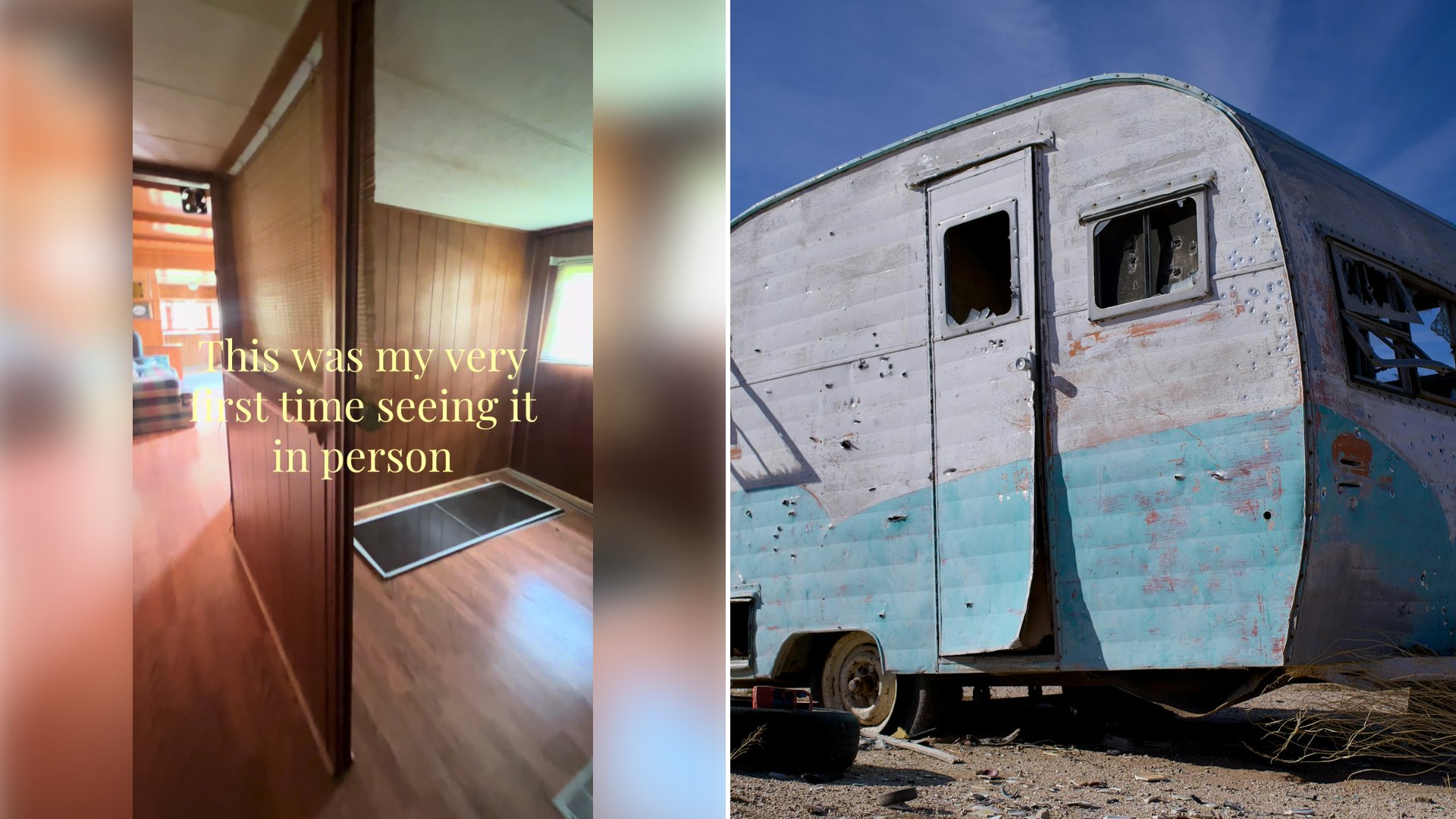
The tour, posted by creator @dusty_canvas, moves room to room. She runs her hand along the paneling, shows off original cabinet hardware, and makes clear that for the price she paid, the character built into the walls was basically a bonus on top of getting a roof over her head.
@dusty_canvas
An $8,500 purchase price sounds almost unbelievable next to the traditional housing market, and that gap is exactly why the video struck a nerve. Vintage single wide and double wide manufactured homes built in the 1960s and 1970s routinely sell for a fraction of what a comparable site-built starter home costs, in large part because manufactured housing depreciates differently than traditional real estate and because older units without land attached are valued closer to a vehicle than a house. Depending on condition, age, and whether the home comes with land, older mobile homes can list anywhere from a few thousand dollars up to the low tens of thousands, while a traditional starter home in most U.S. markets now runs well into six figures.
That price difference is a major reason manufactured housing has become a bigger part of the conversation around affordable homeownership. For buyers priced out of conventional listings, a vintage mobile home with good bones can be a realistic entry point into owning instead of renting, especially in regions where land and lot rent remain affordable. The tradeoff is that financing a mobile home without land, insuring it, and budgeting for repairs on an older unit all work differently than a standard mortgage, so buyers researching this path need to look closely at loan types built specifically for manufactured homes rather than assuming a conventional mortgage will apply.
The wood paneling itself is also part of a broader renewed appreciation for original midcentury materials. Rather than ripping out dated finishes, a growing number of homeowners are choosing to clean, seal, or lightly refresh original wood paneling instead of replacing it, treating it as a design feature tied to the era the home was built rather than something to cover up. That shift mirrors what is happening with other original materials in older homes, from hardwood floors to vintage tile, where buyers increasingly see age and authenticity as value rather than a flaw to fix.
For now, this new owner seems content to let the home be exactly what it is: a small, affordable, unapologetically 1970s space that got her into homeownership without a six-figure price tag attached. Whether she eventually updates anything beyond basic maintenance remains to be seen, but the reaction to the video suggests plenty of people are rethinking what an affordable first home can actually look like.
More from Willow and Hearth
- Freddie Mac Survey Puts the Average 30 Year Fixed Mortgage Rate at 7.40 Percent for October 8, Adding About $24.50 a Month to a $300,000 Loan Compared With the Week Before
- National Association of Realtors Says the Typical First Time Buyer Is Now 40 Years Old and Puts Down 10 Percent, According to Its 2025 Profile of Home Buyers and Sellers
- Federal Housing Finance Agency Raises the 2026 Baseline Conforming Loan Limit to $832,750 and Caps High Cost Areas at $1,249,125, Which Leaves Some Buyers Still Borrowing Jumbo
Leave a Reply