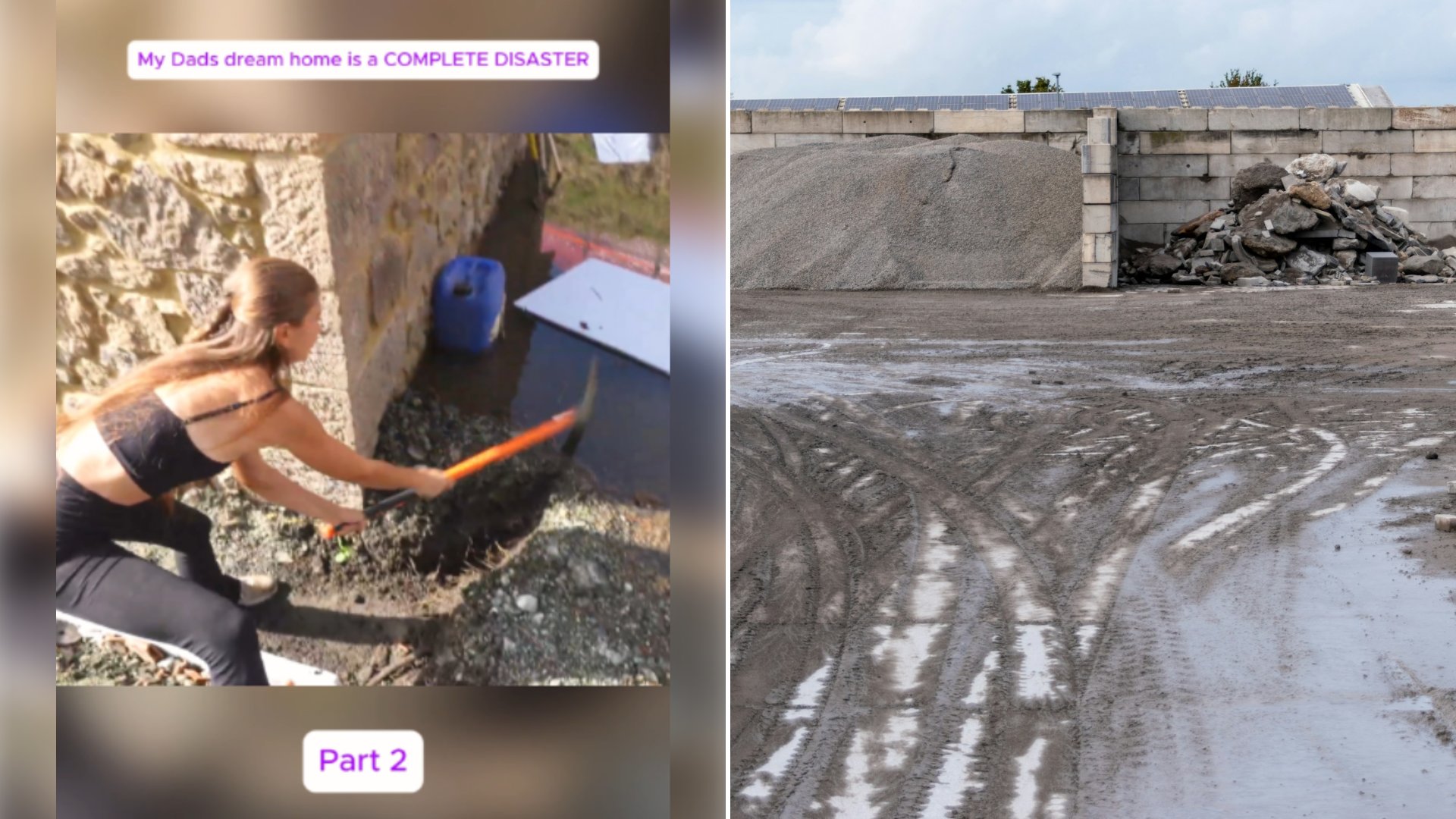
A renovation diary posted by @professi18 on TikTok is drawing attention for its blunt honesty: the creator describes his own father’s long-planned dream home build as a complete disaster, all because of drainage problems that turned the entire construction site into a flooded, muddy mess. It’s a rare moment of candor in a genre usually filled with glossy progress updates and finished-product reveals.
@professi18
The footage shows standing water across the lot, equipment bogged down in mud, and a general sense that the project has stalled out while the drainage issue gets sorted. For a build the creator describes as his father’s dream home, watching the site turn into a swamp is clearly painful to document, but the honesty is exactly what has made the series resonate with viewers who have lived through their own construction headaches.
Site drainage and grading problems are among the most common — and most expensive — surprises in new home construction. Water has to go somewhere, and if a lot isn’t graded correctly before a foundation goes in, that water tends to pool exactly where you don’t want it: against foundation walls, under future landscaping, or in low spots that turn into standing mud pits every time it rains.
What Poor Grading and Drainage Actually Costs
Correcting a drainage or grading issue is far cheaper when it’s addressed before construction begins than after a home is already built. Industry cost guides commonly used by builders and civil contractors put rough grading and drainage work for a typical residential lot in the range of a few thousand dollars when it’s done as part of initial site prep, often bundled into the overall site development cost. That can include grading the lot to slope away from the structure, installing French drains or swales to redirect water, and in some cases adding a sump system tied to a foundation drain.
Once a home is already standing, fixing the same problem gets considerably more involved and expensive. Regrading around an existing foundation, installing a perimeter drain system, or excavating to correct a drainage slope after the fact often runs into the tens of thousands of dollars, depending on the size of the property and how extensive the water damage has already become. In the worst cases, chronic drainage problems can undermine a foundation over time, leading to cracking, settling, or basement water intrusion that compounds the original repair bill with mold remediation and structural work on top of it.
Building professionals generally recommend that anyone planning new construction get a proper site drainage and grading plan reviewed by a civil engineer or qualified grading contractor before the foundation is poured, not after. A pre-construction soil and drainage assessment is a relatively small line item compared to the cost of excavating and regrading around a finished home later. Key things worth checking before breaking ground include the natural slope of the lot relative to the planned structure, the location of any nearby drainage easements or swales, and whether the local water table or soil type is prone to poor absorption, all of which can affect how a site handles heavy rain once it’s built out.
For families building a dream home the way this creator’s father is, a muddy, flooded setback is frustrating but not necessarily fatal to the project. Experienced builders note that if a drainage problem is caught during the build phase, as it appears to have been here, the cost of correcting it is still far lower than if the same issue surfaced years later as foundation damage. Getting the grading right before the framing goes up is, in nearly every case, the cheapest version of the fix a homeowner will ever get.
The series is continuing, and viewers following along will likely see the drainage correction play out before the build moves forward. For now, it stands as a useful, if muddy, reminder that even a dream home project can hit a very real, very expensive snag before the first wall ever goes up.
More from Willow and Hearth
- Idaho Builders Show a Grain Bin in a Dry Open Field Becoming a Finished Home With Tall Windows, a Loft Staircase and a Bedroom in 11 Seconds
- Land Buyer Compares Two 40 Acre Parcels Side by Side and Explains Why the One With a Dirt Road Leading Into It Is the One He Would Never Buy, Because It Is Landlocked
- House Painter Knocks on 10 Doors Offering a Free Paint Job, Finds One Homeowner Who Says Yes, Then Uncovers Peeling MDF Siding, Bees and Four Squirrels Living in the Soffit
Leave a Reply