Three years ago, this couple built their kitchen almost entirely by hand, choosing finishes and layouts that weren’t exactly standard off a showroom floor. Now they’re revisiting the room with fresh eyes, walking through each decision one by one to show what actually lasted, what needed fixing, and what they’d do again without hesitation.
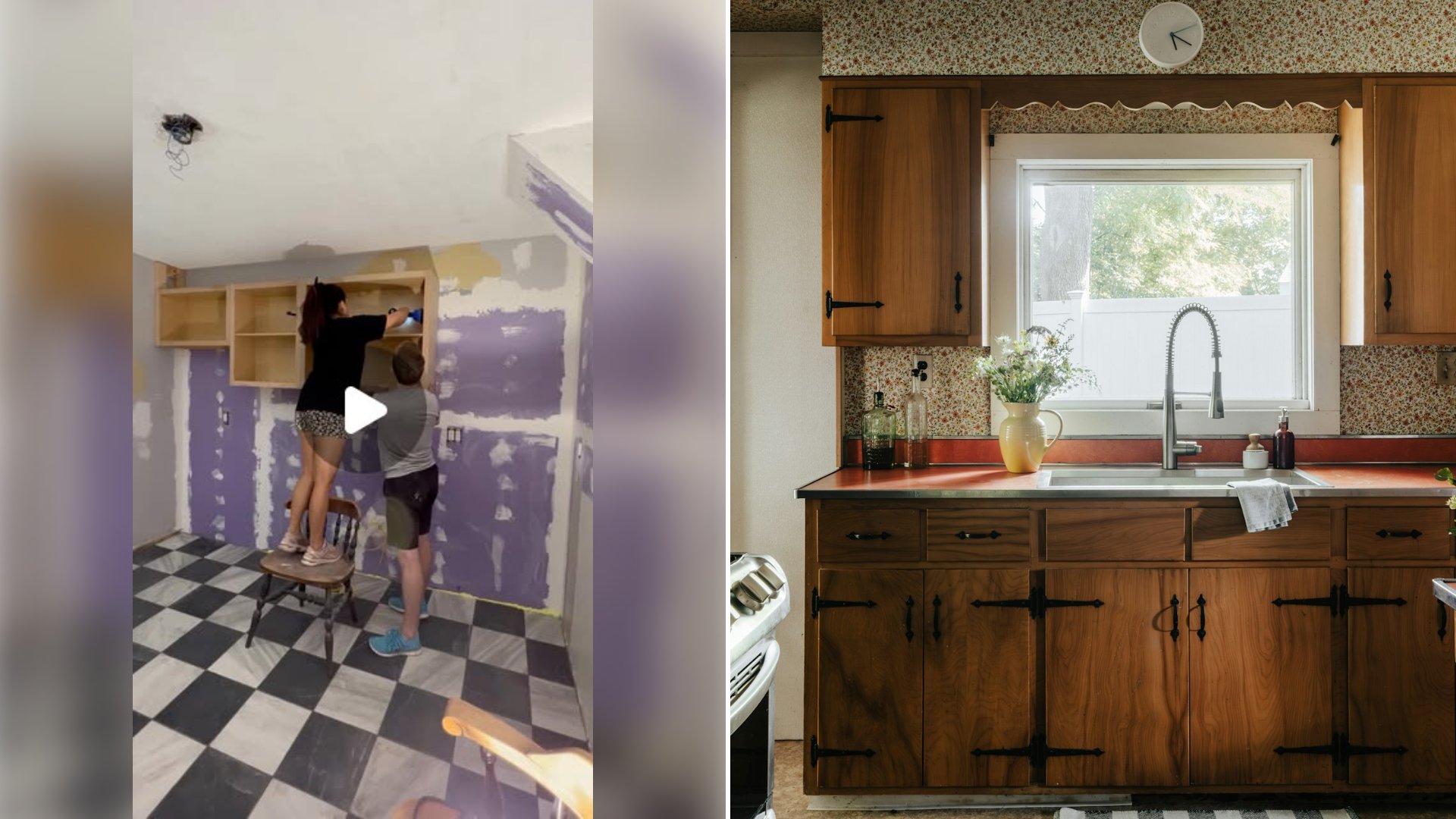
In the reel, creator @gabbydolechek walks through what she calls the best decisions made in their kitchen remodel three years later, pointing the camera at specific DIY elements, custom shelving, a chosen countertop material, a particular cabinet finish, and explaining how each one has actually performed under years of daily cooking, spills, and wear rather than how it looked on move-in day.
A three-year retrospective like this matters because kitchen renovation regrets tend to show up on a delay. The problems homeowners report most often after living with a new kitchen for a few years rarely show up in the first month. Storage is the most common complaint: a kitchen that photographs beautifully with open counters can still leave a family scrambling for cabinet space once small appliances, bulk groceries, and everyday clutter move in permanently. Lighting is a close second, with many homeowners discovering months later that a single overhead fixture doesn’t cut it for actual food prep once the excitement of a fresh paint job fades.
Material choices are where long-term regret shows up most visibly. Countertop surfaces that looked trendy at installation can scratch, stain, or etch under acidic foods and daily knife use, and homeowners who skip sealing natural stone early on often find out the hard way when a wine spill leaves a permanent mark. Flooring tells a similar story, with softer or more porous materials showing wear in high-traffic zones near the sink and stove long before the rest of the room. The couples who report the fewest regrets years later are consistently the ones who prioritized durability in the handful of high-use spots, counters, floors, and cabinet hardware, even if that meant spending a little more upfront.
Outlet and electrical planning is another area that separates kitchens that age well from ones that don’t. A kitchen designed with enough counter outlets for small appliances, properly placed task lighting under cabinets, and dedicated circuits for heavier equipment tends to function well for a decade or more, while a kitchen that skimped on any of those during the build often needs costly electrical work added back in later. Checking these details against how the space is actually used, not just how it looks finished, is the kind of forward planning that pays off exactly on the timeline this couple is showing.
Watching a renovation hold up this well after three full years of real use is its own kind of reassurance for anyone mid-build and second-guessing their choices. Not every unconventional decision made during a DIY kitchen renovation turns into regret, and sometimes the proof is simply time, and a willingness to show the kitchen honestly instead of only on move-in day.
More from Willow and Hearth
- Homeowners Pull Kitchen Cabinets Out of the Middle of the Room, Build IKEA Cabinets, Flip the Doors on a Fridge and Rework the Window Over the Counter
- Homeowner Quoted $18k by a Contractor for a Dining Nook Answers No Thanks I Got It and Builds the Bench, Cushions, Table and Hanging Plants in Five Steps
- Homeowner Remodeling His House After Work Says He Is a 24 Year Old Dad on a Tight Budget as Part 48 Starts a Downstairs Bathroom Built From Scratch
Leave a Reply