A six-year Airbnb host who posts under @atelobnb shared a confrontation from her October 4 video that will feel painfully familiar to anyone who has ever managed a short-term rental: a reservation booked for two guests shows up with six people instead, and the host has to decide, in real time, whether to let it slide or shut it down at the door.
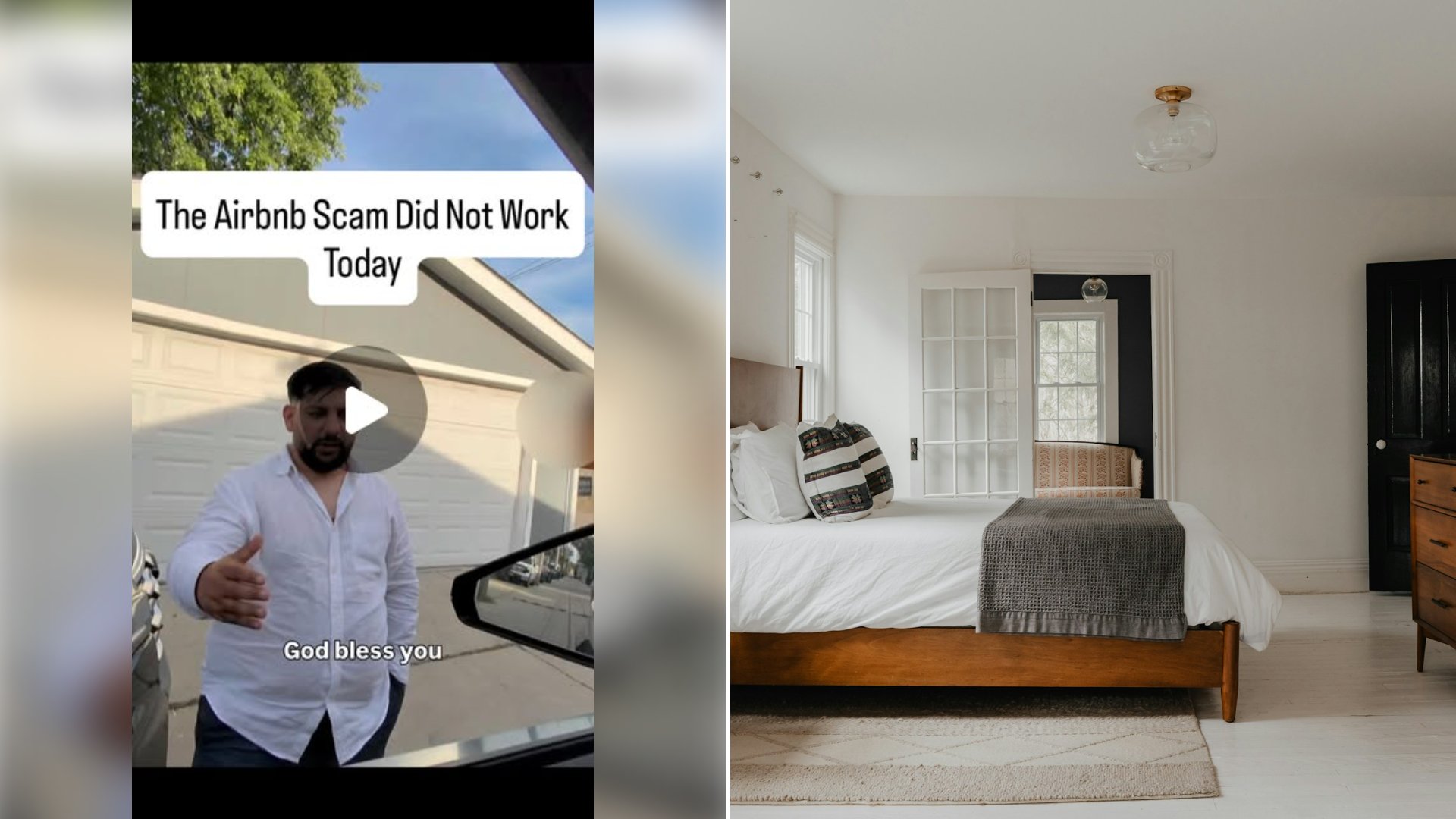
The host frames it as a pattern she’s learned to recognize after years of hosting: a reservation goes in for the minimum number of guests to keep the price low, and then the actual group — sometimes double, triple, or more the booked headcount — arrives expecting the host to either not notice or not say anything. She describes immediately spotting the mismatch and confronting the group on camera rather than waiting to deal with it after the fact, treating it less as an awkward surprise and more as a scam she’s seen enough times to call by name.
The practice is common enough that Airbnb has built explicit rules around it. The platform’s occupancy policy requires guests to list the accurate number of people staying at the time of booking, and listings are required to state a maximum occupancy that hosts set themselves, based on the space and local safety codes. When a host discovers more guests on-site than were booked — what Airbnb and most hosts simply call an undisclosed-guest violation — the platform allows the host to report it directly through the Resolution Center, request that the booking be amended to reflect the real guest count at the correct price, or in serious cases, ask Airbnb to intervene and enforce the listing’s stated maximum.
Hosts who catch the issue have more leverage than many guests realize. Airbnb’s terms allow a host to charge an additional fee for undisclosed guests after the fact, calculated using the platform’s own extra-guest pricing tools, and in cases where the overage is severe or the guest is uncooperative, a host can cancel the remainder of the stay without the usual cancellation penalties that would normally apply for backing out of a confirmed reservation. Airbnb has also stated publicly that repeat or egregious violations of occupancy limits can lead to account suspension for the guest responsible, which gives hosts an additional incentive to document and report rather than simply absorb the cost of extra guests quietly.
For hosts managing the day-to-day reality of short-term rentals, the financial stakes of undisclosed guests go beyond a simple pricing mismatch. More people in a space generally means more wear, higher utility usage, and a greater chance of noise complaints from neighbors — all costs the host absorbs if they don’t catch and address the overage at check-in. That’s part of why experienced hosts increasingly treat the moment of arrival, not the message thread beforehand, as the real verification step: a headcount can be confirmed in person in a way a booking form simply can’t guarantee.
The video is ultimately a small masterclass in why experience matters in hosting. A newer host might hesitate to confront a group already standing in the doorway with luggage, worried about a bad review or an awkward scene. A host who has seen the same pattern play out repeatedly over six years has the confidence — and the platform’s own policies behind her — to address it directly and immediately, before a quiet overbooking becomes an expensive problem.
More from Willow and Hearth
- Airbnb Host Films a Checkout With Trash on the Floor and Rumpled Bedding and Says You Never Know What Happens Behind Closed Doors After a Huge Fight During the Stay
- New York City Rent Guidelines Board Votes a 0 Percent Increase for Leases Starting October 1 and San Francisco Sets 1.6 Percent, While Los Angeles Rules Vary by Year
- Consumer Financial Protection Bureau Says to Compare Three Groups of Fees on Your Loan Estimate and Closing Disclosure Because Some Can Never Rise and Others Can Change by Any Amount
Leave a Reply